Why middle school choir sight-singing loses rehearsal time
A middle school choir can warm up beautifully, learn an anthem quickly by rote, and still freeze when a new page appears. That is not a motivation problem. A new score asks a changing voice to process key, clef, pitch, rhythm, text, and the sound of everyone nearby at the same time.
Rehearsal time disappears when we answer that overload with one more full-choir repetition. Strong readers carry the sound, less confident singers wait for a neighbor, and the teacher learns very little about who can actually read. The answer is not a weekly sight-reading marathon. It is a sequence that removes one layer of difficulty at a time and gives singers many successful first reads.
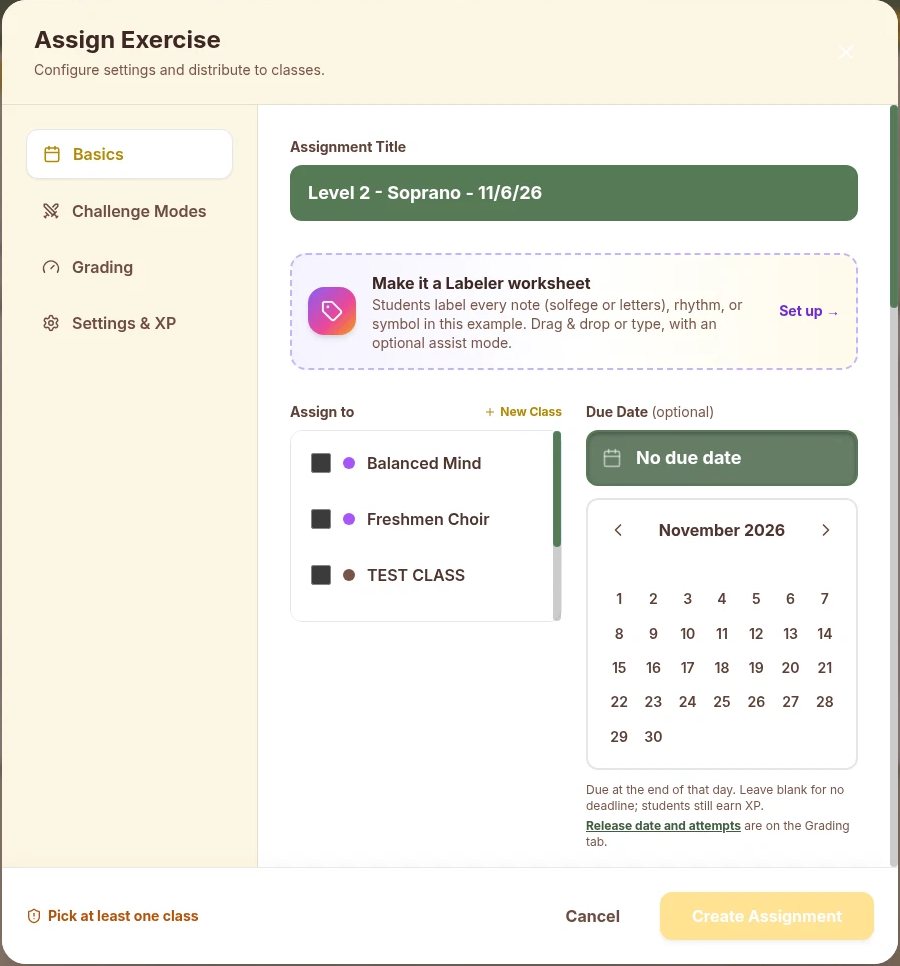
Protect the main rehearsal by deciding what belongs to the group and what belongs to an individual. The group needs a tonal center, a steady pulse, a model for thinking through a score, and chances to hold independent lines. Short individual practice can happen through SightReadQuest assignments, while the full ensemble spends its time singing literature.
Teach the foundations before asking for a polished read
Start with a tonal home
Before singers decode individual notes, they need somewhere those notes belong. Establish do with a scale, a simple arpeggio, and the final note of a short phrase. Ask singers to return to do after mi or sol. In minor, use the tonal language your program already teaches consistently. The goal is not a theory lecture. It is an internal reference point.
SightReadQuest puts Play Tonic and a metronome beside the staff, so tonal center and pulse can be established from the same screen as the reading example. Give the tonic, let singers quietly find their first pitch, and then keep the pulse stable. If an example drifts, compare the ending with tonic rather than restarting every few beats.
Separate rhythm from pitch
When a reading collapses, find out whether the singers lost the pitch, the rhythm, or both. Speak the rhythm on a neutral syllable while tapping the beat. Conduct it. Then speak it again at performance tempo. Only after the pattern is secure should singers add solfege and pitch. A consistent system also matters; this comparison of rhythm-counting systems can help you choose language the whole room understands.
Use solfege before text
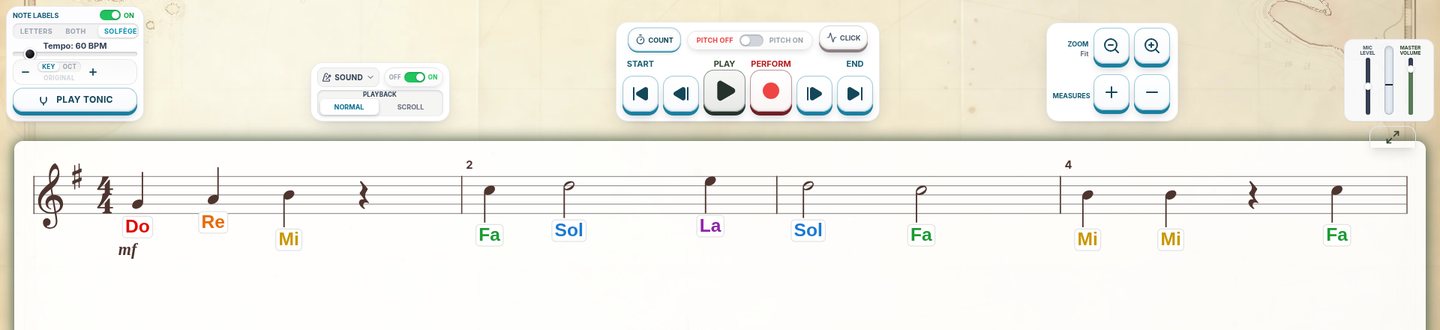
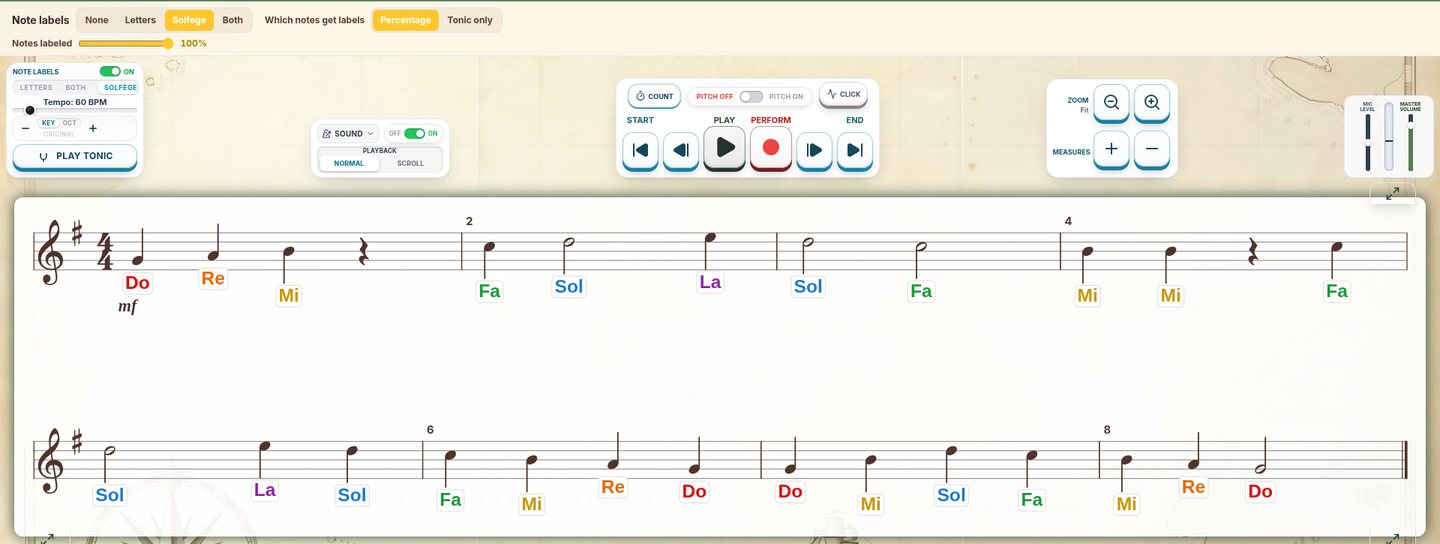
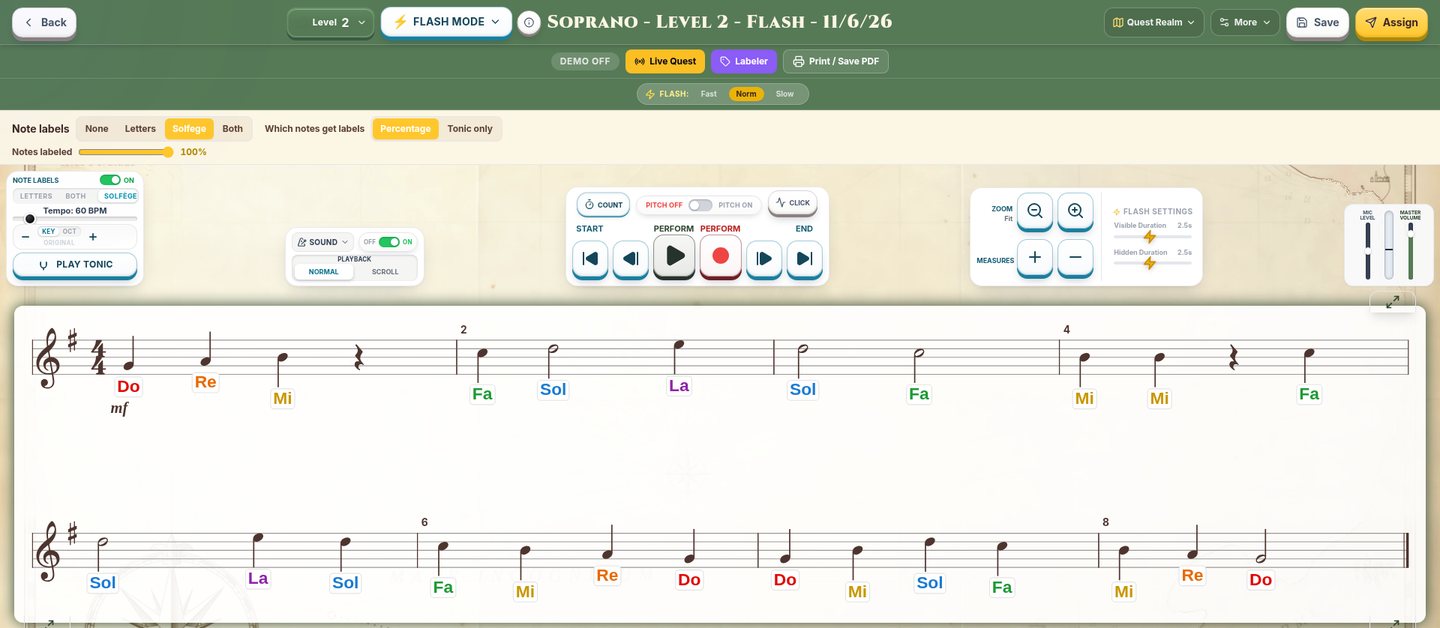
Solfege makes pitch relationships audible instead of leaving singers to memorize isolated letter names. Begin with familiar patterns, then read simple melodies on syllables. SightReadQuest can show solfege syllables under the notes while beginners build those connections. As singers gain independence, turn the labels off and ask for the same process without the visual support. Save text for after pitch and rhythm are steady.
A six-week sequence from unison to independent parts
A useful sequence adds only one major demand at a time. Repeat each stage for more than a week if your choir needs it. Advancement means singers can think through a new example, not that they completed a level number.
- Weeks 1 and 2: Read short unison examples with limited range, stepwise motion, and simple rhythms. Begin every attempt with tonic and silent study.
- Weeks 3 and 4: Add small skips and new rhythmic patterns, one at a time. Mix familiar material into every new challenge so the whole read does not feel harder.
- Weeks 5 and 6: Move to two parts, then add more parts when the choir can sustain them. Give each section a chance to read alone before combining.
Do not treat the lower voices as an echo of the melody. Altos, tenors, baritones, and basses need music that lets them hear and hold their own line. In SightReadQuest, choose soprano, alto, tenor, baritone, or bass, then regenerate for a fresh example in that part and range. Tenor clef options support the way your choir actually reads. Use the same musical idea across sections when you want to combine parts, and save harder intervals for after the lines are secure.
The first goal is a reliable reading process: find tonic, scan rhythm, locate the first pitch, hear the phrase inside, and keep going. If you want the everyday version of that process, use this five-minute choir sight-reading routine. The six-week sequence here determines what skill that daily routine practices next.

Study first, then give one uninterrupted read
Silent study is where singers learn to make decisions without the teacher. Give them the same short checklist every time. What is the key? Where is do? What rhythm needs attention? Where does my line begin? Which interval should I hear before I sing it? At first, let students mark the score or quietly audiate a pattern. Gradually remove those supports.
Then read once without stopping. No rescue singing from the piano, no immediate correction, and no restarting after every missed entrance. Teach recovery instead: listen for tonic, watch the conductor, find the next downbeat, and re-enter. A complete imperfect read gives better information than five polished fragments.
Afterward, ask the choir to name one spot that broke down. Isolate it, compare the difficult interval with a familiar tonal pattern, and put it back into the phrase. One focused repair is enough before the next read. For a practical way to score what you heard, see how to assess sight-reading without killing rehearsal time. Near an evaluation, the festival preparation plan applies the same no-stopping habit.
Build individual accountability without losing the hour
Full-choir singing is encouraging, but it can hide uncertainty. Individual accountability does not require every singer to perform a long solo in front of the class. Use brief, low-pressure samples: one section sings a phrase, two singers read a familiar pattern, or one student demonstrates the first two measures. Keep the examples short enough that the rest of the choir can audiate along.
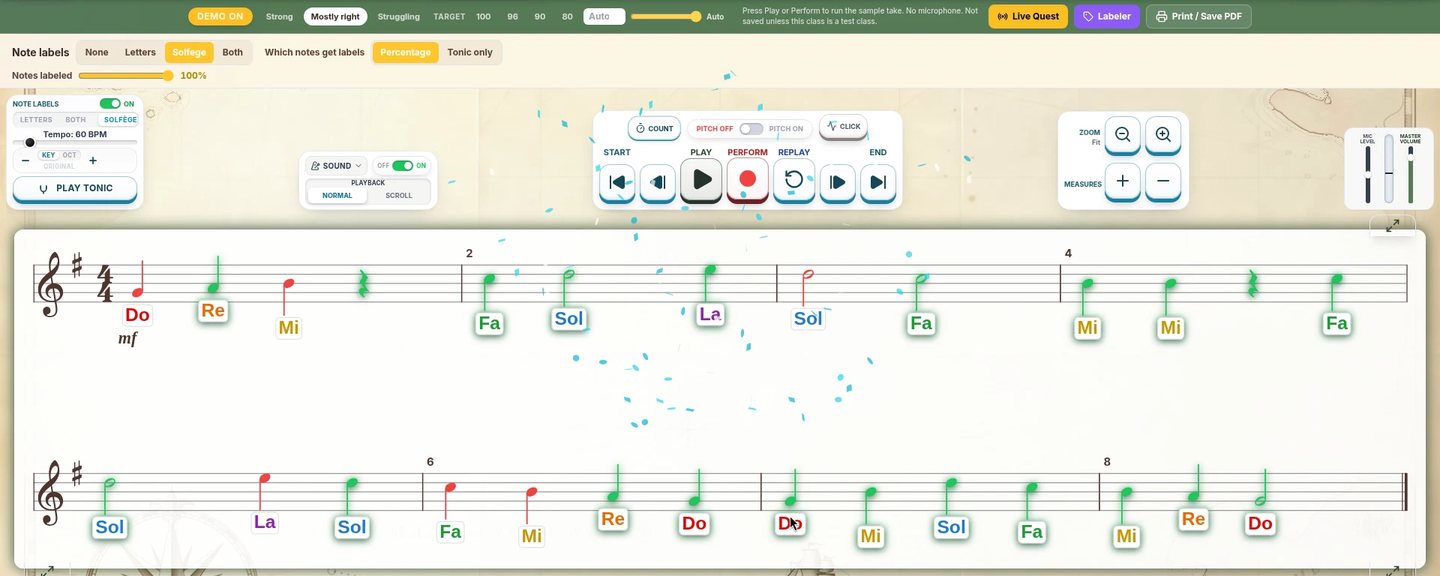
For device-based checks, SightReadQuest live mic grading marks pitches right and wrong on the staff as a student sings. This gives the singer immediate information and helps you separate a pitch problem from a rhythm problem. A student can retry one measure rather than wait for the entire ensemble to improve by osmosis.
Rotate a small number of checks across lessons instead of testing everyone on one day. Assess the process as well as the result. Did the singer find the starting pitch, maintain a pulse, and recover after an error? Those habits transfer to the next score. The guide to improving sight-reading offers more ways to turn errors into useful practice.
Use memory and ear days to strengthen reading
Ear work is not a break from sight-singing. It teaches singers what notation sounds like before they produce it. Choose one short activity, then connect it directly to the next reading example.
Flash Mode lets singers study notes briefly before they disappear. Begin with a pattern they can succeed with, then ask them to sing what they remember. This encourages readers to take in a musical group rather than stare at one note at a time. Memory Mode extends the same idea: study, hide, sing, and grow from one measure toward three as recall improves.
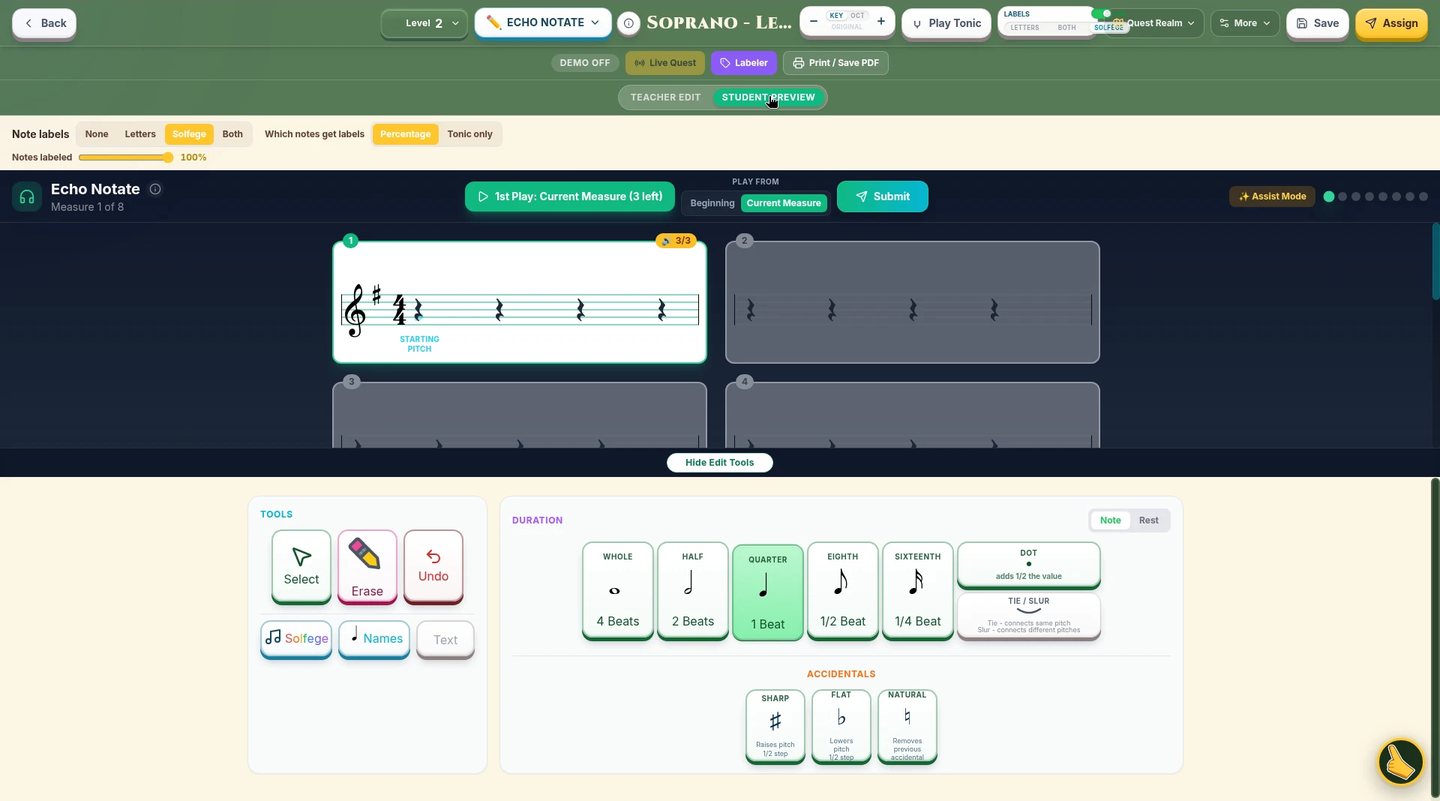
Echo Notate works in the other direction. Singers hear a phrase and write what they heard. In Live Class Mode, you control the playback for the room while student devices stay silent, making it possible to discuss the same phrase together. Use familiar tonal patterns first, then ask students to compare their dictation with the score. There is a fuller classroom walkthrough in Echo Notate ear training and dictation.
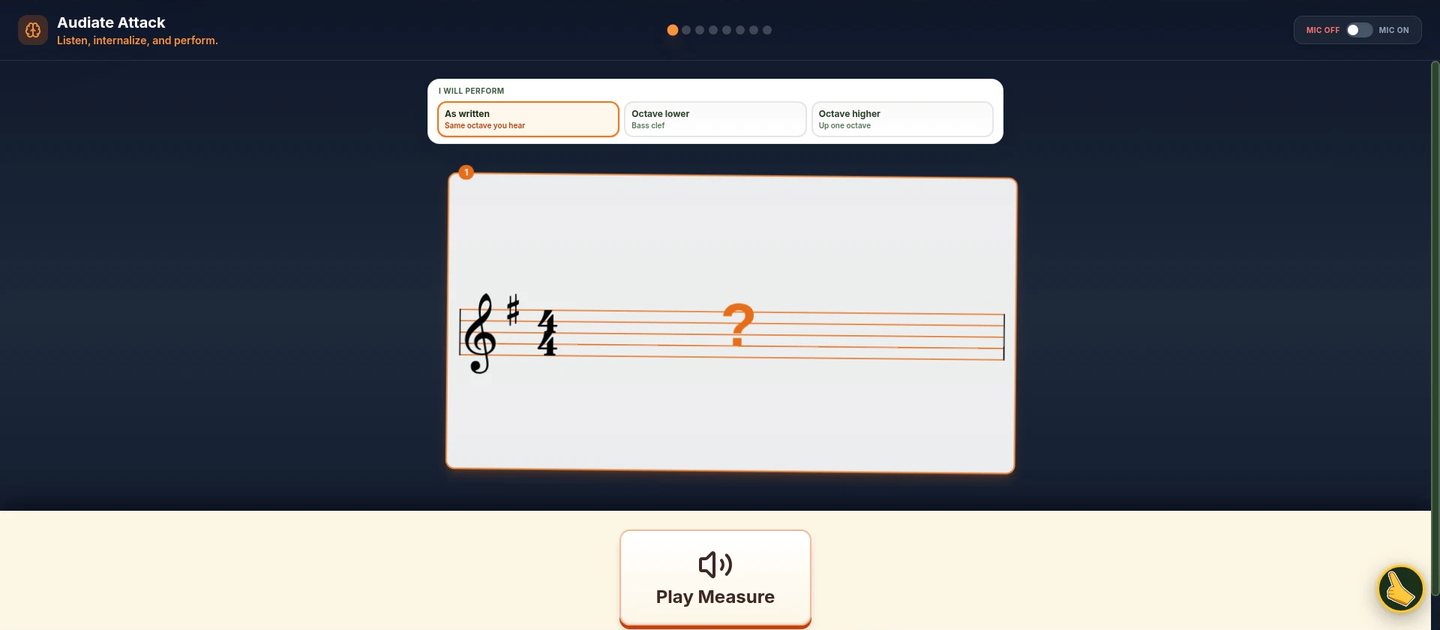
Audiate Attack returns to notation. Singers see the notes, hear them inwardly, and then sing. Adjustable playback and accuracy settings let you control how much support and precision the task requires. These three activities build the internal hearing that makes an uninterrupted sight-reading attempt possible.
How SightReadQuest helps
SightReadQuest brings the sequence onto one screen without replacing the teacher's judgment. Generate fresh material for a voice part and range, use Regenerate for another attempt, and show solfege labels only while singers need them. Play Tonic and the metronome establish the same starting conditions each time.
Flash Mode and Memory Mode develop recall. Echo Notate connects hearing with notation. Audiate Attack builds the bridge from seeing a phrase to singing it. Live mic grading gives individual feedback without requiring the teacher to diagnose every note from across the room.
Students join with a class code and do not need an email address. The 10-day free trial includes 100 students with no card required. SightReadQuest pricing includes a teacher license and optional student packs, so you can try a few short checks before making individual accounts part of the routine.
For the theory language behind the reading process, ThreeMinuteTheory.com choir lessons offer another short classroom resource. And when voices need a focused start before reading, these free choir vocal warmups can prepare singers without adding another plan to your desk.
For a tool shortlist that pairs with this routine, see the best sight-singing apps for middle school choir.
Frequently Asked Questions
How often should middle school choir practice sight-singing?
Short, frequent practice is more useful than an occasional long session. Aim for a few minutes in most rehearsals, with one clear focus such as rhythm, tonal center, or part independence. Keep examples manageable so singers regularly experience a successful first read.
Should beginners sight-sing with solfege, numbers, or neutral syllables?
Use the system you can teach consistently and that helps students hear relationships. Solfege is especially useful for connecting pitches with tonal function. A neutral syllable can work for rhythm isolation or a first read, but singers still need a way to understand where pitches belong.
When should a middle school choir sight-read in harmony?
Start in harmony after singers can complete simple unison examples with a steady pulse and mostly accurate pitch. Begin with two parts, let each section hear its line alone, and combine them briefly. Return to unison whenever adding parts removes the singers’ ability to think independently.
How can I assess sight-singing without testing every student in rehearsal?
Rotate short section and individual checks over several lessons. Listen for starting pitch, rhythm, tonal accuracy, and recovery. Device-based live grading can provide additional individual evidence, while the full choir continues silent study or audiation during a check.
Try SightReadQuest Free for 10 Days
Explore ThreeMinuteTheory.com Choir Lessons
Try These Free Choir Vocal Warmups