Why Five Minutes a Day Beats Thirty Minutes a Week
Sight-singing is a skill like a scale or a vocal warm-up. It grows from small, steady reps, not from one long session the week before festival. A choir teacher who gives five minutes a day gets about fifteen hours of reading across a school year, and every one of those minutes is spent with fresh music and a clear routine.
The routine below fits right after your vocal warm-up, while voices are already on and focus is still high. It is the same five steps every day, so singers stop wondering what is coming and start reading. Change the music, not the routine.
The Routine, Minute by Minute
Minute 1: Find home
Give the tonic, then sing the scale or a short tonal pattern on solfege: do-re-mi-re-do, do-mi-sol-mi-do, and down to low sol and back. Use hand signs if your singers know them. The goal is simple. Every singer should be able to find do, hum it, and come back to it after a few notes. Most choir sight-reading problems are tonal center problems wearing a disguise.
Minute 2: Rhythm first
Put up a short rhythm, two to four measures, and have the choir chant it in counts or on a neutral syllable while you keep the beat. Then chant it again at a slightly faster tempo. Rhythm read on its own is easier to fix than rhythm and pitch at once, and it hides inside text later if you skip it now.
Minute 3: Study period
Now show the actual reading example, four to eight measures per part. Give 30 to 45 seconds of silent study with the same checklist every day:
- What is the key, and where is do? (Or la, if it is minor.)
- What is the time signature, and what is the smallest note value?
- Where does my part start, and what is my first pitch?
- Where is the hardest spot? Find it, and audiate it.
Singers can quietly hum or whisper solfege during study if you allow it. Over time, push them toward doing it silently, which is what audiation actually is.
Minute 4: Read it once, no stopping
Give the tonic and starting pitches, count off, and read it on solfege from start to finish. No stopping, no fixing, no second tries mid-phrase. If a section gets lost, their job is to find the next downbeat and jump back in. This is the habit festival judges reward and the one rehearsals rarely practice.
Minute 5: Fix one spot and read again
Ask "Where did it fall apart?" Singers usually know. Isolate that one measure, sing it slowly on solfege, then read the whole example again. Celebrate the improvement out loud. The second read is often dramatically better, and that is the moment singers start to believe they can read.
A Weekly Rotation That Keeps It Fresh
The five steps stay the same, but the focus of the reading example can rotate through the week:
- Monday: new key. Spend a little extra time on minute 1 so the new do feels at home.
- Tuesday: rhythm focus. Pick a reading example where rhythm is the challenge and the pitches are mostly stepwise.
- Wednesday: ear day. Swap the read for a short dictation: sing a pattern, and singers sing it back on solfege or write it down.
- Thursday: memory read. Show the example briefly, hide it, then sing it back. This trains singers to read ahead instead of note by note.
- Friday: parts. Read in two or more parts at once, so singers practice holding their line against another one.
Friday is also a good day for a quick check. My post on how to assess sight reading without killing rehearsal time walks through a four-category rubric you can score from the podium.
Choir-Specific Tips That Make the Routine Work
Protect the tonal center
If the choir drifts flat across a read, have them stop on the last note and compare it to the tonic on the piano. Make "did we end on do?" part of every read. It builds the habit of checking.
Read on solfege before text
Text adds a third job on top of pitch and rhythm. Read on solfege first. When you add words later, chant the text in rhythm once before singing it.
Let every voice part read
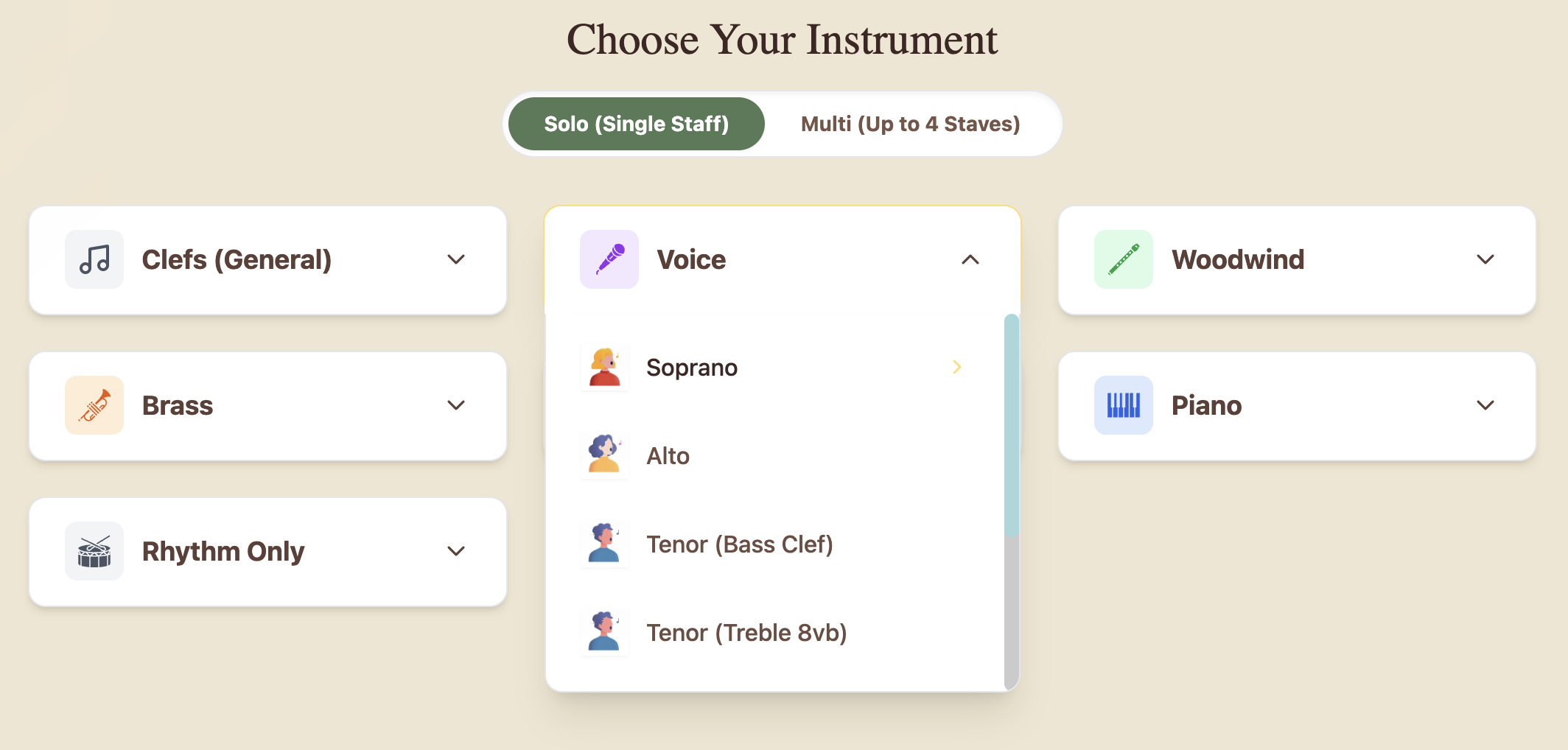
Do not always put the melody in the sopranos. Rotate who has the interesting line. Tenors and basses especially need practice reading in their own clef, and altos need practice holding a line that is not the tune.
Keep the level a little too easy
If a reading example falls apart in minute 4 three days in a row, it is too hard. Drop back a level. Success in the read is what makes singers willing to try the next one.
Two Mistakes That Quietly Kill the Routine
Skipping the study period when rehearsal is tight. The study period is the skill. If you only have three minutes, cut minute 2, not minute 3.
Only reading as a full choir. Full-choir reads hide weak readers behind strong ones. Once a week, let one section read alone while the others audiate along silently. It is the fastest way to hear who is really reading.
How SightReadQuest Fits This Routine
I built SightReadQuest so a choir teacher could run this routine without writing a new example every night. Here is where it fits.
Fresh examples for every voice part
Choose a voice part (soprano, alto, tenor in either clef, baritone, or bass) and a level, and SightReadQuest writes a new exercise in that clef and range. Press Regenerate for another one. You can let each student pick their own voice part, and the examples regenerate to that range. Turn on solfege syllables under the notes when singers are new to reading, and turn them off as they grow.
Play Tonic and live grading
Play Tonic gives the key center before minute 4, and the metronome sits right next to the staff. When singers read into the microphone, live mic grading shows right and wrong on the staff as they sing, so a flat note shows up as flat instead of being lost in the group.

Thursday memory reads, built in
Flash Mode shows a short burst of notes, hides it, then singers sing it back from memory. You can set how long the notes stay visible and how long they stay hidden. Memory Mode works in stages: singers study the phrase, it hides, and they sing it back, growing from one measure up to three. My post on improving sight-reading with Flash Mode goes deeper on why this works.
Wednesday ear days
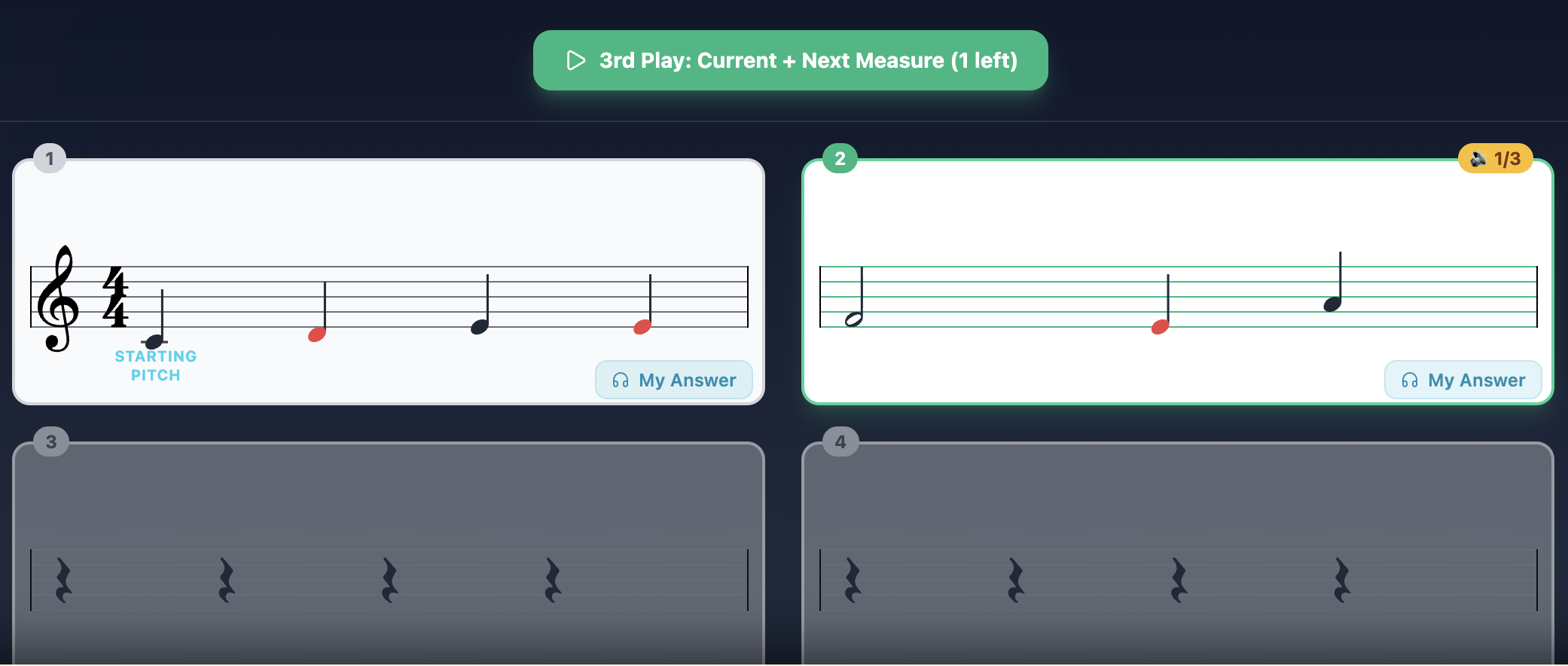
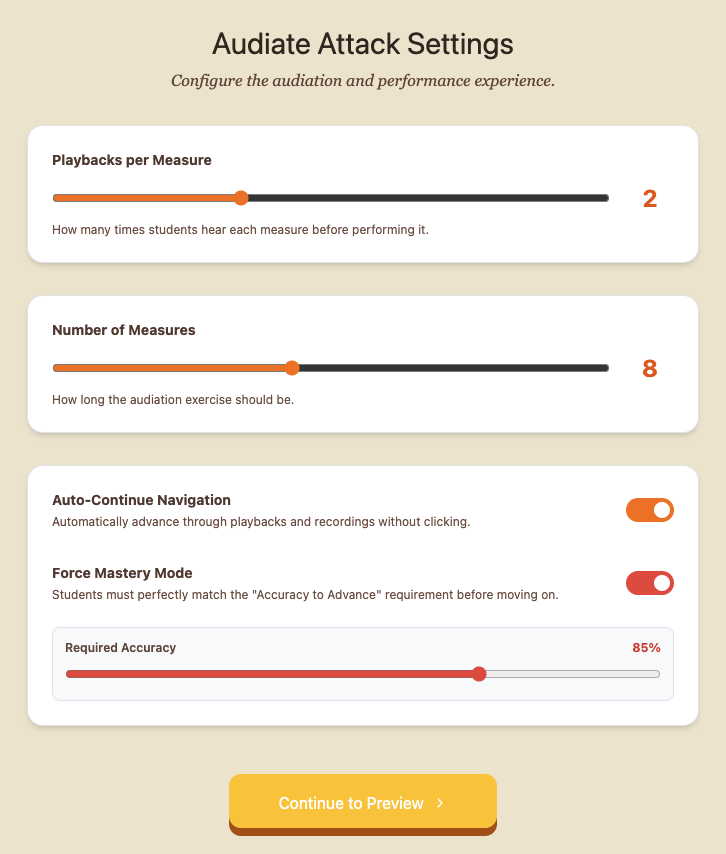
Echo Notate plays a phrase one measure at a time and singers write back what they heard. In Live Class Mode, student devices stay silent and you control the playback for the whole room. Audiate Attack flips it: singers see the notes, hear them inwardly, then sing, with their live pitch shown on the staff. You choose how many times they hear each measure and how accurate they need to be before moving on. There is more on this in ear training and dictation with Echo Notate and why audiation matters.
Singers join with a class code and need no email. The 10-day free trial includes 100 student accounts with no card, and pricing covers a teacher license plus optional student packs. If you also want a daily theory lesson for your choir, ThreeMinuteTheory.com includes a Choir Volume built for exactly that.
More in This Series
This is one of three daily routines. The band routine and the orchestra routine use the same five steps with instrument-specific changes. When festival gets close, the festival sight-reading prep plan builds on this routine week by week.
For more choir-specific detail, see how to use the sight-singing app for choir, or the shortlist of best sight-singing apps for middle school choir.
Frequently Asked Questions
How long should choir sight-reading practice be each day?
Five minutes a day is enough if it happens every day. A short, consistent routine with fresh music builds more reading skill over a school year than a long session once a week.
Should choirs sight-read on solfege or on text?
Start on solfege. Text adds a third job on top of pitch and rhythm. Once the read is steady on solfege, chant the text in rhythm once and then sing it.
What if my choir keeps going flat during sight-reading?
Treat it as a tonal center problem. Spend more time finding do before the read, and have singers check their final note against the tonic after every read so checking becomes a habit.
Can SightReadQuest make sight-reading exercises for each voice part?
Yes. Pick soprano, alto, tenor, baritone, or bass and a level, and SightReadQuest writes a new exercise in that clef and range. Students can also choose their own voice part, and the examples regenerate to fit.
Check Out This Leading Music Education Curriculum!