Sight Reading Is a Skill You Can Grow
Most advice on how to improve sight reading is written for pianists practicing alone. That is useful, but it misses most of the students I teach. A singer in the alto section, a second clarinet, or a cellist in the back stand is not reading alone. They are reading with forty other people, a conductor, and a beat that will not wait for them.
So this guide is for choir, band, and orchestra students, and for the teachers who run those rehearsals. The good news is the same for all of them: sight-reading is not a talent you either have or you do not. It is a skill, and it grows the same way a scale or a long tone grows, with short, steady, daily reps.
If you have never sight read before, start with the step-by-step guide right below. If you already read a little, the habits, the ensemble routine, and the section on reading ahead are where you will grow the most.
How to Sight Read Music: A Step-by-Step Guide for Beginners
Sight reading means performing a piece of music the first time you see it, without stopping. Here is the order I teach beginners in choir, band, and orchestra. Use the same steps on every read and they quickly become automatic.
- Pick a short, easy example. Four to eight measures, in your own clef and range, a little easier than what you can sing or play right now.
- Check the clef, key signature, and time signature. Say them out loud: "treble clef, one sharp, 3/4." Singers figure out where do is. Band students name their written key. String players name the finger pattern.
- Find the beat. Decide which note gets the beat and pick a slow tempo you can keep all the way through the hardest measure. Tap your foot or pat your leg to set it.
- Scan for the hard spots. Look for the trickiest rhythm, big leaps, accidentals, rests, and any repeats or endings. Point to them so they do not surprise you.
- Speak and clap the rhythm. Count it or use your class's rhythm syllables, and clap only where notes start. Keep the beat going through the rests.
- Find your first note and your home note. Singers hear the tonic and find the starting syllable. Instrumentalists finger the first note and check which notes the key signature changes.
- Practice it silently once. Singers hear it in their heads or whisper solfege. Wind players air-play with real fingerings. String players shadow-bow while the left hand fingers the notes.
- Count yourself in and perform it once without stopping. Give yourself a full measure of count-in. If you miss a note, keep going and catch the next beat.
- Check, fix one spot, and read it again. Find where it fell apart, fix just that measure, and read the whole example one more time. Then move on to new music. Reading the same example over and over turns it into rehearsal, not sight reading.
What to learn first if you are brand new
Sight reading sits on top of a few basic reading skills. If any of these feel shaky, spend a few minutes a day on them alongside your reading:
- The note names in your own clef.
- The basic note values and rests: whole, half, quarter, and eighth.
- What the time signature tells you about the beat.
- How a key signature changes certain notes all the way through the piece.
ThreeMinuteTheory.com has short video lessons and games on exactly these skills, including note-reading chapters for treble, bass, and alto clef. You can find it at ThreeMinuteTheory.com. Teachers deciding how their students should count can read my comparison of rhythm counting systems.
Your first two weeks
- Week one: One short example a day, about five minutes. Mostly stepwise notes and simple rhythms like quarter, half, and whole notes. Follow all nine steps every time, even when it feels slow.
- Week two: Add eighth notes, rests, and small skips, and try eight measures instead of four. Start shortening the study time a little, but keep the rhythm step.
After that, the goal is simple: new music, at the right level, almost every day.
How to Start Sight Reading: Six Habits to Build
The steps above are what you do on a single read. These six habits are what you build over weeks of reading, and they are where every good reader begins.
- Start below your level. Your first reads should feel a little too easy. Success is what makes you want to read again tomorrow.
- Check the key and the time signature first. Every time, before the first note. Singers find do. Instrumentalists name their written key and finger pattern.
- Read the rhythm before the pitches. Count it, clap it, or chant it on one note. Rhythm is the skeleton of the read, and it is easier to fix on its own.
- Find home. Know where the tonic is and come back to it. Most wrong notes in an ensemble read are really tonal center or key signature problems.
- Keep going. When you miss a note, do not stop. Find the next downbeat and jump back in. This is the single most important ensemble reading habit.
- Look ahead. Try to keep your eyes a beat or two ahead of what you are playing or singing. More on this below, because it is where most readers get stuck.
How to Sight Read Better: The Ensemble Version
Once the basics are in place, the next step is to make every read follow the same routine. Here is the one I teach to choir, band, and orchestra students:
- Study before you play. Use the first 30 to 60 seconds to scan the key, meter, road map (repeats, endings, key changes), and the hardest rhythm.
- Rehearse in silence. Singers audiate or whisper solfege. Wind players air-play with real fingerings. String players shadow-bow with the left hand fingering the notes.
- Read once without stopping. One pass, start to finish, together.
- Fix one spot, then read again. Find where it fell apart, fix just that measure, and read the whole example one more time.
Teachers, this fits in five minutes at the start of rehearsal. I wrote it out minute by minute for each ensemble: the 5-minute sight-reading routine for choir, the routine for band, and the routine for orchestra.
Why Students Struggle With Reading Ahead
One of the greatest weaknesses in early music reading is that students read one note at a time. They react instead of anticipate. They hesitate, panic after a mistake, and lose the pulse. Every choir teacher knows the frustration of an ensemble that stops the moment a single note goes wrong, and every band and orchestra director has heard the same thing happen at a key change.
Strong readers are not surviving note by note. They see phrases, patterns, rhythms, and melodic motion before they happen. Reading ahead is a habit, and like any habit, it can be trained on purpose.
Train Reading Ahead With Flash Mode
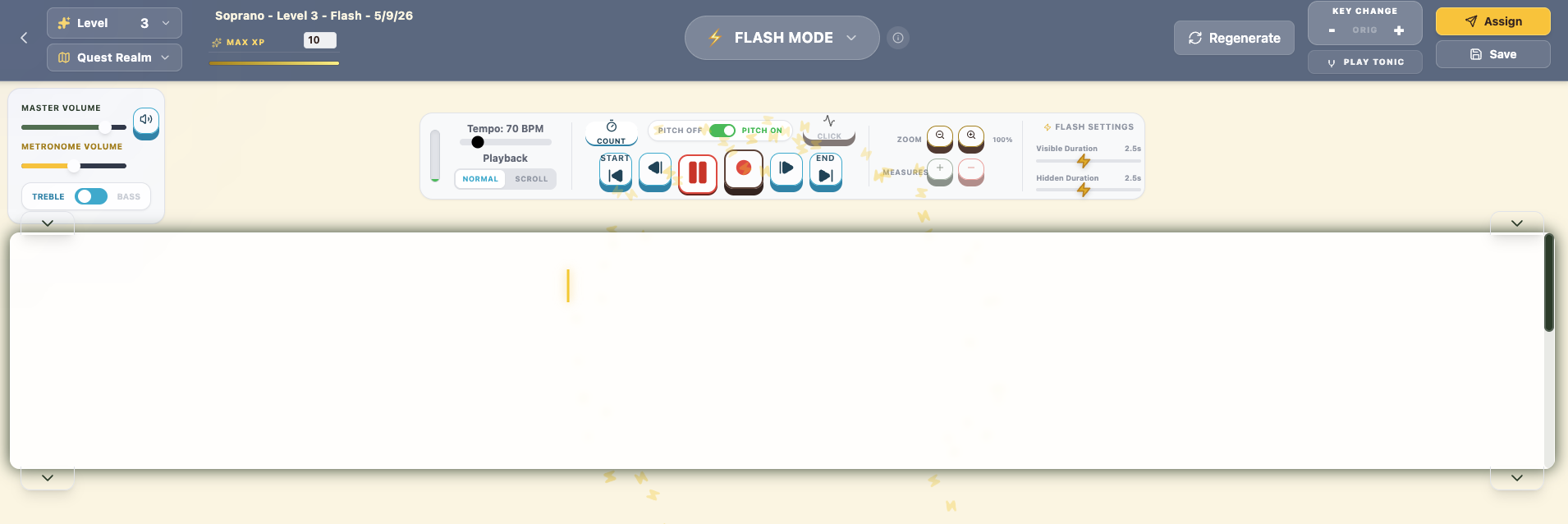
Flash Mode is a SightReadQuest challenge where the notation flashes on and off during playback. The music keeps moving even while the notes are hidden, so students have to keep going while relying on reading ahead, musical memory, internal pulse, and audiation.
The first time the notation disappears, most students freeze. That moment is incredibly revealing. They realize they were not reading ahead at all. After a few rounds, something changes: they start looking ahead on purpose, preparing for the next rhythm and the next leap before it arrives. That habit carries over to regular sheet music outside the app.
A Better Way to Build Audiation
Audiation is the ability to hear music in your head before or while you perform it. When the notation disappears, students have to keep hearing the music internally to stay accurate. That builds a stronger internal pulse, better musical memory, smoother rhythmic continuity, and more confidence in performance.
The Baseball Parallel: Training With Resistance
Think of a batter swinging with a weighted donut in the on-deck circle. Nobody hits with the weight on, but practicing with extra resistance makes the real swing feel quicker. Flash Mode works the same way. Reading with disappearing notation is harder on purpose, so when students go back to normal music, reading ahead suddenly feels easier.
Adjustable for Every Ensemble
Teachers can set how long the notes stay visible and how long they stay hidden. Beginners can start with long visible stretches, and advanced readers can take on quick flashes. That makes Flash Mode usable in choir, band, orchestra, and private lessons.
Tips for Choir, Band, and Orchestra Students
Choir
Choral reading lives and dies on tonal center. Find do before every read, and check your last note against the tonic when you finish. Read on solfege before you add text, because words add a third job on top of pitch and rhythm. If you are brand new, start with stepwise melodies in a comfortable key, and sing the tonic before every read.
Band
Say your written key out loud before the read. Concert B-flat is C for clarinets and trumpets and G for alto saxes. Air-play with real fingerings during study, and remember that an accidental lasts through the measure. If you are brand new, start with reads that use only notes you already know how to finger, and say the note names before you play.
Orchestra
Name the finger pattern before you play, check the first bow direction, and look for shifts and string crossings during study. Violas and cellos, practice alto, tenor, and treble clef on purpose, so your first tenor clef read is not in a concert piece. If you are brand new, start with reads that stay in one finger pattern, and play the rhythm on an open string before you add the left hand.
How Long Does It Take to Get Better at Sight Reading?
This is the question I hear most, and the honest answer is that it depends far more on how often you read than on how long. A student who reads for five minutes every day with fresh music will usually notice a difference within a few weeks: fewer stops, steadier pulse, and less panic at the first wrong note. Real fluency, where reading feels normal instead of scary, takes months of steady practice and keeps growing for years.
Three things speed it up:
- New music every time. Rereading the same example is rehearsal, not sight-reading.
- The right level. Slightly easy and daily beats very hard and occasional.
- Feedback. Knowing which notes and rhythms went wrong, right away, so the next read is better.
For Teachers: Make It Part of Every Rehearsal
The fastest way to improve an ensemble's sight-reading is to stop treating it as a once-a-month event. A five-minute routine at the start of rehearsal, a quick check once or twice a week, and steady new material will do more than any reading day before festival. If you want a simple way to measure progress without losing rehearsal time, my post on how to assess sight reading in rehearsal walks through a four-part rubric. When contest season gets close, the festival sight-reading prep plan builds these habits into six weeks.
How SightReadQuest Helps Students Improve Sight Reading
I built SightReadQuest so ensemble students could get daily reading reps with real feedback, and so teachers would not have to write a new example every night. Here is how it maps onto everything above.
Fresh music for every part
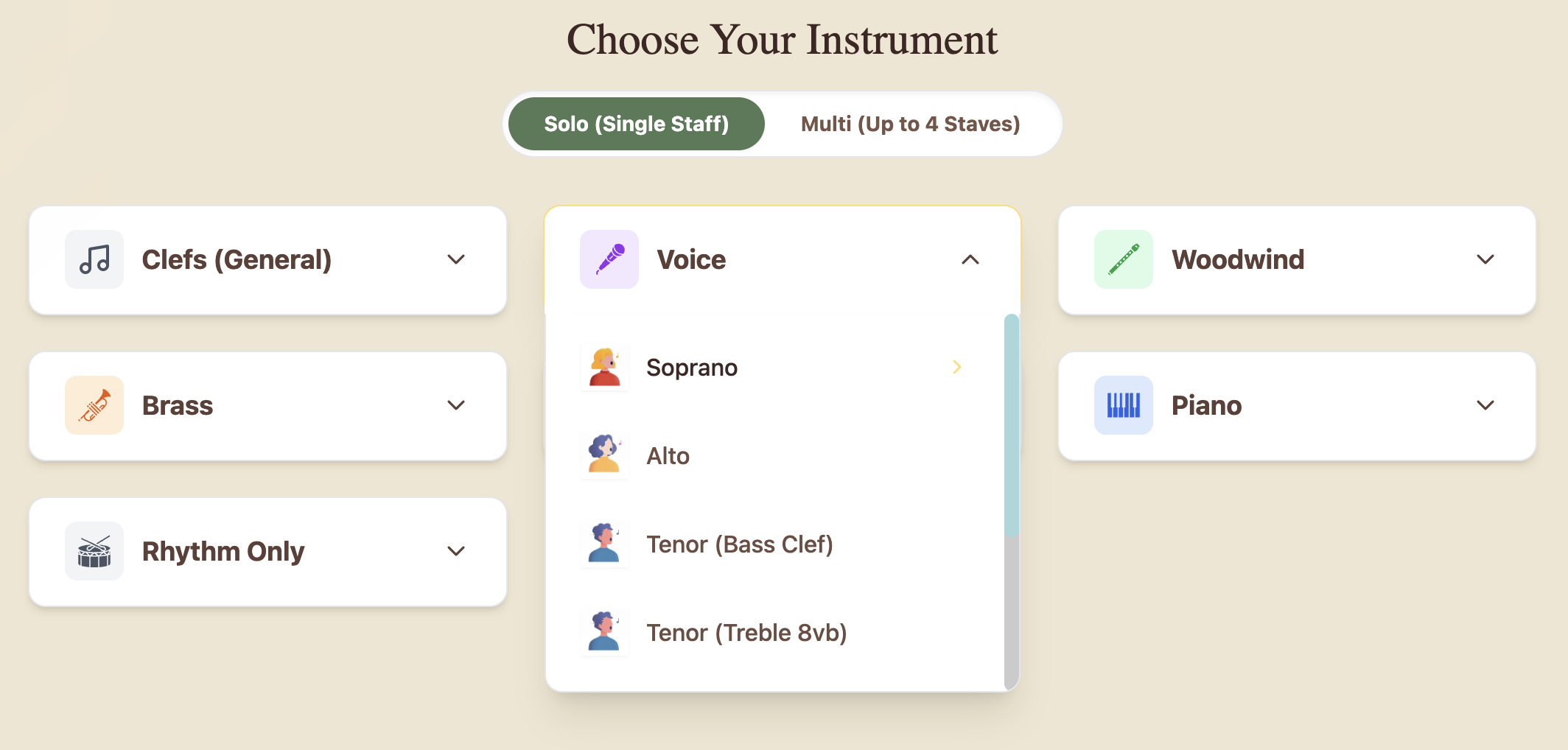
Pick a voice part or instrument and a level, and SightReadQuest writes a new exercise in that clef and range: soprano through bass, woodwinds, brass, strings, and rhythm-only reading for percussion. Set the key, the time signature, and which rhythms are allowed, then press Regenerate for another one. Play Tonic gives the key center before the read.
Feedback while you perform
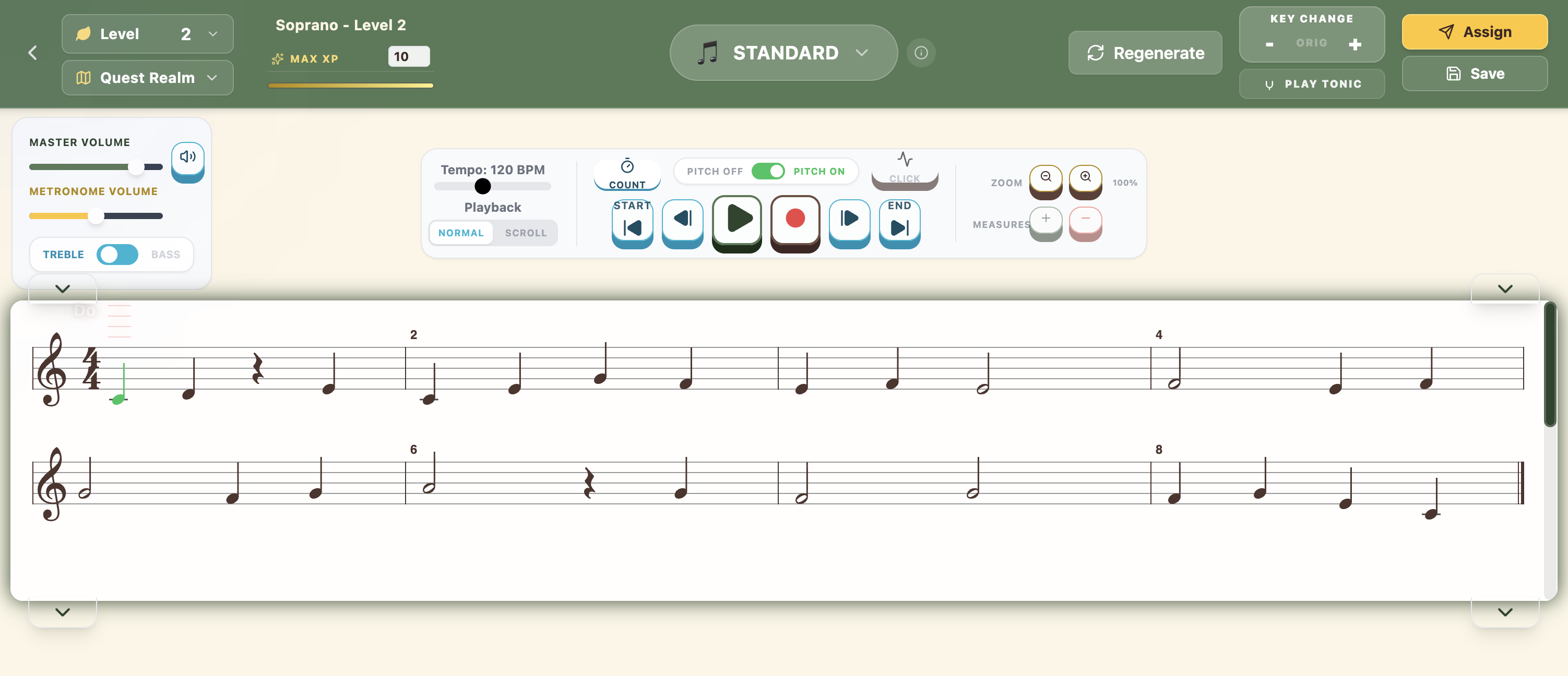
Students sing or play into the microphone, and live mic grading marks right and wrong on the staff as they go. A flat note shows up as flat instead of getting lost in the section. Afterward, students can listen back to their own take and try again.

A gentle start for beginners
For students who are just starting, SightReadQuest begins at Level 1 and lets you take the hard parts one at a time. Rhythm Only exercises start with whole, half, and quarter notes, so students can practice the rhythm step by itself and clap or tap it with right and wrong shown on the staff. For pitched reading, teachers can turn on note labels, solfege or letter names, on a percentage of the notes or on the tonic only, then lower them as students gain confidence. Play Tonic gives singers their home note, the count-in gives a full measure of beats, and the tempo control lets students start slow.
Modes that train the hard parts
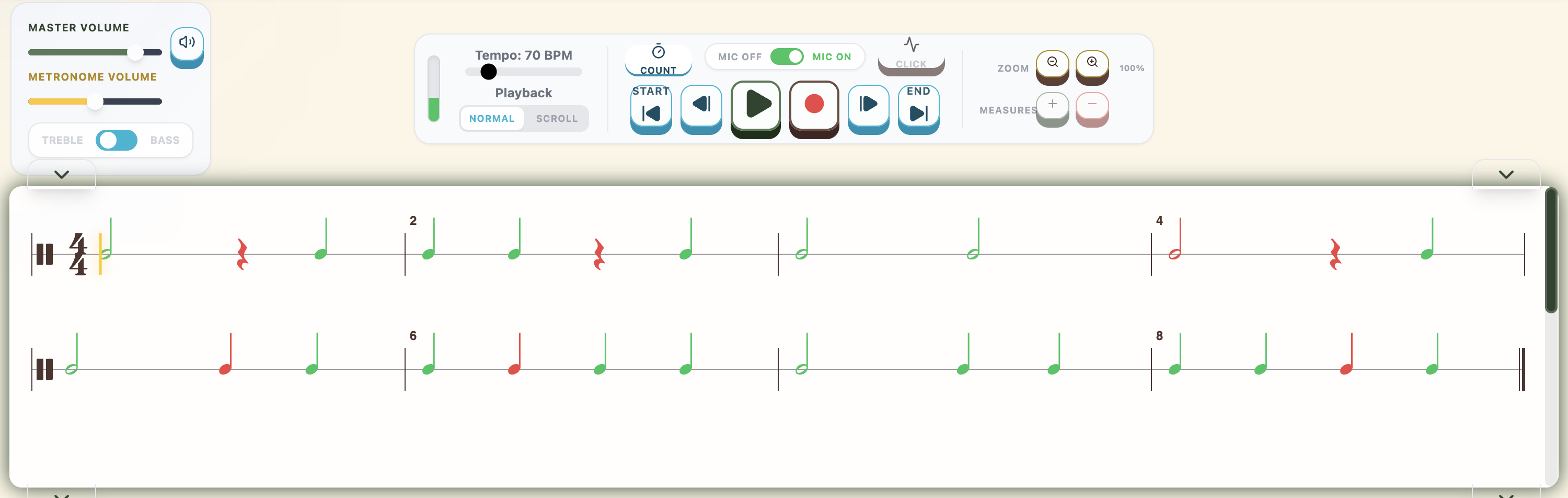
Flash Mode trains reading ahead. Memory Mode has students study a phrase, hide it, and perform it back in stages that grow from one measure to three. Rhythm practice lets students clap or play a rhythm into the microphone with right and wrong shown in green and red, at a tempo you choose. Audiate Attack builds inner hearing before the first note. There is more on that in why audiation matters in music class and how to teach rhythm with rhythm practice.
Data for the teacher
Scores and recordings go to your gradebook. The assignment view shows the problem measure, the spot with the most mistakes across the class, so you know exactly what to fix in tomorrow's warm-up. Live Class Read pushes the same exercise to every device, and with an ensemble score each student gets their own part.
Students join with a class code and do not need an email address. The free 10-day trial includes 100 student accounts and needs no card, and pricing lists the teacher license and student packs. If you are comparing tools, here is how SightReadQuest compares with Sight Reading Factory. For short daily theory lessons that support all of this in your music class, take a look at ThreeMinuteTheory.com.
If you are comparing classroom tools, start with why SightReadQuest and the SightReadQuest vs Sight Reading Factory page.
Frequently Asked Questions
How do you sight read music step by step?
Pick a short, easy example. Check the clef, key signature, and time signature. Find the beat and choose a slow tempo. Scan for hard spots, then speak and clap the rhythm. Find your first note and home note, practice silently once, count yourself in, and perform it once without stopping. Then fix one spot and read it again.
What should I look at first when sight reading?
The clef, the key signature, and the time signature, every time, before the first note. Then look for the hardest rhythm, big leaps, accidentals, rests, and any repeats or endings.
How do I start sight reading?
Start with music a little below your level. Before every read, check the key and time signature, count the rhythm, and find the tonic. Then read once without stopping. Five minutes a day with new music is the best way to begin.
How long does it take to get better at sight reading?
With five minutes of daily reading on fresh music, most students notice fewer stops and a steadier pulse within a few weeks. Fluency takes months of steady practice and keeps growing for years. How often you read matters more than how long.
How can I sight read better in choir, band, or orchestra?
Use the same routine every time: study the key, meter, road map, and hardest rhythm, rehearse it silently, read once without stopping, then fix one spot and read again. Keep going after mistakes and try to keep your eyes a beat ahead.
How do you teach sight reading effectively?
Teach students to read ahead and recognize patterns rather than individual notes. A short daily routine with fresh music, plus tools like Flash Mode that hide the notation, helps students internalize the music and anticipate upcoming phrases.
What is audiation in music education?
Audiation is hearing and understanding music in your mind when the sound is not physically present. It is a foundation of sight-reading, because it lets musicians hear the notes on the page before they perform them.
Why do students struggle to read music ahead?
Most students are reactive readers who focus only on the note they are playing right now. That leads to hesitation and stops. Practicing with disappearing notation trains the eyes to take in what comes next and hold it in short-term memory.
Can Flash Mode be used in choir, band, and orchestra rehearsals?
Yes. Teachers set how long the notes stay visible and hidden, so it works for beginning and advanced readers in choir, band, and orchestra. It helps students build independent reading instead of following the person next to them.
Check Out This Leading Music Education Curriculum!