Why Five Minutes a Day Beats a Reading Day Once a Month
Band directors know the feeling. You hand out a new piece, and the first read sounds like a fire drill. Students stop at the first accidental, the clarinets drop out at the key change, and percussion is still looking for the right mallets. The fix is not one big reading day. It is a short sight-reading routine every rehearsal, so reading becomes as normal as tuning.
The routine below fits right after your long tones and before you start the concert music. It takes five minutes, it is the same five steps every day, and it works for a beginning band or a top wind ensemble. Change the music, not the routine.
The Routine, Minute by Minute
Minute 1: Set the key
Play the concert scale for today's reading example, or a short pattern in that key. Then ask each section to say its written key out loud. "Concert B-flat" means C for clarinets and trumpets, G for alto saxes, and B-flat for flutes and low brass. This takes fifteen seconds and prevents half of the wrong notes you would hear in minute 4.
Minute 2: Rhythm on one pitch
Put up two to four measures of rhythm. Have the band count it and clap it once, then play it on a single concert pitch. Percussion plays it on snare or pad. When the rhythm is solid on one note, the real read has a foundation.
Minute 3: Study period with air-play
Show the reading example, four to eight measures per part, and give 45 to 60 seconds of study. Use the same checklist every day:
- Written key signature and any accidentals. Remember that an accidental lasts through the measure.
- Time signature, tempo marking, and the smallest note value.
- The road map: repeats, first and second endings, and any tempo or meter change.
- Articulations and dynamics, especially anything sudden.
Then air-play it. Students finger the notes (or move slides) in tempo while you or a section leader counts aloud or hisses the rhythm. Real fingerings, not loose wiggling. Percussion counts rests out loud and taps the rhythm on their knees.
Minute 4: Read it once, no stopping
Count off and play it from start to finish. No stopping and no restarting. If a player gets lost, their job is to find the next downbeat and come back in. This is the single most important habit in ensemble sight-reading, and it only grows if you protect it every day.
Minute 5: Fix one spot and read again
Ask the band where it fell apart. Isolate that measure, play it slowly once, then read the whole example again. The second read is almost always better, and saying so out loud builds the confidence that makes the next day's read better too.
A Weekly Rotation That Keeps It Fresh
Keep the five steps, and rotate the focus of the reading example:
- Monday: new key. Pick a key you have not read in for a while and give extra time to minute 1.
- Tuesday: rhythm day. Choose a reading example that is rhythmically busy but stays on easy pitches. Let percussion lead the count.
- Wednesday: ear day. Play a short pattern on concert pitch and have the band echo it back, or try a quick dictation.
- Thursday: flash read. Show the example briefly, hide it, and play it back. This trains eyes to read ahead.
- Friday: parts day. Read in harmony instead of unison, so each section practices holding its own line.
Friday is also a great day for a quick check. My post on how to assess sight reading without killing rehearsal time has a four-category rubric you can score by section from the podium.
Band-Specific Tips That Make the Routine Work
Make transposition automatic
Saying the written key out loud every day sounds small, but it is how young players stop thinking "concert B-flat" while reading a part in C. Horn players especially need this habit.
Give percussion a real job
Percussion reading is still reading. Have them read the same rhythm on snare or pad, count rests aloud during study, and check instrument assignments before the read. A percussion section with a job is a quiet percussion section.
Start in unison, then split
Early in the year, use a unison or octave line so every section reads the same melody. Move to parts once the routine is automatic.
Keep it a little too easy
If the read falls apart in minute 4 three days running, drop a level. A band that succeeds in sight-reading wants to do it again tomorrow.
Three Mistakes That Quietly Kill the Routine
Skipping the study period when you are short on time. The study period is the skill. If you only have three minutes, cut minute 2, not minute 3.
Stopping the band to fix a wrong note. Every time you stop mid-read, you teach the band that stopping is normal. Save the fix for minute 5.
Only reading as a full band. Full-band reads hide weak readers behind strong ones. Once a week, have one section read alone while the others air-play along. You will learn more in thirty seconds than in a whole tutti read.
How SightReadQuest Fits This Routine
The hardest part of a daily routine is having fresh music every day in every transposition. That is the part SightReadQuest handles.
Parts for every chair
SightReadQuest writes parts for flute, oboe, clarinet, bass clarinet, alto, tenor, and bari sax, bassoon, trumpet, French horn, trombone, euphonium, and tuba, each in the right clef and key for that instrument. Students can pick their own instrument and the exercise is written for it. The Rhythm Only option gives percussion a reading line of their own.
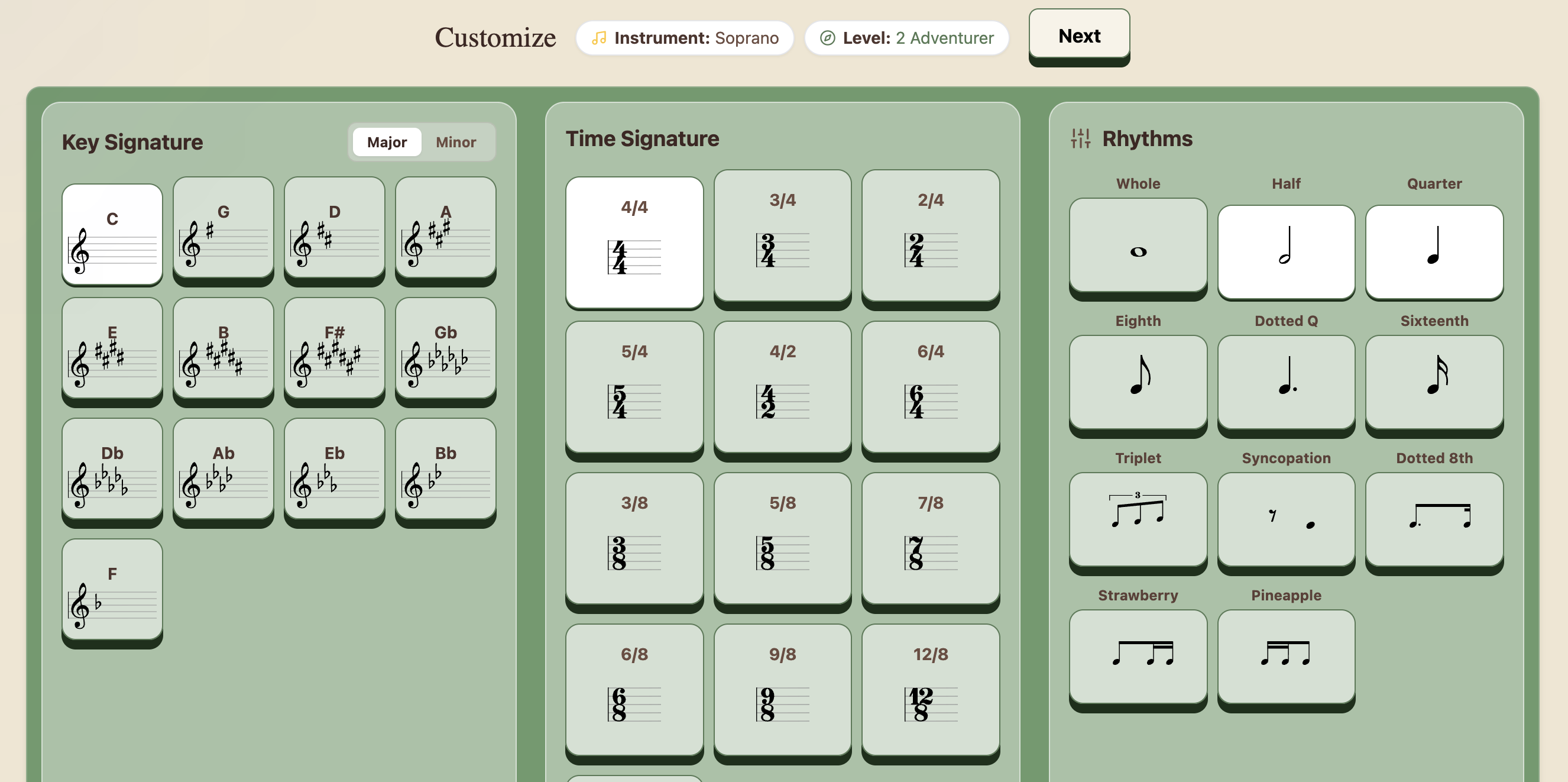
You choose the key, meter, and rhythms
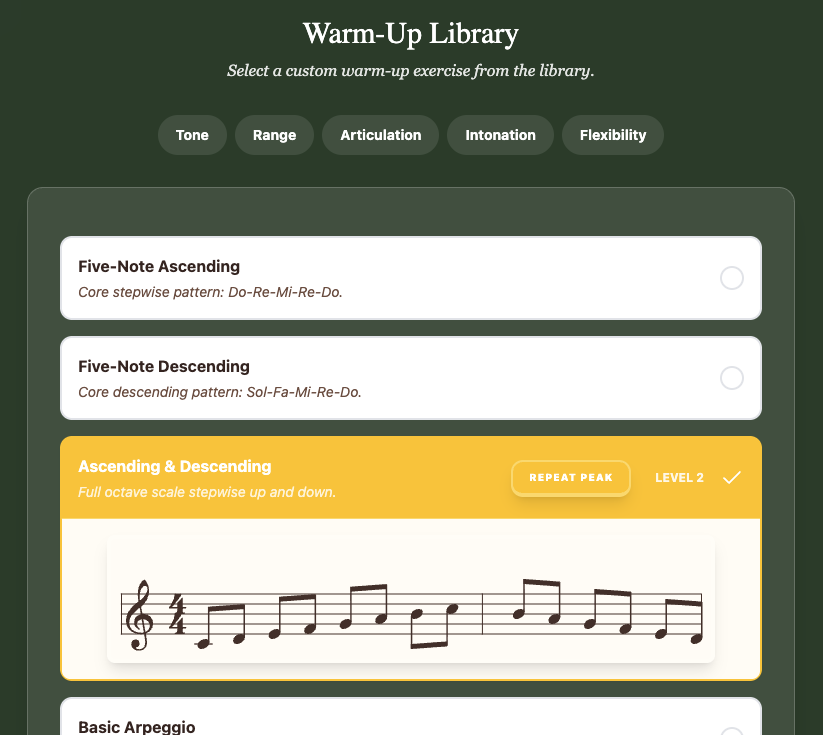
Set the key signature, time signature, and which rhythms are allowed, from whole notes up to syncopation and dotted eighths. Then press Regenerate for a new example at the same level. For minute 1, the Warm-Up Library has ready-made patterns sorted by tone, range, articulation, intonation, and flexibility.
Rhythm days with real feedback
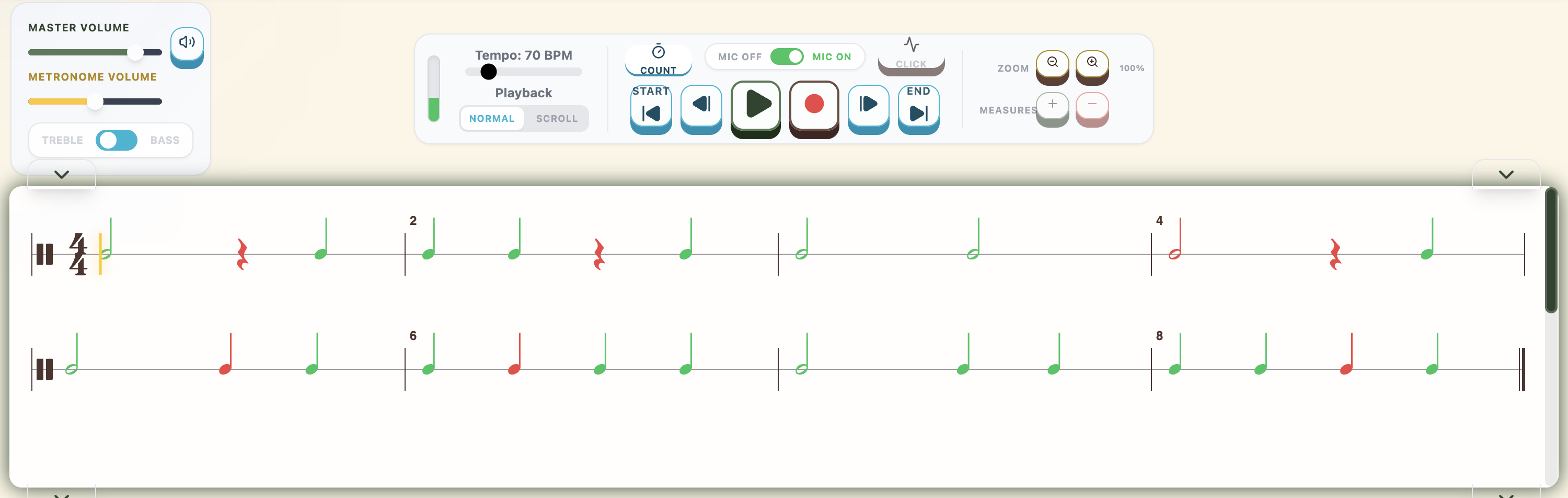
Rhythm practice lets students clap or play a rhythm into the microphone, and right and wrong show on the staff in green and red. You control the tempo, so a beginning band can start slow. My post on teaching rhythm with rhythm practice covers how I use it.
Thursday flash reads and live grading
Flash Mode shows a short burst of notes, hides it, and students play it from memory. When players read into the microphone, live mic grading marks right and wrong on the staff as they go, and scores and recordings land in your gradebook.
Live Class Read for the whole band
Live Class Read pushes the same sight-reading exercise to every student device at once. Choose an ensemble score and each student gets their own part, in their own transposition, from the same piece.
Students join with a class code and need no email. The 10-day free trial includes 100 student accounts with no card, and pricing lists the teacher license and student packs. If you want short daily theory lessons to go with this, the ThreeMinuteTheory.com band page shows how a three-minute lesson fits right after warm-ups.
More in This Series
This routine has two siblings: the choir routine and the orchestra routine. When contest season gets close, the festival sight-reading prep plan builds on these five minutes week by week.
For the full band product walkthrough, see the sight-reading app for band page. The wider classroom story is on why SightReadQuest.
Frequently Asked Questions
How much rehearsal time should a band spend on sight-reading?
Five minutes a day is enough if it happens every rehearsal. A short routine with new music every day builds more reading skill than a long reading session once a month.
How do I help band students with transposition when sight-reading?
Have every section say its written key out loud before the read. It takes fifteen seconds and makes the link between concert pitch and written pitch automatic over time.
What should percussion do during band sight-reading?
Give them a real reading job. They can read the same rhythm on snare or pad, count rests aloud during the study period, and check instrument assignments before the read.
Can SightReadQuest write sight-reading parts for band instruments?
Yes. It writes parts for woodwinds, brass, and rhythm reading, each in the right clef and key for the instrument. With Live Class Read and an ensemble score, each student gets their own part of the same exercise.
Check Out This Leading Music Education Curriculum!