Why Five Minutes a Day Works for Strings
String players have more to think about on a first read than almost anyone. Notes and rhythms, yes, but also finger patterns, bow direction, string crossings, shifts, and for violas and cellos, more than one clef. That is exactly why sight-reading has to be a daily habit in orchestra and not an occasional event. Each piece of the puzzle gets easier with reps, and five minutes a day gives you a lot of reps.
The routine below fits right after tuning, while instruments are in tune and attention is fresh. It is the same five steps every day for a beginning string class or an advanced chamber orchestra. Change the music, not the routine.
The Routine, Minute by Minute
Minute 1: Set the key and the finger pattern
Play the scale for today's reading example, one octave, slurred two to a bow or separate. Then name the finger pattern out loud. "D major: high 2 on the A and E strings." For violas and cellos, name the pattern on their strings too. Most wrong notes in an orchestra read are finger pattern mistakes, and naming the pattern first prevents them.
Minute 2: Rhythm on one note
Put up two to four measures of rhythm and have the orchestra play it on the tonic or an open string. Decide bow distribution together: where you need a lot of bow, where you need a little, and where the up-bows go. Beginners can pizz it first. When rhythm and bow are solid on one note, the real read has a foundation.
Minute 3: Study period with shadow bowing
Show the reading example, four to eight measures per part, and give 45 to 60 seconds of study with the same checklist every day:
- Key signature, finger pattern, and any accidentals.
- Time signature, tempo, and the smallest note value.
- Clef. Violas confirm alto clef, cellos check for tenor clef, basses remember they sound an octave lower than written.
- Bowings: does it start up-bow or down-bow, where are the slurs, and is there a hooked bowing or a retake?
- Shifts and string crossings that could trip the section.
Then shadow-bow it in tempo, bows just above the string, left hand fingering the notes, while you count aloud. It is the orchestra version of air-playing, and it catches bowing problems before they happen.
Minute 4: Read it once, no stopping
Count off and play it start to finish. No stopping to fix intonation, no restarting a phrase. If a player gets lost, the job is to find the next downbeat and come back in. Intonation matters, but during the read the priority is to keep going together.
Minute 5: Fix one spot and read again
Ask the orchestra where it fell apart. It is usually a shift, a string crossing, or a bowing that came out backwards. Fix that one measure slowly, then read the whole example again and point out how much better the second read sounded.
A Weekly Rotation That Keeps It Fresh
- Monday: new key and finger pattern. Spend extra time on minute 1.
- Tuesday: rhythm and bow day. Pick a reading example where bow distribution is the challenge.
- Wednesday: ear and intonation day. Play a short pattern and have the orchestra echo it back, matching pitch, or try a quick dictation.
- Thursday: memory read. Show the example briefly, hide it, and play it back so eyes learn to read ahead.
- Friday: parts day. Read in parts instead of unison so each section holds its own line.
Friday works well for a quick check, too. My post on how to assess sight reading without killing rehearsal time has a four-category rubric you can score by section.
Orchestra-Specific Tips That Make the Routine Work
Give violas and cellos clef reps
Violas read alto clef all day, but they rarely sight-read in treble when the part goes high. Cellos need tenor clef practice long before they meet it in repertoire. Rotate clefs on purpose so nobody's first tenor clef read happens in a concert piece.
Do not let intonation stop the read
String players are trained to fix pitch instantly, which is great in rehearsal and a problem in sight-reading. Teach them that during the read, a slightly out-of-tune note is fine and a stopped bow is not. Fix intonation in minute 5.
Let basses be basses
Basses often double the cellos an octave lower. Have them check where they double and where they split during study, so they are not surprised in the middle of the read.
Keep it a little too easy
If the read falls apart in minute 4 three days running, drop a level. Confidence in the read is what makes players willing to try a harder one.
Three Mistakes That Quietly Kill the Routine
Skipping the study period when rehearsal runs long. The study period is the skill. If you only have three minutes, cut minute 2, not minute 3.
Stopping the orchestra for every bowing problem. If half the section ends up on the wrong bow, let them finish and fix it in minute 5. Stopping mid-read teaches players that stopping is normal.
Only reading as a full orchestra. Tutti reads hide weak readers behind strong ones. Once a week, have one section read alone while the others shadow-bow along. Thirty seconds of a single section tells you more than a whole tutti read.
How SightReadQuest Fits This Routine
A daily routine needs a daily supply of new music in four clefs. That is the part SightReadQuest takes off your plate.
Parts for every section, in the right clef
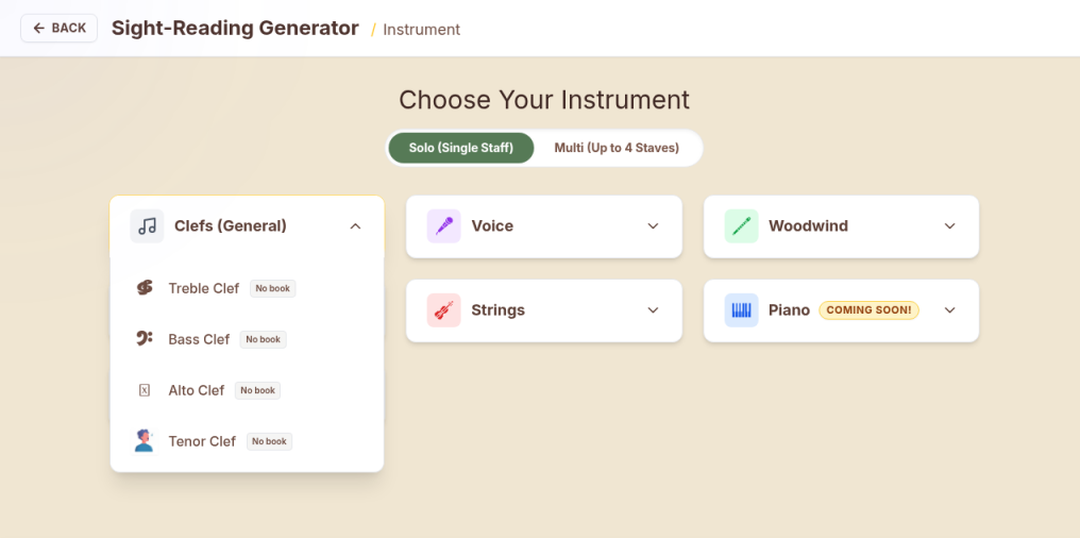
SightReadQuest writes parts for violin, viola, cello, and double bass, each in the right clef and key, and you can also choose alto or tenor clef reading on its own. Students can pick their own instrument, and the exercise is written for it. Pick a level, set the key and time signature, and press Regenerate for a new example.
Intonation work that shows on the staff
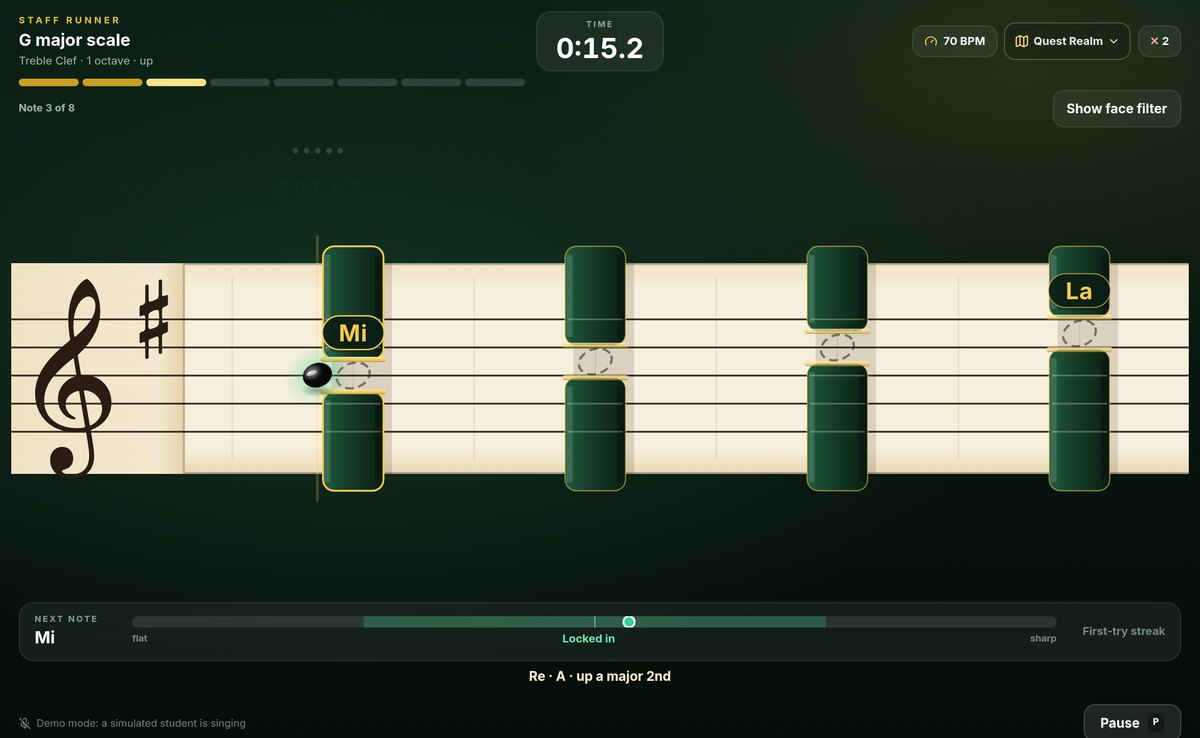
Staff Runner is a great Wednesday activity for strings. Live pitch has to stay on the note, and a tuning meter shows whether the student is flat, sharp, or locked in. A miss comes with a quick coaching note, like "A little flat. Lift up into the gap." Play Tonic gives the key center first, and the metronome sits right next to the staff.
Rhythm and bow days with feedback
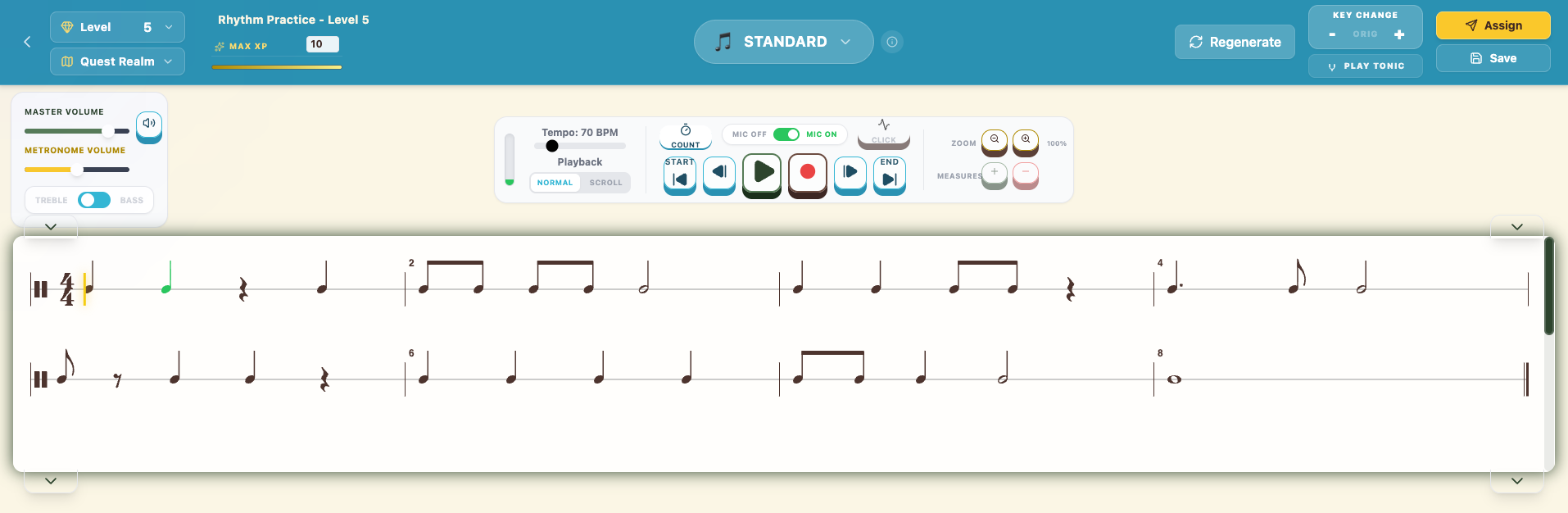
Rhythm practice lets students play a rhythm into the microphone, and right and wrong show on the staff in green and red. Set the tempo where your players are. My post on teaching rhythm with rhythm practice goes into more detail.
Thursday memory reads and Friday parts
Memory Mode lets students study a phrase, hide it, and play it back in stages that grow from one measure to three. For parts day, Live Class Read pushes the same exercise to every student device, and with a string orchestra ensemble score, each student gets their own part: Violin I, Violin II, Viola, Cello, or Double Bass. When students read into the microphone on an assigned round, live mic grading marks right and wrong as they play, and scores and recordings go to your gradebook.
Students join with a class code and need no email. The 10-day free trial includes 100 student accounts with no card, and pricing lists the teacher license and student packs. For daily theory that fits right after tuning, the ThreeMinuteTheory.com orchestra page covers three-minute lessons, including an alto clef chapter for violists.
More in This Series
This routine has two siblings: the choir routine and the band routine. When festival gets close, the festival sight-reading prep plan builds on these five minutes week by week.
For the full orchestra product walkthrough, see the sight-reading app for orchestra page.
Frequently Asked Questions
How often should an orchestra practice sight-reading?
Every rehearsal, for about five minutes. Short daily reads build finger pattern, bowing, and clef reading habits much faster than an occasional long session.
What should string players check before sight-reading?
Key signature and finger pattern, time signature, clef, the starting bow direction and slurs, and any shifts or string crossings. Then shadow-bow the passage in tempo before playing it.
Should orchestra students stop to fix intonation while sight-reading?
No. During the read, keeping the bow moving matters more than fixing a slightly out-of-tune note. Fix intonation right after, in the one-spot fix before the second read.
Does SightReadQuest support viola alto clef and cello tenor clef?
Yes. It writes parts for violin, viola, cello, and double bass in the right clef, and you can also choose alto or tenor clef reading on its own.
Check Out This Leading Music Education Curriculum!