The Real Problem: Assessment Eats Rehearsal
Most of us agree that sight-reading matters. We also know what happens the minute we start hearing students one at a time. The rest of the room starts talking, the clock keeps moving, and the concert music sits untouched on the stands. So sight-reading assessment gets pushed to "later," and later turns into the week before festival.
It does not have to work that way. A useful sight-reading check can fit inside five minutes, give you real information, and feed straight back into what you rehearse that same day. The trick is to keep it short, keep it regular, and keep the scoring simple enough that you can do it while you are still standing on the podium.
Here is the system I use with choir, band, and orchestra students. Take whatever helps and leave the rest.
Score Four Things, and Only Four
If your rubric has ten categories, you will never use it during class. I score four things on a 1 to 3 scale, and that is it:
- Pitch. Are the notes (or solfege, or fingerings) correct? For singers, this includes holding the tonal center to the end.
- Rhythm. Are note values and rests accurate, including ties, dotted rhythms, and anything syncopated?
- Steady pulse. Does the student or section keep the beat moving, or do they slow down every time something gets hard?
- Recovery. When something goes wrong, do they find their place and keep going, or do they stop and start over?
Recovery is the one most teachers leave out, and it is the one I care about most. A read with two wrong notes and a steady pulse is a better read than one with perfect pitches and three restarts. Scoring recovery tells students out loud that keeping going is the skill.
A 1 means "not yet," a 2 means "mostly there," and a 3 means "solid." That is coarse on purpose. You can score it in your head while the last measure is still ringing.
The Five-Minute Whole-Group Check
Whole-group checks are your most efficient tool. They will not tell you about every individual, but they show you what the ensemble as a whole can and cannot read yet. I run them as part of warm-up once or twice a week.
- Put up a short exercise. Four to eight measures is plenty. Pick something slightly above what the group reads comfortably right now.
- Give a quick study period. Thirty to sixty seconds. Students check the key, the time signature, and anything that looks tricky.
- Read it once, no stopping. Count them off and let it go to the end, no matter what happens.
- Score by section. While they are still holding instruments or sitting up, jot a 1 to 3 in each of the four categories for each section.
- Name one thing. Tell them what went well and the one spot that fell apart. Then move on to your repertoire.
Scoring by section is where this gets useful. If your altos hold pitch but rush, or your low brass keeps time but misses accidentals, you now know something specific to fix. Write it on a sticky note on your score. That note becomes tomorrow's warm-up.
Individual Checks Without Losing the Room
Individual checks give you the clearest picture, but they are the ones that wreck a rehearsal if you run them the old way, one student at a time while forty others wait. A few formats keep the room moving.
Rolling checks
Hear two or three students per rehearsal, not the whole roster in one day. Rotate through your seating chart so everyone is heard roughly every two to three weeks. Each check takes under a minute, and nobody loses a full period to testing.
Small-group reads
Have two or three students from the same section read together. It is less scary for younger readers, and you can still hear who is leading and who is following.
Recorded submissions
If students have devices, let them record a short read in a practice room or at home. Give one attempt and a set study time so it stays a true sight-reading check. You can score these during a planning period instead of during class.
Keep the room busy
Whatever format you choose, give everyone else a job. Silent fingering through a passage, writing counts into a tricky measure, or a short theory task all work. A busy room is a quiet room.
A Simple Sight-Reading Rubric for Individual Students
The four categories above work for a whole section. When you hear one student at a time, use the same four rows, with a short description at each score, so a 2 means the same thing in October and in March. Print it on half sheets or keep it on a clipboard next to your seating chart.
| Category | 3: Solid | 2: Mostly there | 1: Not yet |
|---|---|---|---|
| Pitch | Nearly every note, solfege syllable, or fingering is correct. Singers hold the key to the end. | A few wrong notes, but the line and the key are still clear. | Many wrong notes, or the key drifts away. |
| Rhythm | Note values and rests are accurate, including dotted rhythms and ties. | One or two spots are off, then the student gets back on track. | Rhythms are guessed, or rests are skipped. |
| Steady pulse | The beat stays even from start to finish. | The beat slows or rushes at hard spots, then settles. | The beat stops or changes often. |
| Recovery | Keeps going after a mistake without stopping. | Hesitates after a mistake, then finds the place. | Stops and restarts, or gives up. |
How to score an individual read
- Use the same level for everyone that day. Students scored on the same day should read the same kind of exercise.
- Give the same study time. Thirty to sixty seconds, timed, for every student.
- One read, no stopping. You cannot score recovery if you stop the student.
- Circle one number per row right away. Add a short note, such as "rushed measure 3."
- Total it out of 12. Then tell the student one thing that went well and the one row to work on.
Turning rubric scores into feedback and grades
The total is most useful as a trend. A simple starting point: 10 to 12 means on track, 7 to 9 means developing, and 4 to 6 means the student needs targeted help with the lowest row. If your school needs a percentage, decide before the first check how a total converts, and use the same conversion all year. That conversion is your choice, not a SightReadQuest setting.
Share the lowest row, not just the total: "Your pitch was solid. Next time, keep the beat moving through measure 3." That one sentence tells the student what to practice.
Where SightReadQuest fits on the rubric
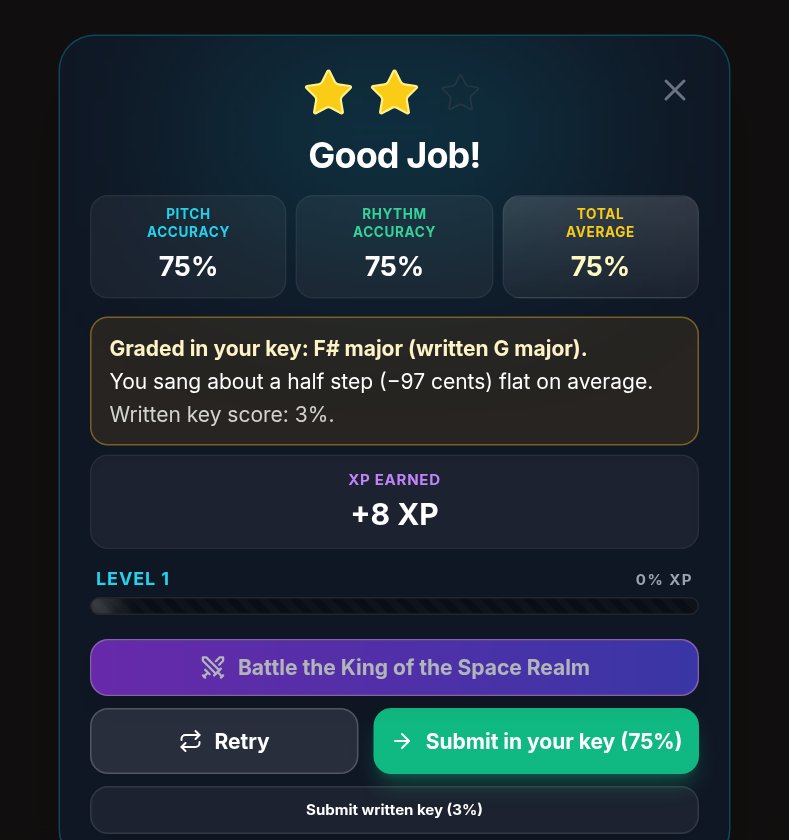
On an assigned round, SightReadQuest scores the pitch and rhythm rows for you and shows pitch and rhythm accuracy on the results card. Steady pulse and recovery still need your ears, and the recording makes that easier because you can listen back after rehearsal. If a singer starts in the wrong key but sings the melody correctly in that key, SightReadQuest can grade the take in the key the student sang and says so on the results card. Score the reading on the pitch row, and make a separate note that the starting pitch needs work.
How Often to Assess
Frequency matters more than length. A short check every week tells you far more than a long test once a quarter, because you can see the trend and adjust before it is too late. Here is a schedule that works for most programs:
- Whole-group check: once or twice a week, inside your warm-up.
- Rolling individual checks: two or three students each rehearsal.
- Bigger benchmark: once a grading period, a slightly longer individual read that goes in the gradebook.
Turn the Scores Into Rehearsal Decisions
Assessment only saves time if it changes what you do next. After a week of checks, look for the pattern. If rhythm scores are low across every section, spend the next week's warm-ups on short rhythm reads. If one section's recovery scores are low, have that section practice "keep going" reads where you deliberately do not stop for anything. If pitch is low for singers, go back to tonal center work before you add harder intervals.
The point is that a 2 in rhythm for the trumpets is not just a grade. It is a decision about what to rehearse on Tuesday.
How SightReadQuest Handles Sight-Reading Assessment
I built SightReadQuest because I wanted individual sight-reading checks without the one-at-a-time line. Here is how the pieces above map onto the app.
Students perform, the mic grades
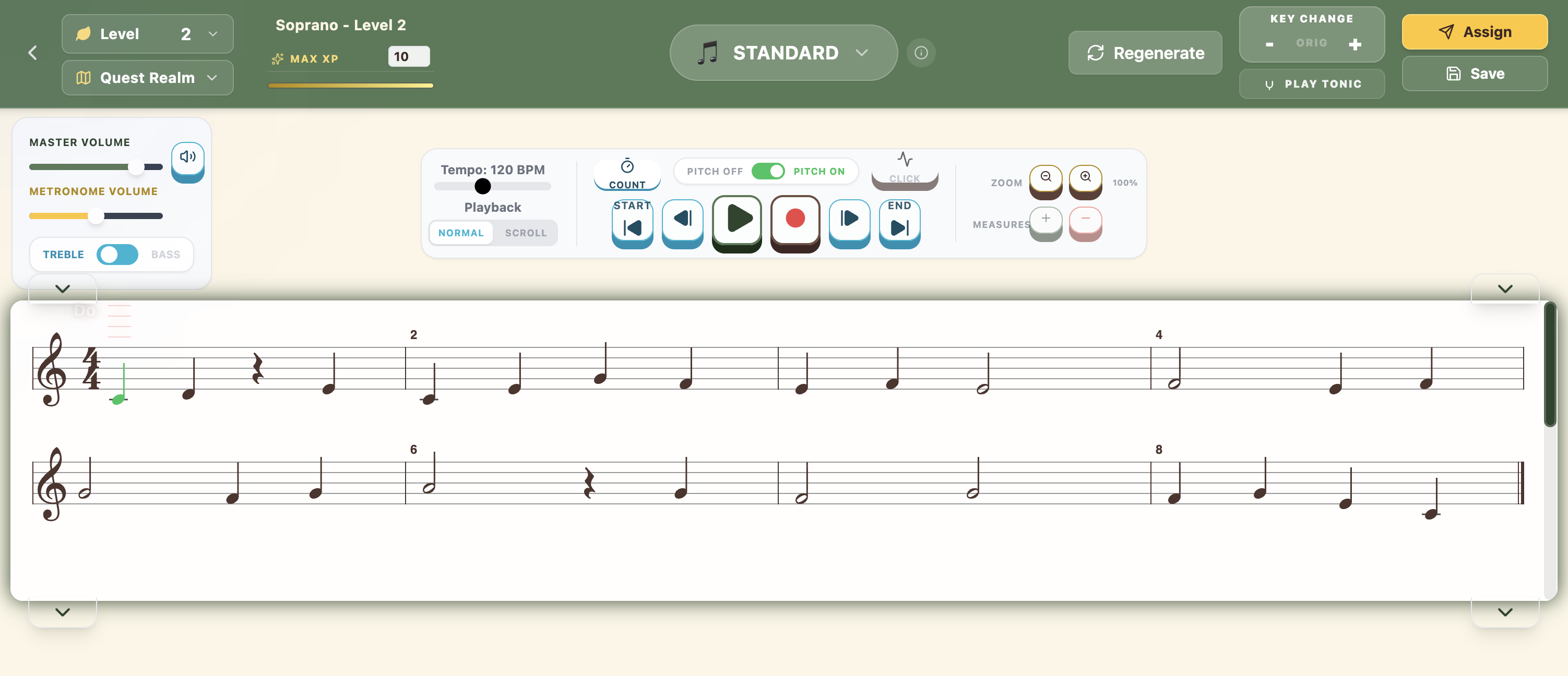
You assign a short round, and students sing or play it into the microphone on their own devices. Live mic grading marks right and wrong on the staff as they go, so pitch and rhythm are scored while they perform. Every student gets an individual check at the same time, and you are not the bottleneck.

Set it up like a real sight-read
Pick a level, a voice or instrument, and a length, then press Regenerate until you like the exercise. Each part shows in the right clef and key. When you assign it, the settings let you decide how strict the check is. Turn off Allow Listening to Model so students cannot hear a perfect playback first, set the attempt limit to one, and choose whether the best or the most recent attempt counts. For practice rounds, open those settings back up so students can retry.
See the problem measure, not just a percentage
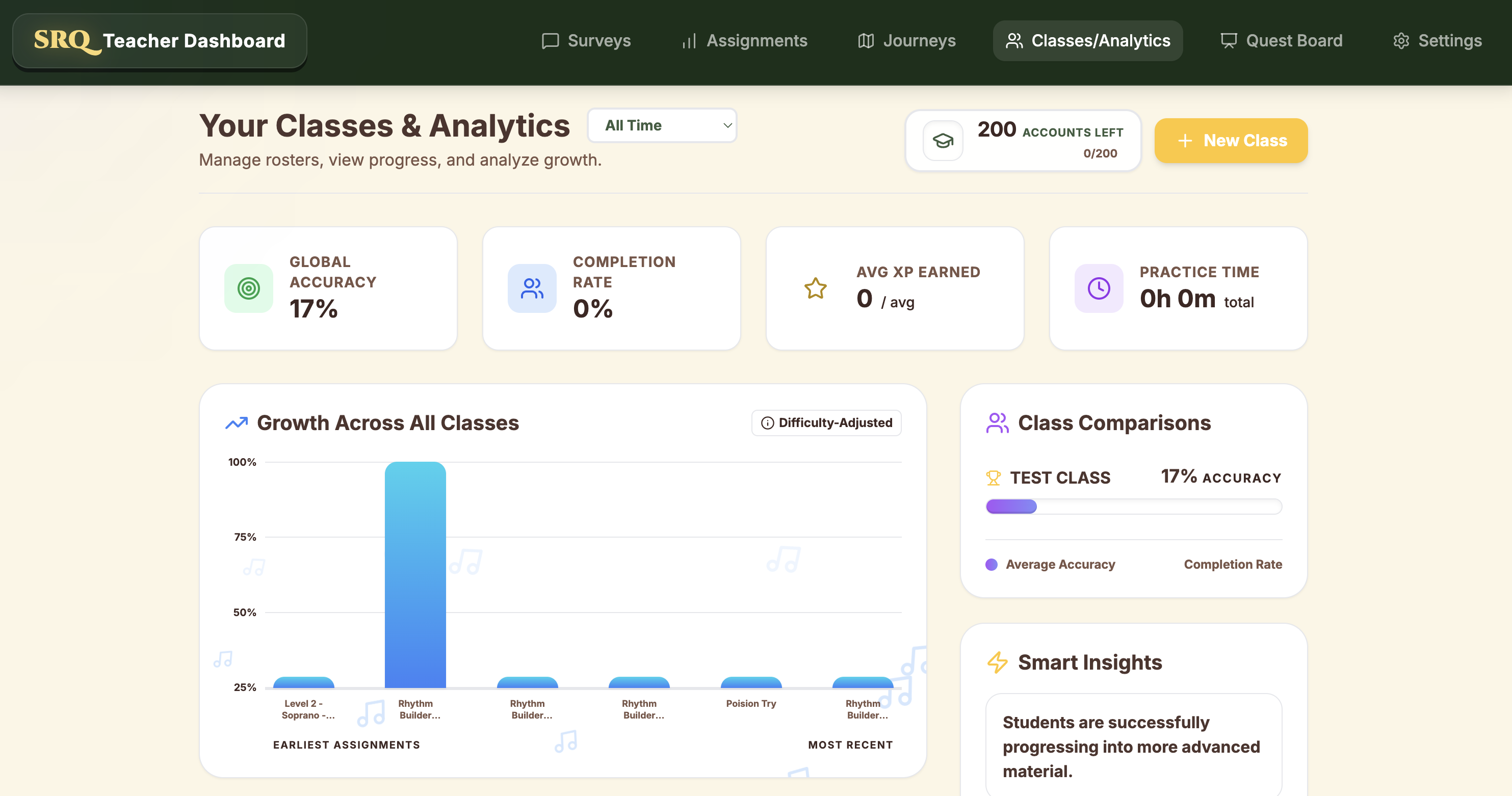
Scores and recordings land in the gradebook. The assignment view goes past the average: it shows the problem measure, the spot with the most mistakes per submission across the class. That is the same sticky note I described above, without writing it by hand. Teacher analytics also show class and assignment views over time, so you can see whether last month's weak spot is getting stronger.
Listen back when the number is not enough
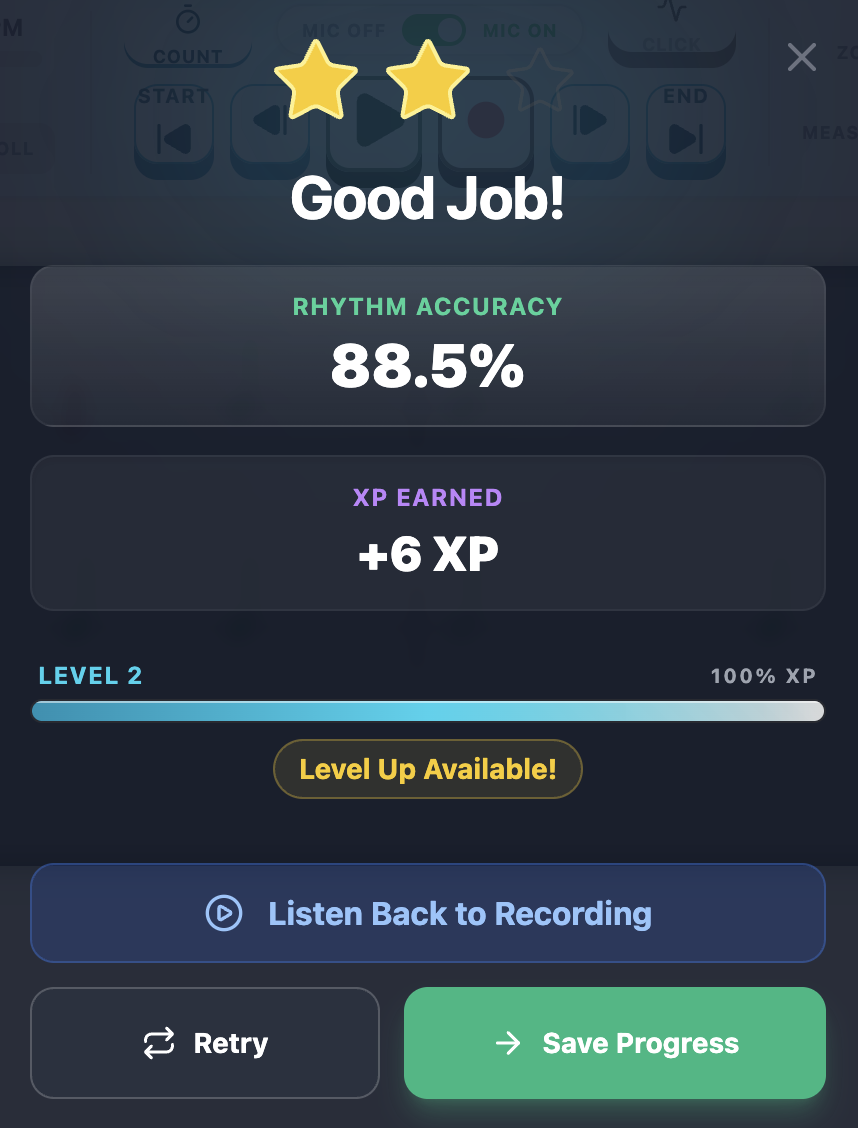
A score tells you what happened. A recording tells you why. You can listen back to a student's take, leave a comment, and keep the score with the assignment. For the bigger benchmark read each grading period, that is the difference between "72 percent" and "you rushed every dotted quarter."
Students join with a class code and do not need an email address. If you want to try this with one class, the free 10-day trial includes 100 student accounts and needs no card, and pricing is laid out plainly if it works for you.
Keep Going in This Series
Assessment works best when there is a daily habit underneath it. If you want a short routine to pair with these checks, start with the one for your ensemble: the 5-minute daily sight-reading routine for choir, the 5-minute routine for band, or the 5-minute routine for orchestra. If festival is on the calendar, the festival sight-reading prep plan builds these checks into a six-week schedule. If your checks point to bigger reading gaps, here is why students struggle with music literacy and what helps. For more on reading data, see data and analytics in music education, and for the bigger curriculum picture in your music class, ThreeMinuteTheory.com has short daily theory lessons that pair well with all of this.
To turn those checks into a weekly take-home habit, see sight-reading homework for choir, band, and orchestra.
Frequently Asked Questions
How long should a sight-reading assessment take in rehearsal?
A whole-group check takes about five minutes: a 30 to 60 second study period, one read without stopping, and a quick section-by-section score. Rolling individual checks take under a minute each if you hear only two or three students per rehearsal.
What should a sight-reading rubric include?
Keep it to four categories on a 1 to 3 scale: pitch, rhythm, steady pulse, and recovery. Recovery, meaning whether a student keeps going after a mistake, is the one most rubrics leave out and the one that predicts a good ensemble read. For individual students, add a short description at each score so the numbers stay consistent.
How do I use a sight-reading rubric for individual students?
Hear two or three students per rehearsal on the same level of exercise. Give each the same 30 to 60 second study time, let them read once without stopping, and circle a 1, 2, or 3 for pitch, rhythm, steady pulse, and recovery. Add a short note and total the score out of 12.
How do I turn a sight-reading rubric score into a grade?
Track the total over time rather than grading one read. As a starting point, 10 to 12 is on track, 7 to 9 is developing, and 4 to 6 needs targeted help. If you need a percentage, decide the conversion before the first check and use it all year.
Can I use the same sight-reading rubric for choir, band, and orchestra?
Yes. Pitch means notes and solfege for singers and notes and fingerings for instruments. Rhythm, steady pulse, and recovery work the same way in every ensemble, so one rubric lets you compare growth across groups.
How often should I assess sight-reading?
Short and often beats long and rare. A whole-group check once or twice a week, a few individual checks each rehearsal, and one longer benchmark per grading period gives you a clear trend without losing rehearsal time.
Can SightReadQuest grade sight-reading for me?
Yes. Students sing or play an assigned round into the microphone and live mic grading scores pitch and rhythm as they perform. Scores and recordings go to your gradebook, and the assignment view highlights the problem measure across the class.
Check Out This Leading Music Education Curriculum!