7 Reasons to Try SightReadQuest for Band Sight-Reading
Build short reading checks around your players. Choose the instrument part and level, set the pulse, then use individual attempts to decide what the next rehearsal needs.
10-day trial · No card · 100 trial student accounts
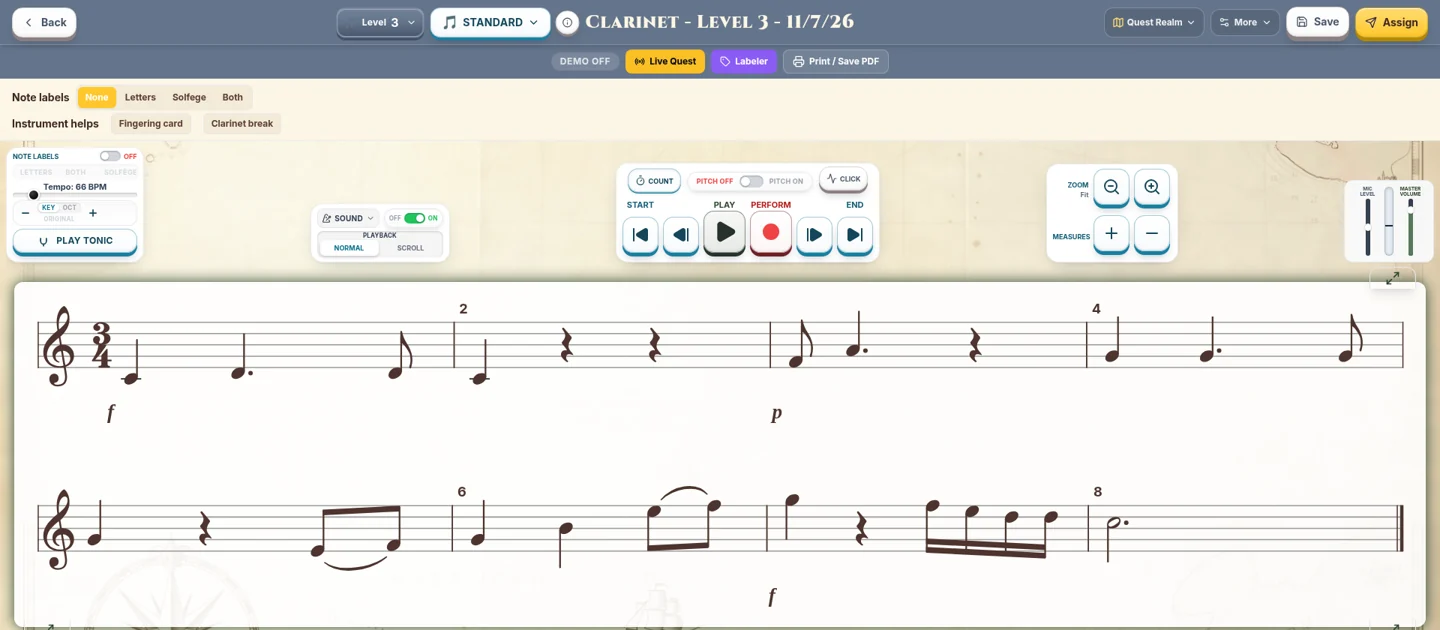
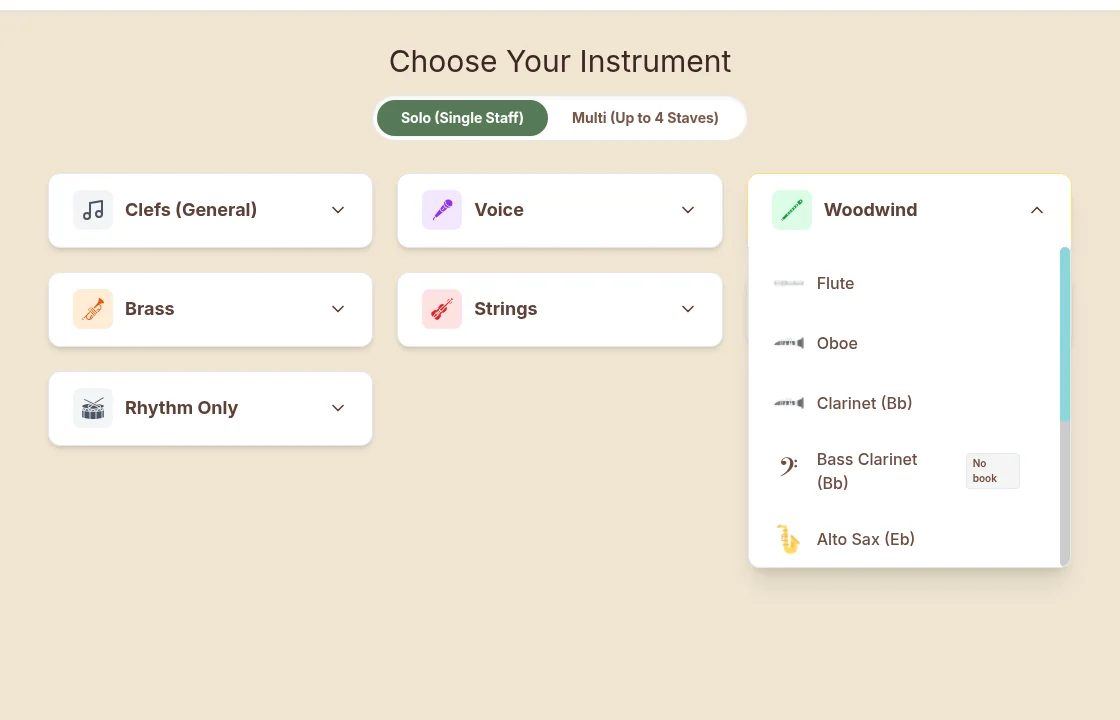
Choose woodwinds or the brass category: Open the instrument picker for the reading task. The Woodwind menu shown includes Flute, Oboe, Clarinet (Bb), Bass Clarinet (Bb) and Alto Sax (Eb). Brass is a separate category. The generated example on this page is Clarinet Level 3 in treble clef and 3/4.
Set the pulse on the clarinet exercise: The generated clarinet screen keeps tempo, Count/Click and Play Tonic beside the staff. Establish the reading pace before the attempt. The screenshot shows the actual instrumental exercise and its controls, not a choir setup.
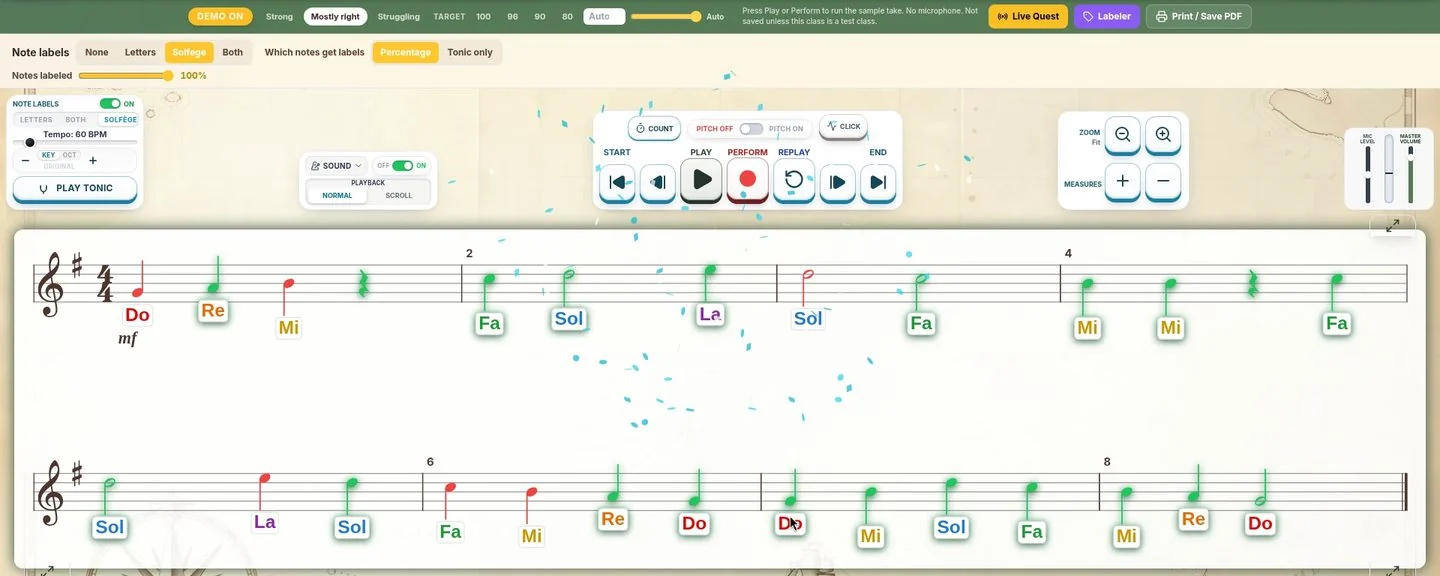
Check an individual attempt: Players perform into the microphone and see feedback on the staff. Scores and recordings let you review the attempt after the round. The screen below uses the built-in demo, not an actual instrumental performance.
Keep clarinet helps beside the line: The Clarinet Level 3 screen includes Fingering card and Clarinet break controls alongside the note-label choices. Choose the support that fits your lesson. The pictured exercise has note labels set to None; neither help panel is open.
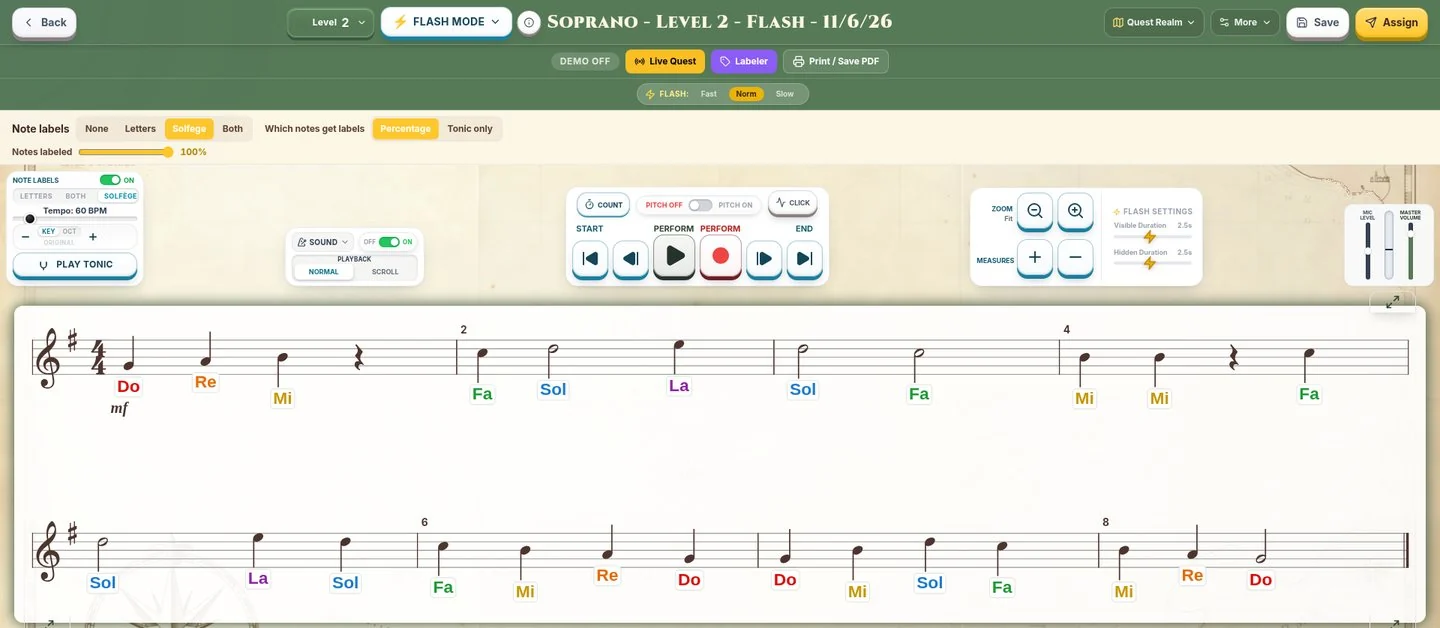
Change the demand with a memory round: Use Flash Mode for a short look followed by a performance from memory. Memory Mode offers a study-and-recall task too. Keep the line manageable so you can focus on how players prepare.
Ask players to connect sound and symbols: Echo Notate asks students to hear a phrase and write it on the staff. Audiate Attack adds a listening and recall task. These can support the aural side of a reading routine. The existing Echo Notate preview below uses a choir sample, not an instrumental capture.
Keep the assignment with the class: Assign the round and have players join with a class code. No student email is required. Your teacher dashboard keeps the scores and recordings connected to the assigned task. The dialog shown is a choir example.
For beginning and developing bands
Build short reading checks around your players. Choose the instrument part and level, set the pulse, then use individual attempts to decide what the next rehearsal needs.
10-day trial · No card · 100 trial student accounts
Choose the part. Set the task. Review the attempt.
Product workflow, not a teacher testimonial or a learning-outcome claim.
Singers and players
Live mic feedback
Class codes, no student emails
A reading task with a clear purpose.
A full-band read and an individual reading check answer different questions. Use a short assigned line to look at one player’s pitch and rhythm, then bring that information back to rehearsal.
REASON 01 Choose woodwinds or the brass category
Open the instrument picker for the reading task. The Woodwind menu shown includes Flute, Oboe, Clarinet (Bb), Bass Clarinet (Bb) and Alto Sax (Eb). Brass is a separate category. The generated example on this page is Clarinet Level 3 in treble clef and 3/4.
Real instrument picker, Woodwind menu open: Flute, Oboe, Clarinet (Bb), Bass Clarinet (Bb) and Alto Sax (Eb) are visible. Brass is a separate category. No instrument is selected in this picker capture.
REASON 02 Set the pulse on the clarinet exercise
The generated clarinet screen keeps tempo, Count/Click and Play Tonic beside the staff. Establish the reading pace before the attempt. The screenshot shows the actual instrumental exercise and its controls, not a choir setup.
Real generated Clarinet Level 3 exercise in treble clef and 3/4. Fingering card and Clarinet break controls are visible. Note labels are set to None.
REASON 03 Check an individual attempt
Players perform into the microphone and see feedback on the staff. Scores and recordings let you review the attempt after the round. The screen below uses the built-in demo, not an actual instrumental performance.
Choir example: Soprano exercise with a built-in demo performance, not a student take or microphone recording. Colored notes illustrate the feedback display.
REASON 04 Keep clarinet helps beside the line
The Clarinet Level 3 screen includes Fingering card and Clarinet break controls alongside the note-label choices. Choose the support that fits your lesson. The pictured exercise has note labels set to None; neither help panel is open.
Real generated Clarinet Level 3 exercise in treble clef and 3/4. Fingering card and Clarinet break controls are visible. Note labels are set to None.
REASON 05 Change the demand with a memory round
Use Flash Mode for a short look followed by a performance from memory. Memory Mode offers a study-and-recall task too. Keep the line manageable so you can focus on how players prepare.
Choir example: real Flash Mode controls in the Soprano teacher edit view. The staff is still visible here.
REASON 06 Ask players to connect sound and symbols
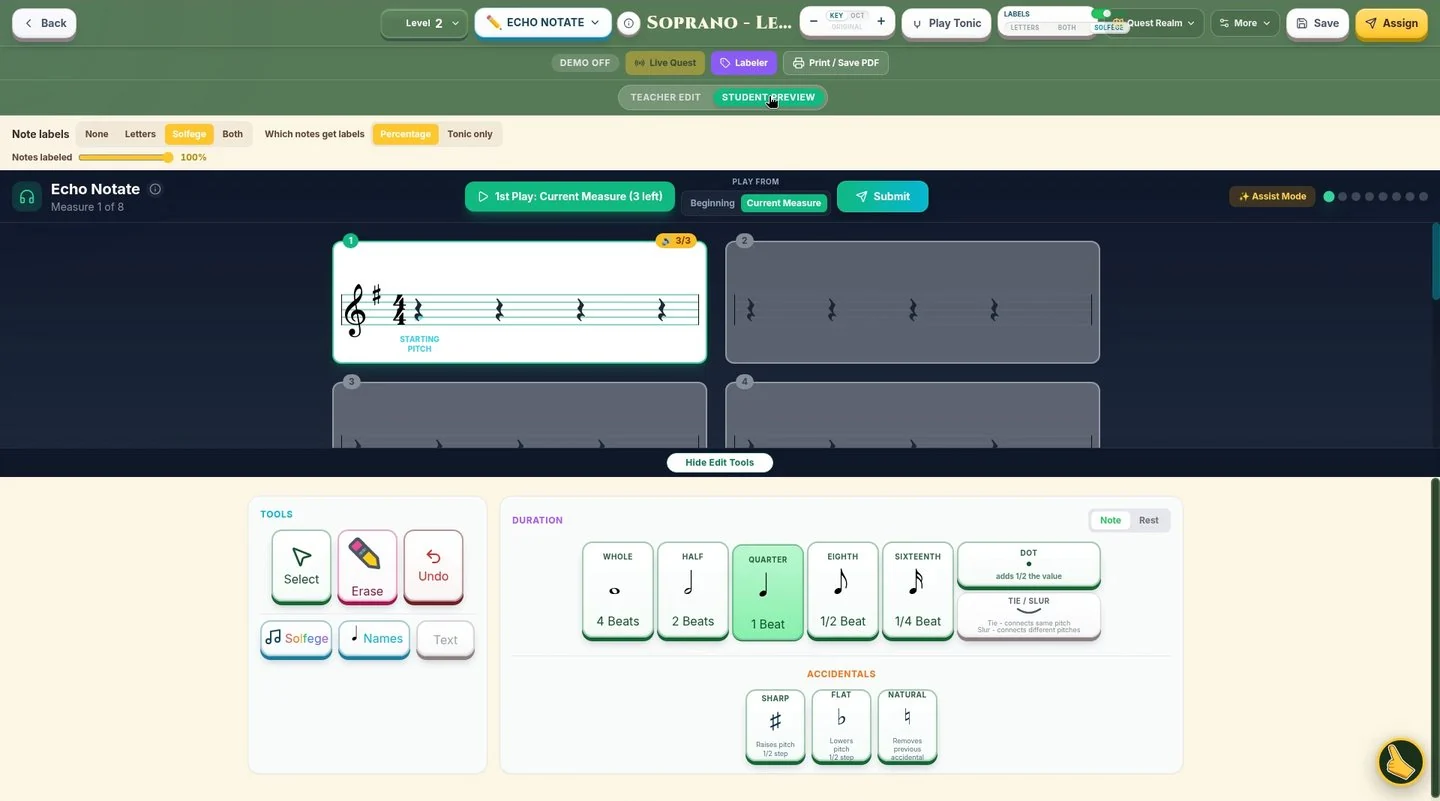
Echo Notate asks students to hear a phrase and write it on the staff. Audiate Attack adds a listening and recall task. These can support the aural side of a reading routine. The existing Echo Notate preview below uses a choir sample, not an instrumental capture.
Choir sample: real Echo Notate student preview. Hear a measure, then write it on the staff.
REASON 07 Keep the assignment with the class
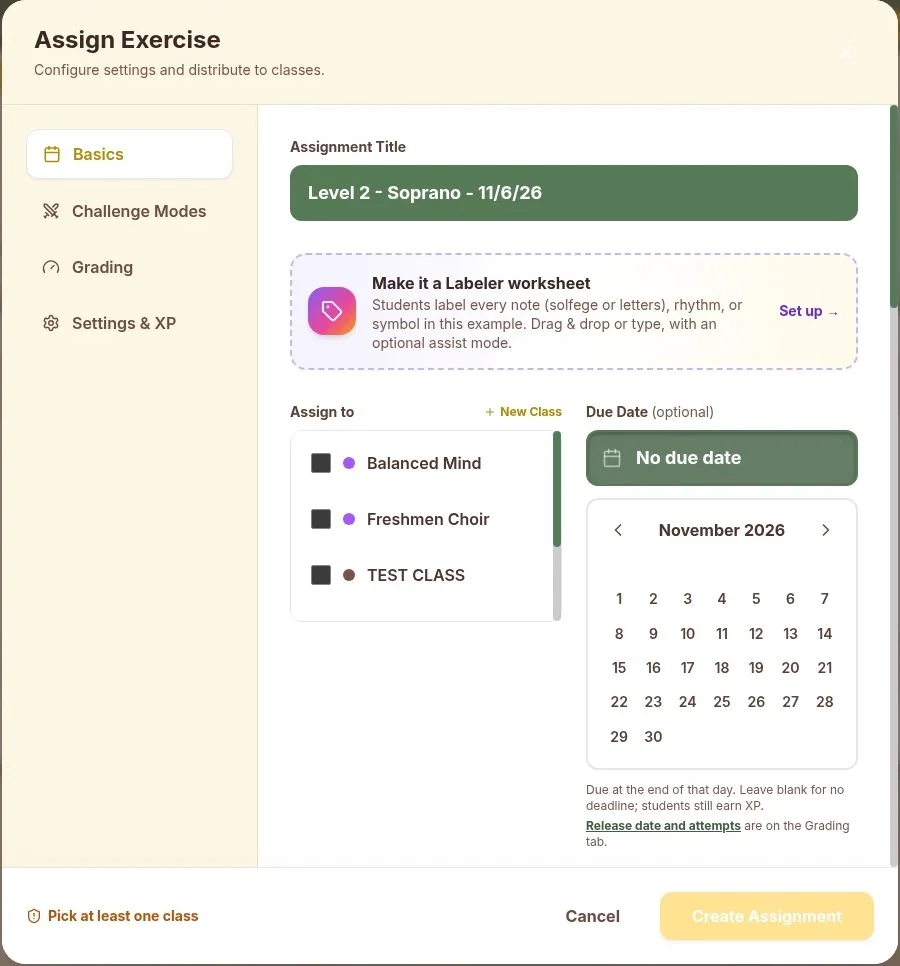
Assign the round and have players join with a class code. No student email is required. Your teacher dashboard keeps the scores and recordings connected to the assigned task. The dialog shown is a choir example.
Choir example: real Assign Exercise dialog for a Soprano exercise. It was cancelled; nothing was assigned. Class names are teacher-created examples, not student names.
A note about teacher proof
Review note: No band-specific testimonial is included. The feedback reviewed did not establish a publishable band endorsement. This page relies on verified features and real product screens, not borrowed choir praise.
Pick the Teacher License. Add seats when you need them.
A Teacher License is your account. Student Accounts are separate annual packs. No student seats are included in a paid Teacher License.
Monthly and Yearly Teacher Licenses and card-purchased student packs renew until cancelled. For multiple teachers, more than 300 students or a school purchase order, request an emailed quote from the pricing page.
Standard prices checked November 7, 2026 (ET). No promotional code or discount is assumed.
Monthly Teacher License: $15/month. Billed monthly. Student Accounts sold separately.
Yearly Teacher License: $99/year. Billed yearly. Student Accounts sold separately.
50 Student Accounts: $199/year
100 Student Accounts: $299/year
150 Student Accounts: $399/year
200 Student Accounts: $499/year
300 Student Accounts: $699/year
Questions before you start
Does my Teacher License include students? No. Paid Teacher Licenses cover the teacher tools. Student Accounts are separate annual packs. The free 10-day trial includes 100 student accounts.
Do students need an email address? No. Students join with a class code and do not need a student email address.
Can I try it before buying? Yes. The free trial lasts 10 days, includes a teacher account and 100 student accounts, and does not require a credit card.
Can students sing or play? Yes. SightReadQuest supports choir, band and orchestra parts. Choose the part and level for the reading task. Test your school microphone and device setup during the trial.
What happens when I cancel? Monthly and Yearly Teacher Licenses and student packs renew until cancelled. Cancel in Account Settings or email support. Cancellation stops future renewals and takes effect at the end of the current billing period.
Can my school pay with a purchase order? Yes. Use the school quote option on the pricing page. Quotes and purchase-order help are handled by email.
Try one short round with your students.
Choose a part and level, check your school setup, then decide if it fits your classroom.