Walk down the hall of almost any school music department and you can hear three different rhythm languages. The band is counting "1 e & a." The elementary class is chanting "ta ti-ti." Someone else is speaking "ta ka di mi." All of these rhythm counting systems can produce strong readers. The trouble starts when a student moves from one room to the next and has to start over.
This post is for music teachers deciding what their program should use. I will walk through the four systems you are most likely to meet, what each one does well, where each one gets clumsy, and how I would choose for a choir, band, or orchestra program. If you want the daily classroom routine that goes with any of them, start with how to teach rhythm with rhythm practice.
The short answer
There is no single best system. The best rhythm counting system for your program is the one your students can use the same way every day, that connects to what your feeder teachers already use, and that still works when the music gets to sixteenths, syncopation, and 6/8. Consistency beats perfection. A so-so system used the same way in every rehearsal will beat a great system that changes every time a student changes rooms.
Two families: duration systems and beat-function systems
Most counting systems fall into one of two groups, and this one difference explains most of the pros and cons below.
- Duration systems name the kind of note. A quarter note gets its syllable no matter where it falls in the measure.
- Beat-function systems name where the note falls inside the beat. Anything on the beat gets the same syllable, whatever the note value.
Numbers sit a little to the side. They name the beat of the measure, then add words for the parts of the beat.
Numbers (1 e & a)
How it sounds: In 4/4, quarter notes are "1 2 3 4," eighth notes are "1 & 2 &," and sixteenths are "1 e & a." Compound meter is where programs differ. Some count every eighth note in 6/8 (1 2 3 4 5 6). Others count the dotted-quarter beat with a three-part pattern such as "1 & a" or "1 la li."
What it does well: Numbers are the shared language of most instrumental method books and most rehearsals, so students can use them anywhere. They also tell students which beat of the measure they are on, which is exactly what you need for counting rests, multi-measure rests, and entrances. And every student already knows how to count.
Watch out for: Numbers get wordy at faster subdivisions, and "1 e & a" is hard to say cleanly at a quick tempo. Different teachers handle triplets and 6/8 differently, so agree on one version as a department. Also, counting the beats is not the same as speaking the rhythm. Some students say every subdivision correctly and still play the wrong rhythm. Teach them to say only the numbers and syllables where a note starts, and to keep the rest silent or whispered.
Takadimi
How it sounds: Takadimi was developed by Richard Hoffman, William Pelto, and John W. White and published in the Journal of Music Theory Pedagogy in 1996. It is a beat-function system. In simple meter, the beat is always "ta," the division is "ta di," and the subdivision is "ta ka di mi." In compound meter, the division is "ta ki da" and the subdivision is "ta va ki di da ma."
What it does well: Every spot inside the beat has its own syllable, so a rhythm pattern always sounds the same, whether it is written in 2/4 or 2/2. Simple and compound meters share "ta" on the beat and "di" at the midpoint, which helps with two against three and with music that switches between duple and triple feels. It was designed with college theory classes in mind, so it handles syncopation and uneven divisions, and students do not outgrow it.
Watch out for: Students need a steady beat first, because the syllables only make sense in relation to it. Takadimi does not tell students which beat of the measure they are on, so you will still use numbers to count rests and find measures. It may be new to your students, their private teachers, and their parents, so plan to teach it on purpose.
Kodály-style ta and ti-ti
How it sounds: The ta and ti-ti syllables used in Kodály-inspired classrooms were adapted from the French Time-Names system of Galin, Paris, and Chevé. In the Hungarian version, a quarter note is "ta," two eighth notes are "ti ti," a half note is "ta-a," and four sixteenths are "tiri tiri." Many American classrooms use their own versions, such as "too" for a half note or "ti ka ti ka" for sixteenths.
What it does well: It is easy to say, easy to sing, and a natural fit for young children. It works hand in hand with a Kodály sequence of singing, hearing, and then reading. If your students had it in elementary general music, they walk into your room with a real head start.
Watch out for: Because the syllables follow note values, the same spot in the beat can get different syllables depending on the note. That gets confusing with syncopation, dotted rhythms, and compound meter, and the local versions multiply right where the music gets harder. If you inherit students who learned ta and ti-ti, decide early how you will handle sixteenth patterns and 6/8 so the system does not stall at the intermediate level.
Gordon beat-function syllables (du-de)
How it sounds: Edwin Gordon's Music Learning Theory uses a beat-function system. The big beat (the macrobeat) is always "du." In duple meter the smaller beats (microbeats) are "du de," and in triple meter they are "du da di." Anything that is not a macrobeat or a microbeat is "ta."
What it does well: You can hear the meter in the syllables themselves, and a pattern sounds the same however it is notated. It fits naturally if your program already follows the Music Learning Theory approach of hearing and chanting patterns before reading them. It also connects well to audiation, the skill of hearing music in your head.
Watch out for: It is less common outside Music Learning Theory programs, so students and colleagues may not know it. Like Takadimi, it does not tell students which beat of the measure they are on.
Rhythm counting systems side by side
Here is a quick comparison you can share with your department. The examples assume a quarter-note beat in simple meter and a dotted-quarter beat in 6/8.
| System | How it names notes | Beat, two eighths, four sixteenths (quarter-note beat) | Beat divided in three (6/8) | Often a good fit for |
|---|---|---|---|---|
| Numbers | Counts the beats in the measure | 1 / 1 & / 1 e & a | Varies by program: 1 2 3 4 5 6, or a three-part count on each dotted-quarter beat such as 1 & a or 1 la li | Band and orchestra, and talking about where you are in rehearsal |
| Takadimi | Beat function: where the note falls in the beat | ta / ta di / ta ka di mi | ta ki da | Middle school through college, and harder rhythms |
| Kodály ta and ti-ti | Duration: what kind of note it is | ta / ti ti / tiri tiri (many US classrooms say ti ka ti ka) | Varies by teacher | Elementary music and early choir reading |
| Gordon (du-de) | Beat function, built around audiation | du / du de / du ta de ta | du da di | Programs that follow Music Learning Theory |
How to choose a system for your program
- Start with your feeder program. Ask your elementary general music teachers and the other directors in your district what they use. If students arrive fluent in one system, building on it saves you weeks every fall.
- Use syllables for the rhythm and numbers for the map. These two jobs do not compete. Syllables help students speak a pattern, and numbers tell them where they are in the measure. I recommend keeping numbers for rests, entrances, and "start at beat 3 of measure 12," whichever syllable system you choose.
- Test it on your hardest music. Try sixteenth patterns, syncopation, dotted eighth and sixteenth, triplets, and 6/8. If the system gets awkward, write down your rule now instead of making one up mid-rehearsal. For a step-by-step sixteenth-note unit, see how to teach sixteenth notes in middle school band and choir.
- Make one chart and post it. Same chart in every room, every ensemble, and every grade level you teach.
- Give it a full semester. Any new system feels slow for the first few weeks. Judge it by how well students read new music in January, not on the first Tuesday.
- Teach students to translate. Students who sing in choir and play in band, or who take private lessons, will hear more than one system. Show them how the systems line up so they are not starting over.
A teaching sequence that works with any system
- Beat first. Students step, tap, or pat a steady beat before any syllables.
- Echo before reading. You chant a short pattern, they chant it back. Sound comes before symbol.
- Read the pattern. Show the same pattern in notation and chant it together.
- Chant and clap. Say the syllables while clapping only the notes, with the beat still going underneath.
- Perform it. Sing it on one pitch, play it on one note, or bow it on an open string. Then add the real pitches.
- Fade the syllables. The goal is reading, not talking. Over time, students whisper, then think the syllables while they perform.
The 5-minute routines for choir, band, and orchestra all start with a short rhythm step, and this sequence slides right into that spot.
Choir, band, and orchestra: practical guidance
Choir
Many singers arrive knowing solfege and sometimes ta and ti-ti from elementary music. If that is true in your district, keep it for simple rhythms and decide how you will extend it for sixteenths and compound meter. Takadimi is a common next step because it still uses spoken syllables. A three-step read works well with any system: speak the rhythm on syllables, sing it on solfege, then add the words. Words carry their own rhythm, so checking the text against the rhythm you just chanted catches a lot of mistakes.
Band
Numbers are the language of most band method books and rehearsals, so keep them. If your students stumble on patterns like eighth and two sixteenths or syncopation, try adding a syllable system just for chanting those patterns. Have students count or chant while they air-play with real fingerings during the study time before a read. Numbers stay essential for counting multi-measure rests and finding entrances.
Orchestra
Everything from band applies, plus the bow. Rhythm and bow distribution are linked, so have students chant the rhythm while they shadow-bow during the study time, then play it on an open string before adding the left hand. In 6/8, decide whether your section counts six or two, and make sure the whole orchestra counts it the same way.
Whatever you choose, assess it the same way every time. My post on how to assess sight reading in rehearsal includes rhythm as its own row, so you can see whether the system is working.
How SightReadQuest works with any rhythm counting system
I built SightReadQuest so it would fit whatever rhythm language you already teach. The app does not print counts or syllables under the notes, so it never competes with your system. Students say the rhythm your way, then perform it, and SightReadQuest checks the timing. The count-in shows plain beat numbers, which works with every system.
Rhythm Only exercises that grow with your sequence
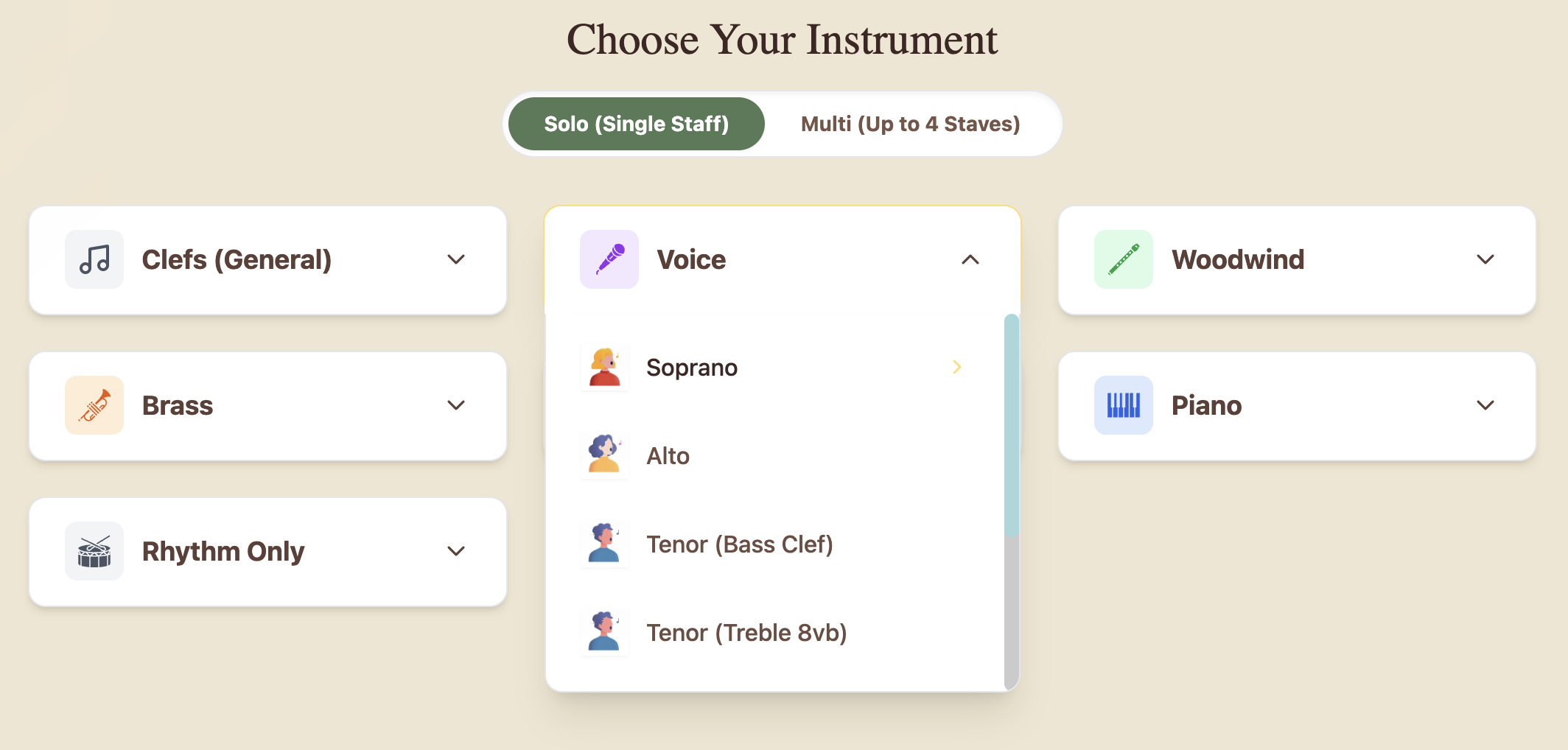
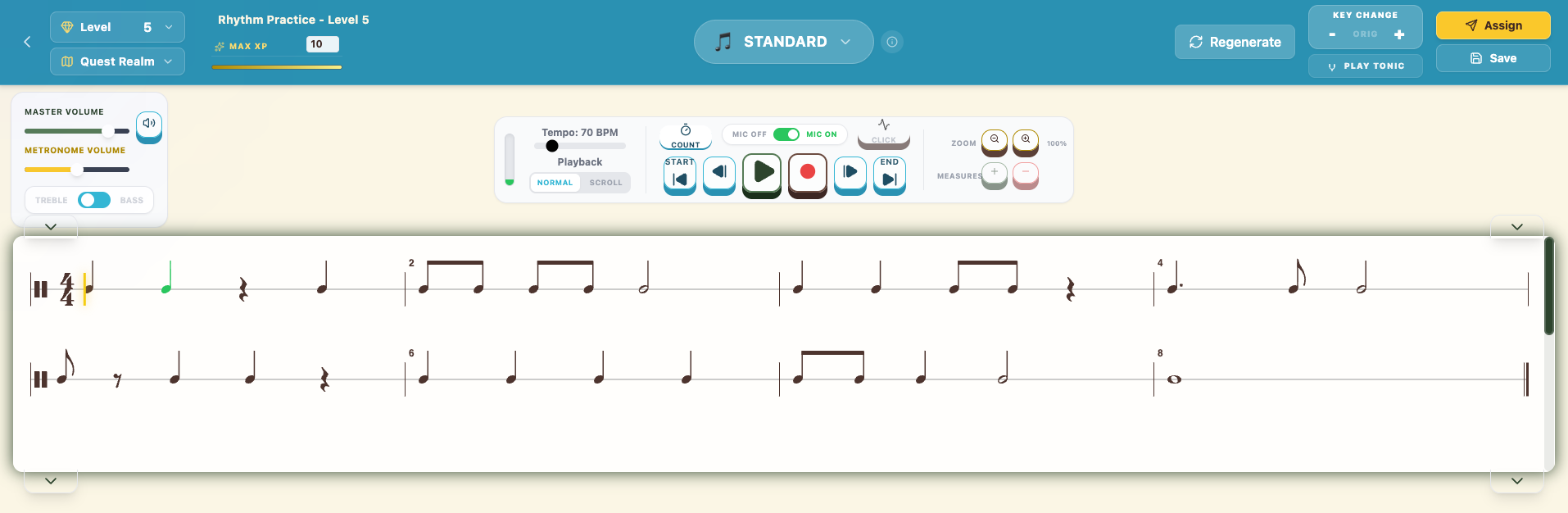
Choose Rhythm Only, then Rhythm Practice, on the Choose Your Instrument screen, and SightReadQuest writes a fresh rhythm exercise on a one-line percussion staff. There are six levels. Level 1 uses whole, half, and quarter notes. Later levels add quarter and half rests, beamed eighth pairs, 6/8, the dotted quarter and eighth, ties, syncopation, sixteenths, and finally the dotted eighth and sixteenth, triplets, and cut time. You can set the tempo, and press Regenerate any time you want new material in the same level.
Clap or tap, with instant timing feedback
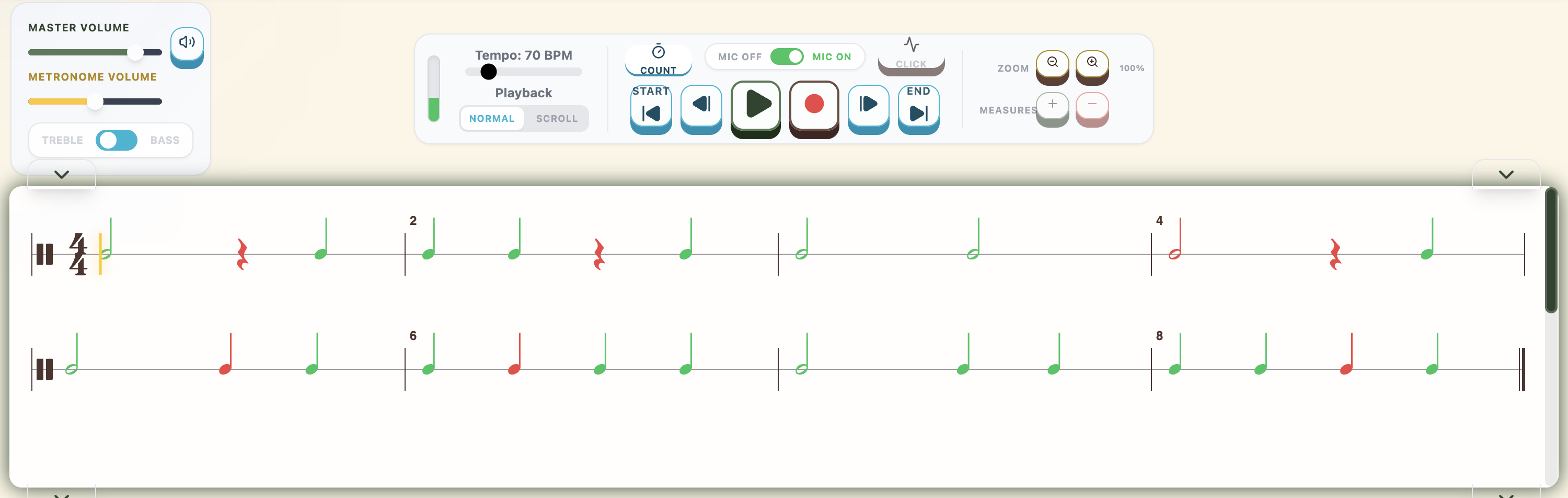
Students clap into the microphone, tap the spacebar, or use a large TAP pad on tablets. Notes they hit in time turn green and misses turn red, right on the staff. When you assign a rhythm exercise, you choose the performance input (clap, spacebar or TAP, or both) and the timing tolerance: Strict (within 120 milliseconds), Classroom (within 250), or Generous (within 400). Extra claps during rests cost points, so students learn to feel the silence too. That is a great place to hear whether your counting system is really in their heads.
Listen back and try again
After each take, students see their rhythm accuracy, can listen back to the recording, and can retry right away. When it is an assignment, the score and recording go to your gradebook, so you can listen to a student who says "I counted it right" and hear exactly where the counting broke down.

A metronome you can project
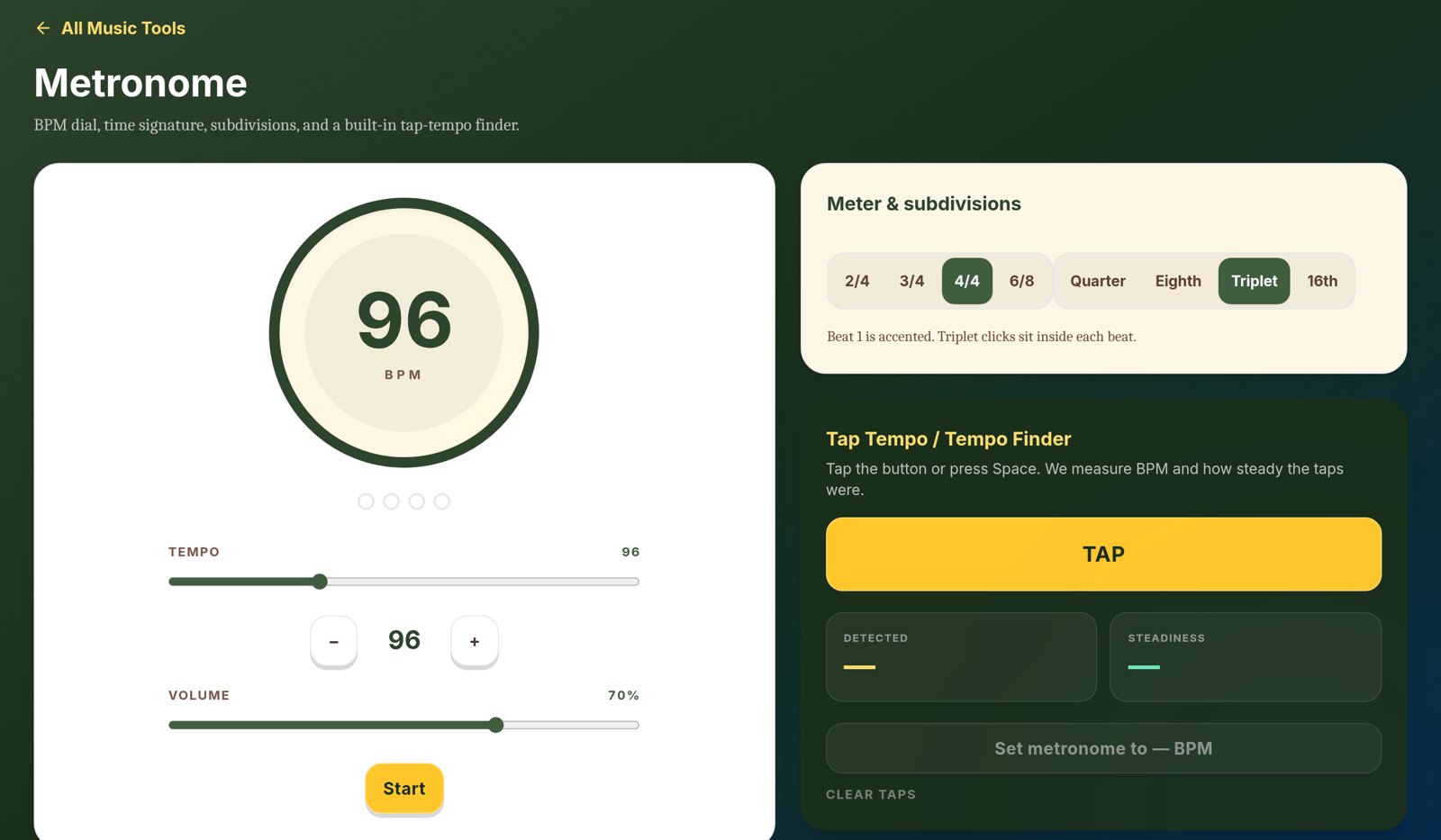
The Metronome on the SightReadQuest Music Tools page opens without a login. Pick 2/4, 3/4, 4/4, or 6/8, then choose quarter, eighth, triplet, or sixteenth subdivisions. Beat 1 is accented, and the tap-tempo finder measures both the tempo and how steady the taps were. Put the subdivision clicks on while the class chants in whatever system you use, then turn them off and see if the beat holds.
Students join with a class code and do not need an email address. If you want to try it with one class, the free 10-day trial includes up to 100 student seats and needs no credit card.
More rhythm resources
For short daily theory lessons, ThreeMinuteTheory.com has rhythm chapters on eighth notes, dotted rhythms, rests, sixteenth notes, ties, 6/8, and syncopation, plus Rhythm Rumbler, a set of 30 rhythm reading levels you can project for the whole class to clap and play. The counts are written above the notes in the first round and taken away in later rounds. You can find it at ThreeMinuteTheory.com. If you teach choir, Matthew Gawronski's choir resources and free vocal warm-ups pair well with a daily rhythm step.
Once students can count steadily, the next pattern to teach is often sixteenths. See how to teach sixteenth notes in middle school band and choir.
Frequently Asked Questions
What is the best rhythm counting system?
There is no single best one. Choose the system your students can use consistently, that connects to what your feeder teachers use, and that still works for sixteenths, syncopation, and 6/8. Many programs pair a syllable system for speaking rhythms with numbers for finding beats and measures.
What is the difference between Takadimi and Kodály rhythm syllables?
Takadimi is a beat-function system, so the syllable depends on where a note falls in the beat. Kodály-style ta and ti-ti is a duration system, so the syllable depends on the kind of note. That makes ta and ti-ti very easy for beginners, while Takadimi stays consistent with syncopation and compound meter.
Should band and orchestra students count with numbers or syllables?
Keep numbers, because method books and rehearsals use them and they tell students where they are in the measure. Add syllables if they help students speak tricky patterns. The two do different jobs.
Can I use more than one rhythm counting system?
Yes, as long as each one has a clear job. A common setup is syllables for chanting rhythm patterns and numbers for counting rests and entrances. Avoid switching syllable systems from year to year.
Does SightReadQuest use a specific rhythm counting system?
No. SightReadQuest does not print counts or syllables under the notes, so it works with numbers, Takadimi, ta and ti-ti, or du-de. Students say the rhythm your way, then clap or tap it, and the app checks the timing.
Check Out This Leading Music Education Curriculum!
Try Out These FREE Warmups!