Why Festival Sight-Reading Feels So Hard
Most ensembles do not struggle in the festival sight-reading room because they cannot read. They struggle because the room is different. There is a strict study period, an adjudicator watching, music nobody has seen, and one shot to get it right. If the only time your students read under those conditions is festival day, of course it feels scary.
The fix is to practice the conditions, not just the reading. The plan below takes about ten minutes of rehearsal on most days for six weeks. It works for choir, band, and orchestra, and it builds on a short daily routine you may already be running. Rules vary by state and by festival, so check your handbook for study time, whether students may sing or play during study, and what the adjudicator gives you before the read. Then match your practice to those rules.
Weeks 1 and 2: Build the Daily Habit
Start with a five-minute reading routine every rehearsal: set the key, read the rhythm, study, read once without stopping, fix one spot, read again. If you need a template, I have one for each ensemble: choir, band, and orchestra.
Use music below your festival level for these two weeks. The goal is the routine itself. By the end of week 2, students should know the study checklist by heart and should keep going through mistakes without being reminded.
Week 3: Teach the Study Period
The study period is where festival reads are won or lost, and most students waste it. Teach them a fixed order, out loud, until it becomes automatic:
- Key and tonal center. Name the key and find home. Singers find do (or la in minor). Instrumentalists name their written key and finger pattern.
- Meter and tempo. Name the time signature and any meter or tempo changes.
- Road map. Find repeats, endings, codas, and key changes. Point to each one.
- Rhythm scan. Find the hardest rhythm and count it silently.
- Rehearse in silence. Air-play, shadow-bow, or chant the rhythm, depending on what your festival allows.
Practice the timing too. Put a visible clock up and give exactly the study time your festival gives. Students quickly learn that if they spend three minutes on the key signature, they never get to rehearse the piece.
Week 4: Short Graded Rounds
Now raise the stakes a little. Run short reading rounds and score them with a quick four-part rubric: pitch, rhythm, steady pulse, and recovery, each on a 1 to 3 scale. My post on how to assess sight reading without killing rehearsal time explains the rubric and how to score it by section from the podium.
Share the scores with the ensemble. Students care more about the read when they can see that recovery went from a 1 to a 2 since Monday.
Week 5: Mock Festival Rounds
This is the week that makes the difference. Run two or three full mock rounds that copy the festival as closely as you can:
- Move to a different room, or rearrange your own.
- Ask a colleague, an administrator, or a student teacher to act as the adjudicator.
- Read the instructions the way the adjudicator will, then run the exact study time.
- One read, no stopping, then the adjudicator gives two comments.
Record each mock round. Listening back as a group is uncomfortable the first time and incredibly useful by the third.
Week 6: Polish and Protect Confidence
The final week is about confidence, not new skills. Keep running mock rounds, but choose music the group can succeed on. You want students walking into the sight-reading room expecting to do well. Remind them that mistakes will happen and that the goal is to keep going together. A read with a few wrong notes and a steady pulse almost always beats one that stops and restarts.
What to Do When a Mock Round Goes Badly
It will happen at least once. The read falls apart, students look at you, and the room goes quiet. Do not rescue them by reading it again right away. Ask two questions instead: "Where did we get lost?" and "What in the study period would have caught it?" Most of the time the answer is a key change nobody pointed to, or a rhythm nobody counted. Add that item to the checklist on the board, then run a new example. Students learn far more from fixing the process than from repeating the same eight measures.
Notes for Each Ensemble
Band
Watch key signatures and accidentals closely, especially for transposing instruments whose written key differs by section. Have each section name its written key during study. Air-play with real fingerings, and give percussion a real job during study, like counting rests aloud and checking instrument assignments.
Choir
Choral sight-reading lives and dies on tonal center. Establish do with whatever your festival allows, and practice holding it across the read. Chanting rhythm on text is especially helpful, because rhythm problems in choirs often hide inside the words. Teach singers to spot divisi and voice crossings during the road map step.
Orchestra
Add bowings and shifts to the study checklist. Decide which passages start up-bow or down-bow, and look for slurs and string crossings that could trip the group. Shadow-bowing in tempo is the orchestra version of air-play. Watch for clef changes in viola and cello parts, and have the basses confirm where they double the cellos.
The Real Problem: Finding Enough New Music
The biggest practical challenge in any festival plan is material. Over six weeks you will read a lot of examples, and every one has to be new to your students. Old library pieces, method books you no longer use, and short exercises you write yourself can all fill the gap. That is also where SightReadQuest comes in.
How SightReadQuest Handles Festival Prep
New examples at the right level, every day
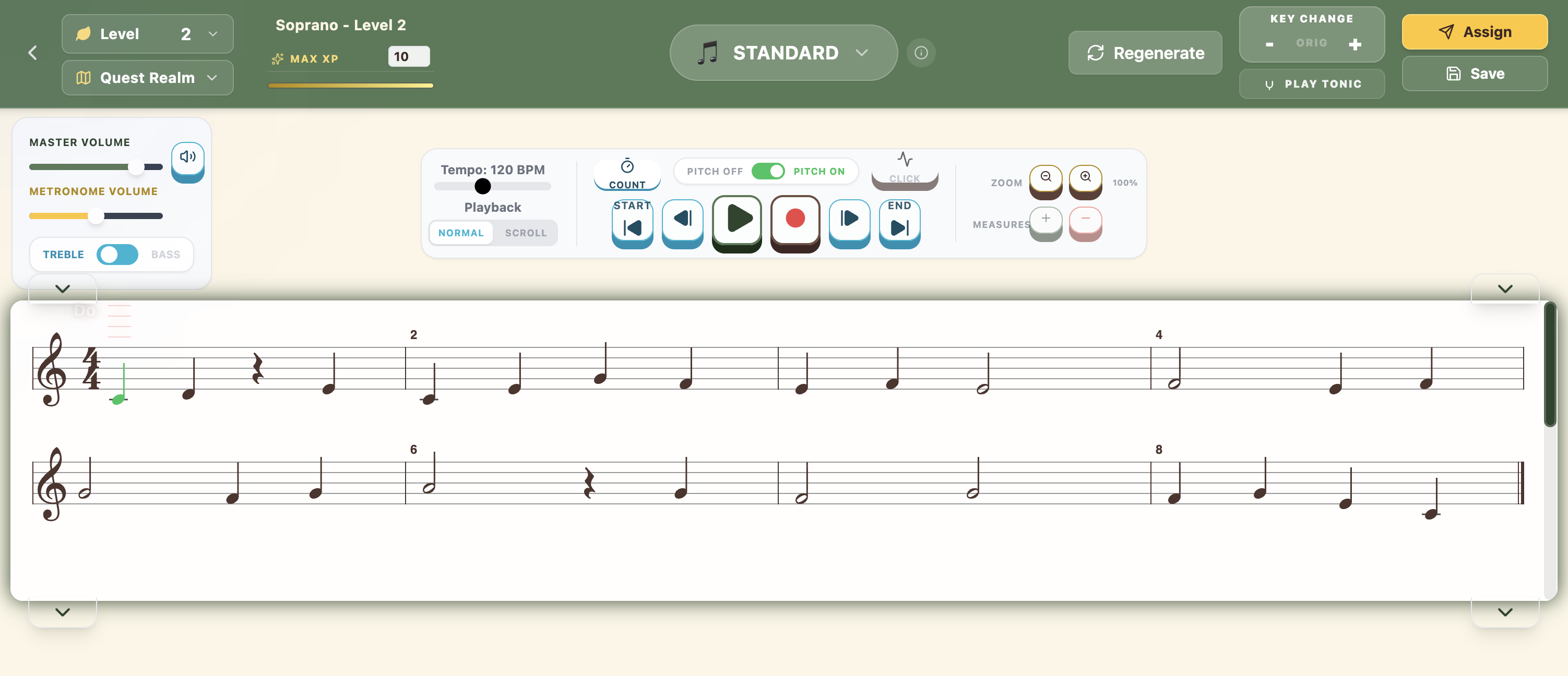
Pick a voice or instrument and a level, set the key and time signature, and SightReadQuest writes a fresh exercise in the right clef and key for each part. Press Regenerate for another one, or use Recreate Last Exercise to get a new variation with the same settings as yesterday. That covers weeks 1 through 4 without a trip to the library.
Practice in the style of your festival
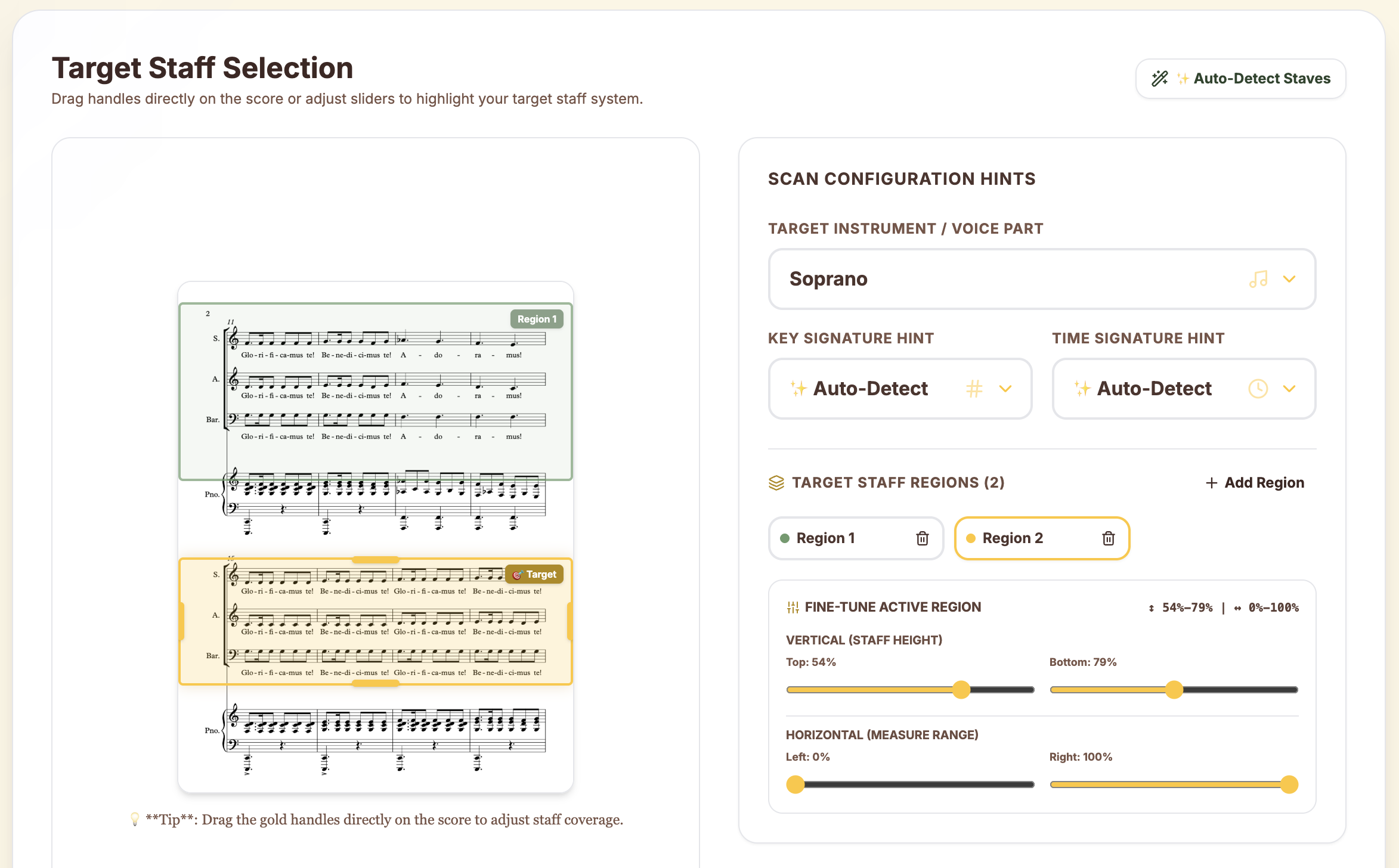
MagicScan lets you photograph a page of music and generate a new, original exercise in that style. If you have a sample sight-reading example from a past year, scan it, choose the voice part or instrument you want, and you have fresh material that looks and feels like the real thing, without reusing the original.
Run graded rounds without the line
For week 4, assign a round and let students sing or play it into the microphone. Live mic grading scores pitch and rhythm as they perform, and the scores and recordings land in your gradebook. For a festival-style check, turn off Allow Listening to Model so nobody hears the example first, and set the attempt limit to one. The assignment view shows the problem measure, the spot with the most mistakes across the class, so you know exactly what to fix in week 5.
Full-ensemble reads on every stand
For mock rounds, Live Class Read pushes the same exercise to every student device. Choose an ensemble score, such as Choir SATB, Concert Band, or String Orchestra, and each student gets their own part of the same piece.

Students join with a class code and need no email. The 10-day free trial includes 100 student accounts with no card, and pricing covers a teacher license plus optional student packs. If you are comparing tools, here is how SightReadQuest compares with Sight Reading Factory. For a broader look at the habits that sink festival reads, see three sight-reading teaching mistakes to avoid, and for daily theory that supports all of this in your music class, take a look at ThreeMinuteTheory.com.
A weekly take-home plan that fits the same routine is in sight-reading homework for choir, band, and orchestra.
Frequently Asked Questions
When should I start festival sight-reading prep?
Six weeks out is a comfortable start, but the habits from the first two weeks are worth building all year. If you only have two or three weeks, focus on the study-period checklist and silent rehearsal, then go straight to mock rounds.
How much rehearsal time does festival sight-reading prep take?
Most days, ten minutes or less. The early weeks may only need five. Mock festival rounds take a little longer because of the setup, so plan a few extra minutes on those days.
What level of music should we practice sight-reading?
Start below your festival level so students can focus on the routine. Work up to the level you expect at festival, then step back slightly in the final week so the group finishes with confidence.
How can SightReadQuest help with festival sight-reading?
It writes new leveled exercises for every voice part and instrument, MagicScan turns a sample page into a new exercise in that style, and live mic grading with a problem measure view shows you where the ensemble is still struggling.
Check Out This Leading Music Education Curriculum!