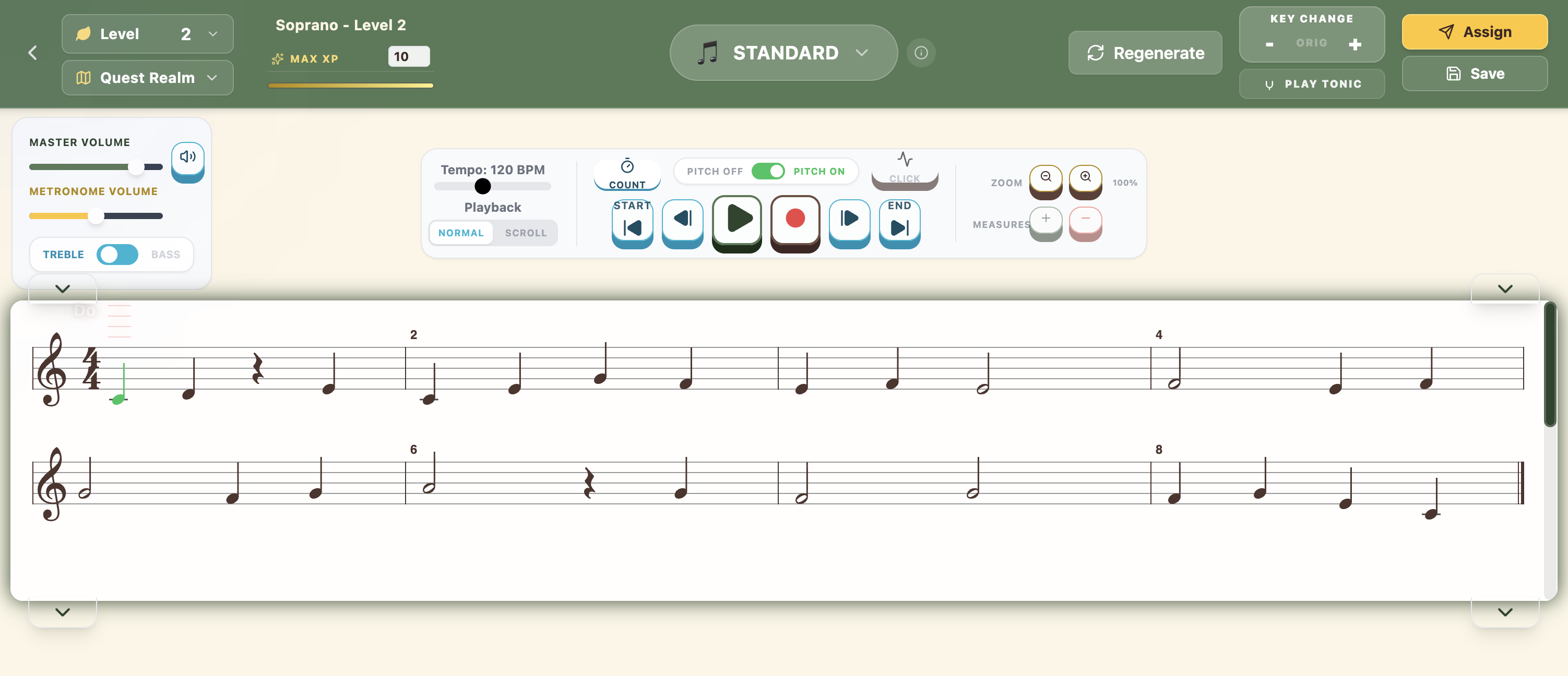
Why Project-Based Music Composition is the Missing Piece in Your Music Classroom
One of the biggest challenges music teachers face is what happens after the concert is over.
The weeks following a major performance can sometimes feel difficult to navigate because students no longer have an immediate performance goal motivating them.
Without another concert on the horizon, many ensembles experience:
- lower engagement
- reduced motivation
- lack of focus
- decreased excitement during rehearsal
And honestly, that makes total sense.
Students thrive when they feel like they are working toward something truly meaningful.
That is one of the biggest reasons we created the new Project-Based Music Composition update inside SightReadQuest to revolutionize modern music education.
Why Traditional Music Composition Projects Often Fall Short
Most music teachers understand the importance of encouraging creativity and composition skills.
The challenge is that traditional composition projects can quickly become overwhelming.
Too often, composition assignments rely on:
- printed staff paper
- pencils
- disconnected worksheets
- isolated individual assignments
In large ensembles, this becomes even more difficult.
Imagine trying to:
- distribute composition materials to 50+ students
- organize dozens of handwritten projects
- grade every assignment manually
- help struggling students individually
- encourage creativity while maintaining structure
That can quickly turn a potentially exciting activity into a logistical headache.

A Better Way to Teach Music Composition
The new project-based composition system inside SightReadQuest was designed to simplify and modernize the composition process for music classrooms.
Instead of giving students completely open-ended notation assignments that may feel intimidating, teachers can now create:
- structured composition projects
- goal-based music challenges
- collaborative notation assignments
- differentiated creative experiences
This allows students to feel creative without feeling overwhelmed.
Why Goal-Based Composition Matters
One of the biggest reasons students struggle with composition is uncertainty.
When students hear: “Write your own music,” many immediately freeze.
They may wonder:
- Where do we start?
- Which notes should we use?
- What if it sounds bad?
- What if we do it wrong?
Goal-based composition changes this entirely.
Instead of unlimited blank space, teachers can guide students through specific creative objectives.
That structure helps students:
- build confidence
- make decisions more easily
- stay focused
- experience success much faster
And importantly, students begin associating composition with creativity instead of intimidation.
Collaborative Music Composition Changes Everything
One of the most exciting parts of this update is the collaborative composition workflow.
Instead of students composing in complete isolation, they can now work together on the same piece of music across multiple devices.
The experience feels similar to collaborative documents online.
Multiple students can:
- edit the same piece
- contribute ideas
- revise notation together
- build compositions collaboratively in real time
This creates something music teachers are constantly trying to cultivate:
- genuine collaboration
- social interaction
- meaningful teamwork
A More Meaningful Way to Build Ensemble Relationships
Music teachers are always looking for ways to strengthen friendships and connection within ensembles.
Traditional icebreakers can help temporarily, but collaborative music creation creates a much deeper type of interaction.
Whether you are a band director or a dedicated choir teacher, using this new project-based system allows you to:
- assign groups
- allow students to choose collaborators
- organize projects by section
- create instrument-specific composition assignments
For example:
- trumpet sections can compose together
- violin sections can collaborate
- choir sections can build harmonies together
- small groups can create rhythm projects together
This transforms composition into both a musical and social experience.
Real-Time Collaboration Without the Paperwork Nightmare
One of the biggest practical benefits of this system is that teachers no longer need to manage stacks of handwritten notation projects.
Students can:
- log into their account instantly
- join assigned groups
- collaborate on shared notation
- edit projects across multiple devices
- continue projects independently
This makes project-based learning dramatically easier to manage in large ensembles.
Built-In Guidance Helps Students Stay Successful
One of the most powerful features in the new composition workflow is the ability for teachers to add guided reminders throughout the project.
Teachers can create:
- pop-up reminders
- composition tips
- project checkpoints
- instructional prompts
- creative suggestions
These can appear:
- after certain measures
- after specific goals are completed
- during particular stages of the project
This reduces confusion and helps students stay focused without constantly relying on teacher intervention.
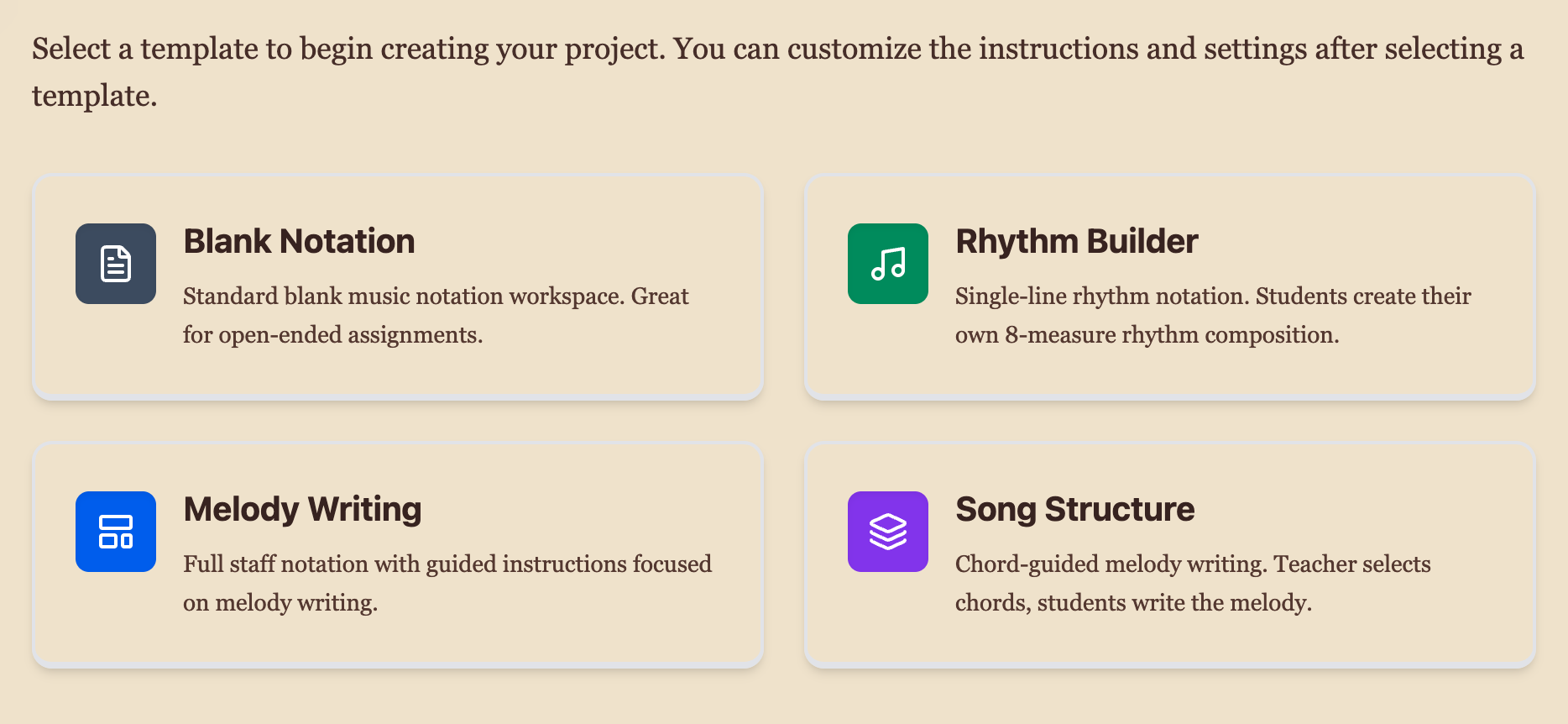
Four Built-In Composition Templates
One of the first “aha” moments for teachers often happens immediately when opening the custom generator.
Teachers can instantly choose from four project templates:
- Blank notation workspace
- Rhythm Builder project
- Melody Writing project
- Song Structure project
Each template helps guide students toward different composition goals while maintaining creative flexibility.
Why the Song Structure Template Is So Powerful
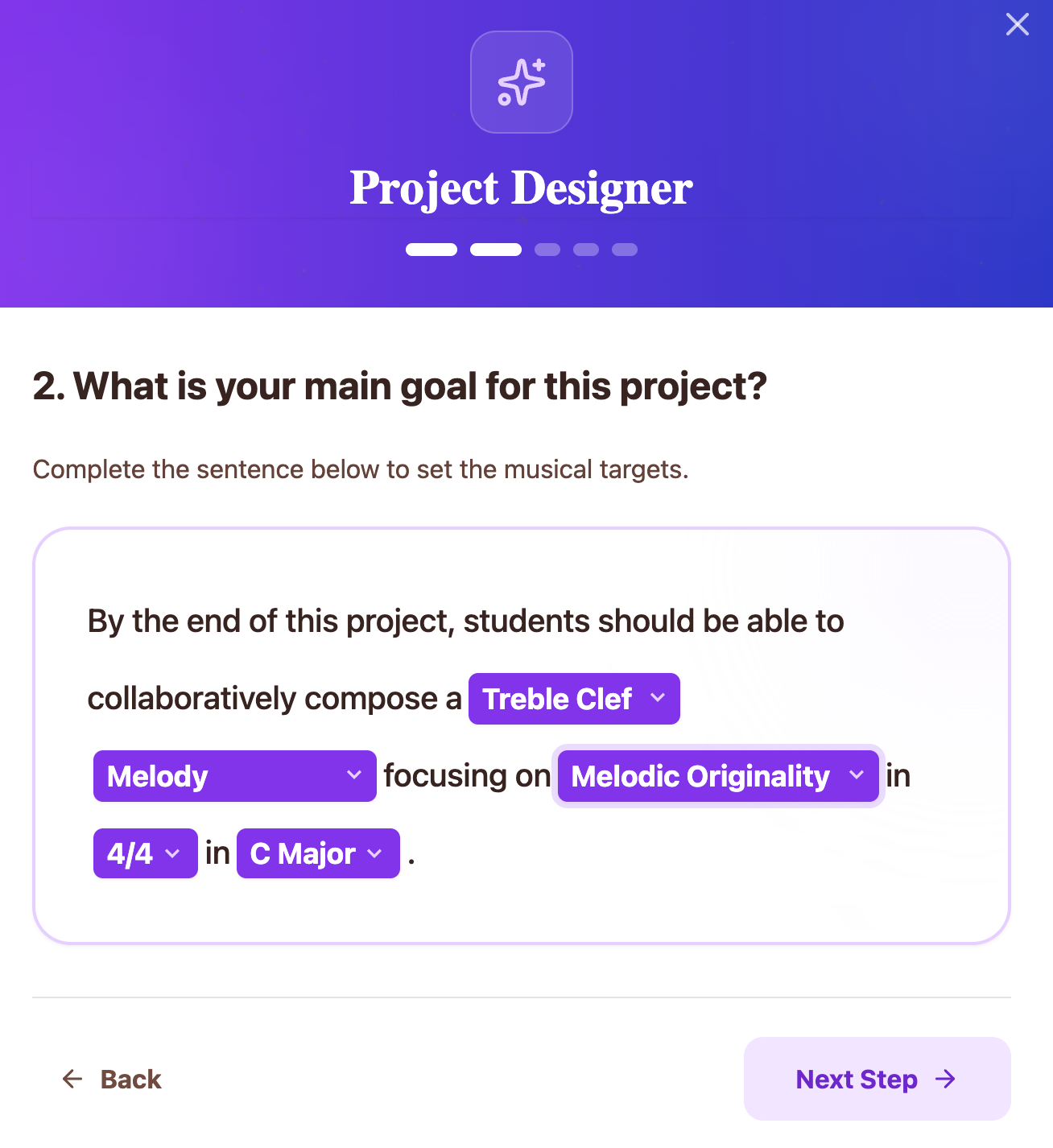
The Song Structure template may become one of the most impactful tools for younger or less experienced composers.
One of the biggest problems with beginner composition is that students often create:
- random pitches
- disconnected rhythms
- melodies without harmonic direction
Technically, the notation may be “correct,” but musically it may not feel coherent.
The Song Structure template solves this by guiding students through a chord-based approach to composition.
Students receive harmonic guidance measure-by-measure so they can better understand:
- melodic direction
- chord relationships
- note selection
- phrase shaping
This helps students create music that sounds:
- cohesive
- intentional
- musical
- deeply satisfying
Even students with limited music literacy experience can create compositions they are proud of.
What Teachers Will Notice
Teachers using project-based composition may notice:
- higher engagement after concerts
- increased collaboration
- stronger music literacy
- more creative risk-taking
- better student ownership
- fewer repetitive questions
- stronger ensemble relationships
And perhaps most importantly:
students begin seeing music notation not just as something they read…
…but something they can create.
Why Creativity Matters for Music Literacy
Music literacy is not just about reproducing notes accurately.
True music literacy also includes:
- creating
- experimenting
- collaborating
- hearing internally
- understanding musical structure
When students compose music themselves, they begin understanding notation at a much deeper level.
That understanding transfers directly into:
- sight-reading
- ensemble performance
- rhythmic understanding
- harmonic awareness
- musical confidence
Frequently Asked Questions About Project-Based Music Composition
Can students collaborate on the same composition project?
Yes. Multiple students can work together on the same composition project across different devices in real time.
Is this useful for choir, band, and orchestra?
Absolutely. Teachers can organize projects by section, instrument family, voice part, small groups, or full-class collaboration.
What types of projects can teachers assign?
Teachers can create rhythm projects, melody writing projects, collaborative notation assignments, chord-based composition projects, and structured song-building assignments.
Is this suitable for beginners?
Yes. The built-in templates and guided structure make composition approachable even for students with developing music literacy skills.
Final Thought
Composition should not feel intimidating.
And music notation should not feel disconnected from creativity.
The new Project-Based Music Composition update inside SightReadQuest helps students move beyond simply reading music and begin creating it together.
Because when students collaborate, compose, and experiment creatively, music literacy becomes more meaningful, more engaging, and far more memorable.
Frequently Asked Questions
How do you teach music composition to beginners effectively?
To teach beginners effectively, avoid starting with a blank page. Use structured, goal-based templates such as rhythm builders or chord-based melody guides. This scaffolding reduces intimidation and helps students experience immediate success.
What is project-based learning in music education?
Project-based learning in music involves students working collaboratively on creative, hands-on tasks—such as composing, arranging, or analyzing music—to solve a creative challenge, rather than just memorizing theory or practicing repertoire in isolation.
How does composing music improve a student's sight-reading skills?
Composing forces students to understand music notation from the inside out. By writing their own rhythms and melodies, they internalize musical structure, which directly translates to faster recognition and more accurate execution during sight-reading.
Can a choir teacher use collaborative composition in rehearsals?
Yes! A choir teacher can assign small groups or vocal sections to co-create harmonies, write vocal warm-ups, or compose short melodic phrases. This builds both ensemble relationships and advanced harmonic listening skills.
Check Out This Leading Music Education Curriculum!