Why So Many Students Still Struggle With Basic Music Literacy
One of the most frustrating realities in music education is this:
Music teachers can spend countless hours teaching note names, solfege, rhythm symbols, dynamics, articulations, and music theory vocabulary… and still have a large number of students who either do not fully understand the concepts, forget them quickly, or become apathetic toward learning them altogether.
But this usually is not because a dedicated choir teacher or band director is failing to teach the material.
The bigger issue is motivation.
Too often, music literacy exercises feel repetitive, disconnected, overly academic, or even punitive. Students begin viewing music literacy as something they are tested on rather than something they actively want to improve.
That is one of the biggest reasons we created the new Name It Challenge inside SightReadQuest.
Why Traditional Music Flashcards Often Fall Short
Most music teachers will tell you that flashcards absolutely work.
The problem is not whether flashcards are educationally effective. The real problem is scalability, engagement, and classroom practicality.
In larger ensembles, flashcards quickly become difficult to manage consistently. Teachers often cannot tell which students truly understand the concepts and which students are simply following along or memorizing temporarily.
And even when flashcards are effective, students rarely describe them as exciting.
That creates a major issue because students are far more likely to retain music literacy concepts when they are genuinely engaged in the learning process.

What Is the Name It Challenge?
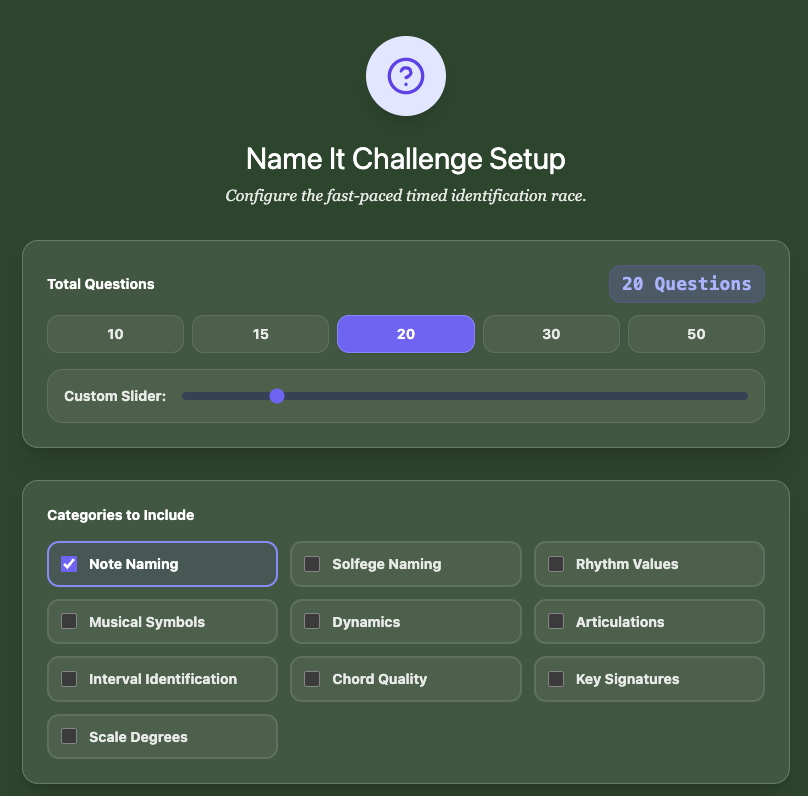
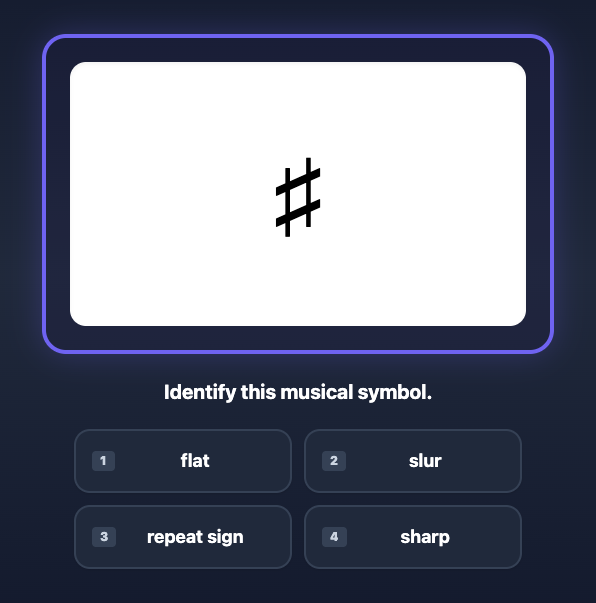
Name It Challenge is a new gamified music literacy mode inside SightReadQuest designed to help students quickly and accurately identify note names, solfege syllables, rhythm symbols, rests, clefs, articulations, dynamics, and other foundational music literacy concepts.
But unlike traditional worksheets or drills, the Name It Challenge transforms music literacy into an interactive and competitive experience.
Students are not simply identifying concepts correctly. They are motivated to identify them quickly, accurately, and consistently while competing against classmates and even their own previous records.
That shift completely changes the emotional experience surrounding music literacy practice.
Why Speed Matters in Music Literacy
One of the biggest hidden struggles in music reading is slow recognition speed.
Many students technically “know” note names or music symbols, but they identify them too slowly to apply them fluently during real music-making situations.
That delay creates hesitation during:
- sight-reading
- ensemble rehearsal
- rhythm performance
- musical processing
Strong musicians do not slowly decode every note or symbol individually. Recognition must become automatic over time.
The Name It Challenge helps strengthen this rapid recognition process through repeated and engaging practice that students actually enjoy participating in.
Turning Music Literacy Into a Game
Traditional music literacy drills often feel passive.
The Name It Challenge changes the emotional atmosphere entirely.
Instead of reluctantly completing another worksheet, students become motivated to:
- beat their personal best
- improve reaction speed
- increase accuracy
- compete in a healthy way
- strengthen their musical fluency
This creates a classroom environment where music literacy feels active and rewarding rather than tedious and disconnected.
And that matters because students learn best when challenge and motivation work together.
Why Gamification Works So Well in Music Education
Gamification is not about distracting students from learning.
It is about increasing:
- focus
- repetition
- participation
- motivation
- consistency
Students naturally respond to challenge, progress, measurable improvement, and feedback.
When music literacy becomes interactive and goal-oriented, students spend significantly more time engaging with the exact concepts teachers want them to master.
That repetition strengthens long-term retention and overall music reading fluency.
The Analytics Behind Name It Challenge
One of the most powerful aspects of the Name It Challenge happens behind the scenes.
As students complete challenges, the system tracks:
- speed
- accuracy
- repeated mistakes
- literacy trends
- concept weaknesses
This gives teachers meaningful, data-driven insight into which concepts students are truly struggling with.
Instead of wasting valuable rehearsal time reviewing concepts the majority of students already understand, teachers can create highly customized challenges that target actual literacy gaps within their ensemble.
That makes classroom review far more intentional and efficient.
The "Aha" Moment for Music Teachers
For many teachers, the biggest "aha" moment comes when they realize that the Name It Challenge is doing far more than creating a fun classroom activity.
It is actively helping uncover:
- hidden literacy gaps
- weak concepts
- struggling students
- ensemble-wide trends
And then helping teachers create more focused and meaningful instruction based on real student performance data.
That transforms music literacy from generalized review into targeted musical growth.
Why Music Literacy Confidence Matters
Students are far more likely to enjoy music reading when they feel successful.
When students begin recognizing notes, rhythms, and symbols more fluently, they approach:
- sight-reading
- ensemble rehearsal
- music theory
- performance
with significantly more confidence.
That confidence compounds over time.
And ultimately, stronger music literacy creates stronger sight-readers, stronger performers, stronger ensembles, and more independent musicians.
Final Thought
Music literacy should not feel like punishment.
And students should not feel disconnected from the foundational concepts that help them become stronger musicians.
The Name It Challenge inside SightReadQuest helps transform note identification and music literacy practice into something students actively want to improve.
Because when students become motivated to recognize music fluently, the entire process of reading music becomes faster, easier, and far more rewarding.
Frequently Asked Questions
How do you teach sight-reading effectively?
Effective sight-reading instruction combines daily, short practice sessions with gamified tools that build rapid note and rhythm recognition, ensuring students don't hesitate during real-time performance.
Why do students struggle with music literacy?
Many students struggle because traditional drills feel disconnected and academic. Without immediate feedback and engaging motivation, they fail to build the automatic recognition speed needed for fluent reading.
How can a choir teacher improve ensemble sight-reading?
A choir teacher can use gamified tools like the Name It Challenge to turn music theory and note identification into a fun, competitive team activity, building confidence before students even sing a note.
What is the Name It Challenge in SightReadQuest?
It is an interactive, gamified mode designed to help music students rapidly identify notes, solfege, rhythms, and symbols while tracking their progress and competing with peers.
Check Out This Leading Music Education Curriculum!