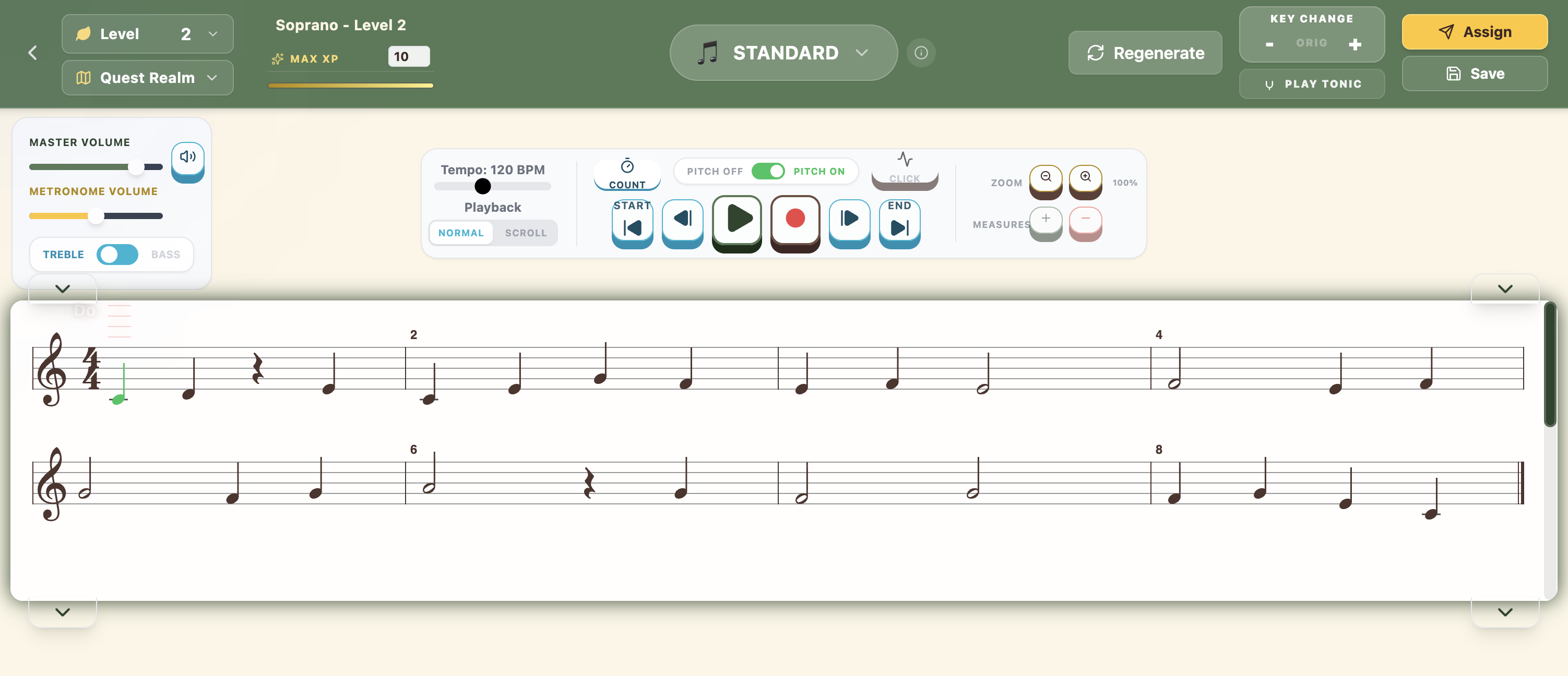
A Better Way to Teach Rhythm: Introducing Rhythm Practice Mode in SightReadQuest
Rhythm is notoriously one of the most challenging skills for music students to master. In many classrooms, rhythm is only practiced during full sight-reading sessions, which creates a significant hurdle for developing musicians.
Why Rhythm Is So Difficult for Students
Students often struggle because they are guessing instead of reading, distracted by pitch or lyrics, or simply trying to follow others instead of thinking independently. When students are asked to process rhythm, pitch, and expression all at once, it leads to immediate confusion and inconsistency. As a result, rhythm literacy does not develop as strongly as it should.

The Missing Piece in Rhythm Instruction
One of the biggest gaps in modern music education is that rhythm is not always taught in isolation. When rhythm is always combined with pitch, students divide their attention, errors increase, and confidence decreases. What students need is a way to focus only on rhythm. That is exactly what the Rhythm Practice Mode in SightReadQuest is designed to do.
If you are still deciding how your students should say rhythms out loud, my comparison of rhythm counting systems walks through numbers, Takadimi, ta and ti-ti, and du-de, with guidance for choir, band, and orchestra.
What Is Rhythm Practice Mode?
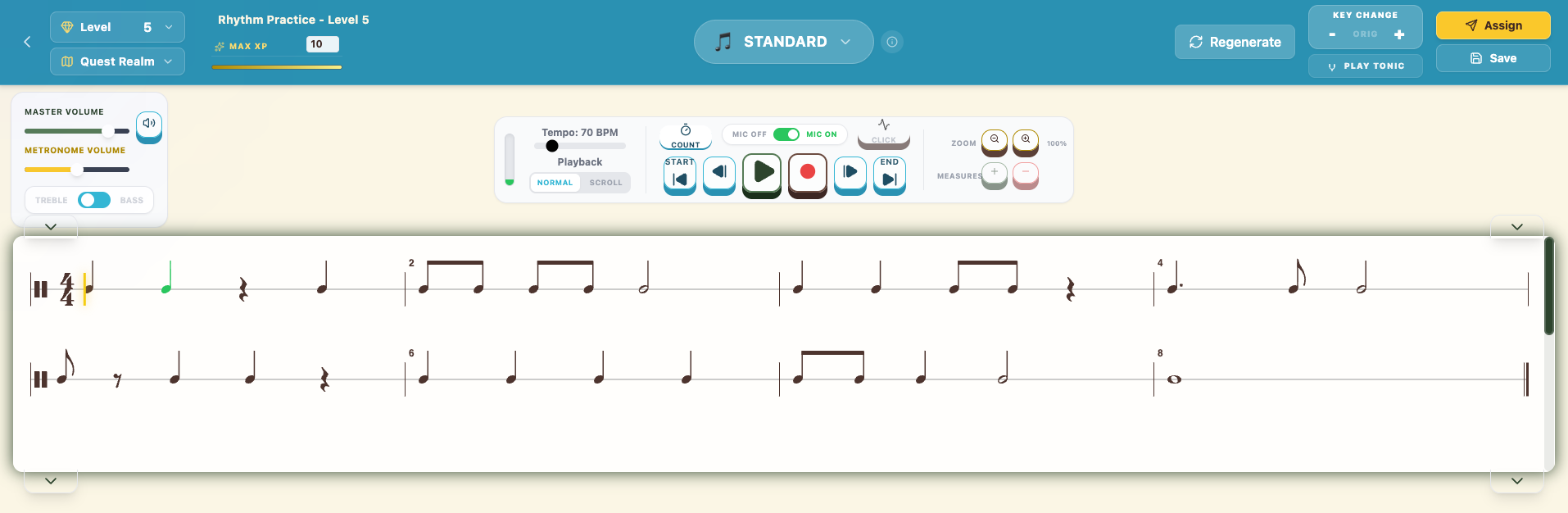
Rhythm Practice Mode is a new feature that allows students to focus entirely on reading and performing rhythms without the distraction of pitch. By removing note names and solfege, students can concentrate on timing, subdivision, accuracy, and consistency. This creates a much clearer learning experience where students begin to understand what they are seeing rather than just guessing.
How It Improves Rhythm Accuracy
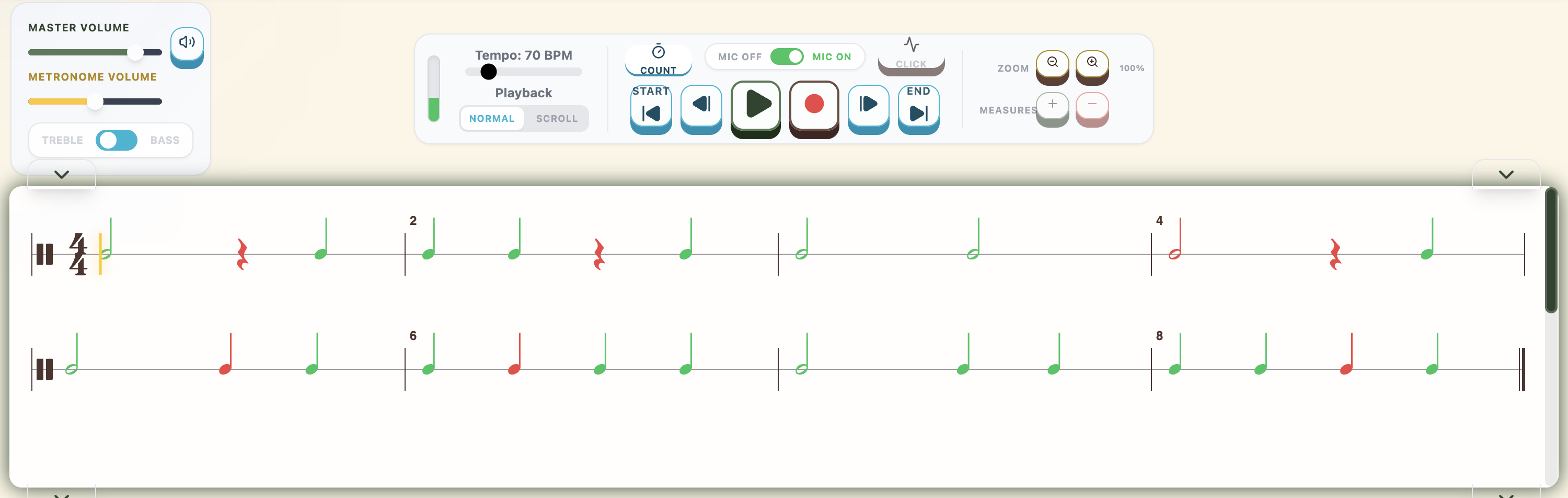
One of the most powerful parts of this feature is the real-time feedback system. As students perform, correct rhythms are highlighted in green, while incorrect rhythms are highlighted in red. This gives students immediate awareness of their performance. They no longer have to wait for feedback or wonder if they were correct; they can see it instantly, replacing guesswork with absolute clarity.
Tempo Control That Matches Your Ensemble
Teachers can easily adjust the tempo to meet the specific needs of their students. This allows for slower practice for beginners, moderate tempos for development, and faster tempos for advanced challenges. Students can build confidence at the right pace and gradually improve their skills.

A More Engaging Way to Practice Rhythm
Traditional rhythm exercises can feel repetitive or disconnected. Rhythm Practice Mode changes that by using built-in scoring and feedback to keep students engaged. Students are motivated to improve and focus on accuracy because they are trying to perform the exercise well, not just finish it.
Built-In Repetition and Improvement
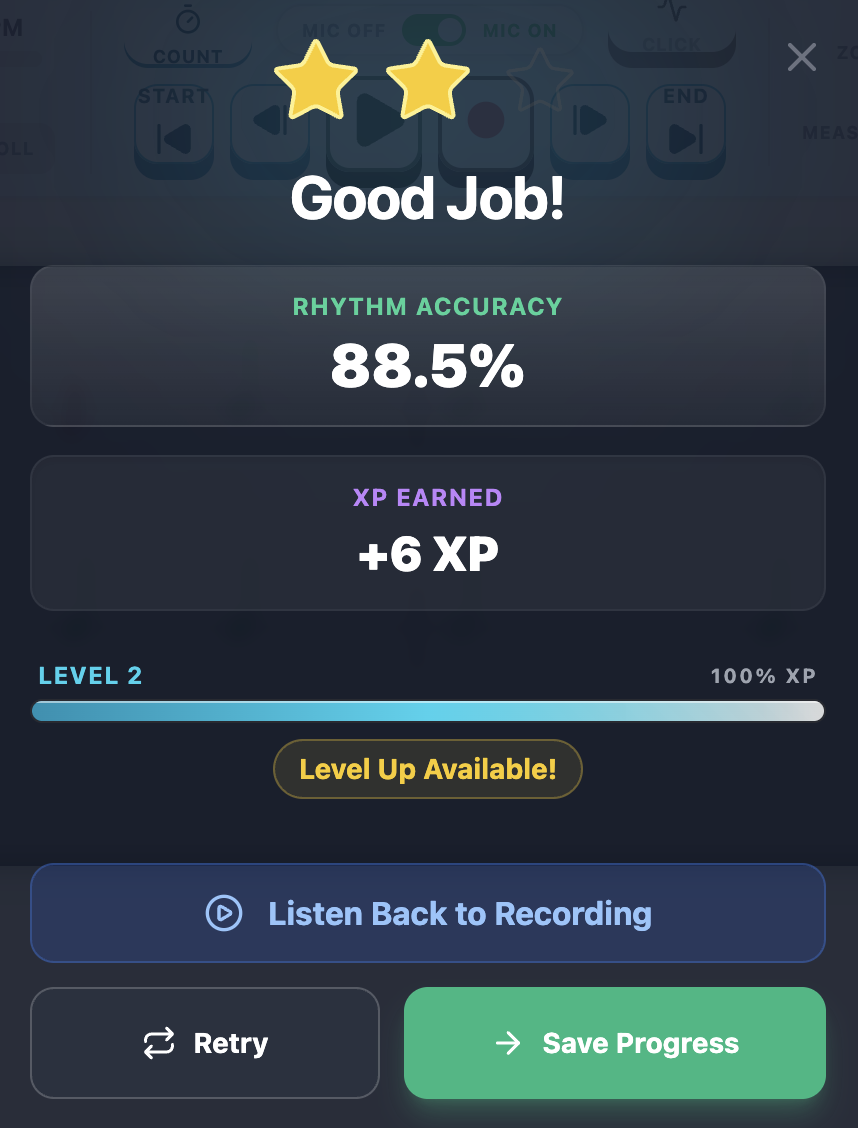
Students can listen back to their performance and immediately try again. This creates a natural cycle of performing, receiving feedback, reflecting, and retrying. This encourages students to refine their accuracy and builds stronger rhythm skills over time.
A Powerful Tool for Ensemble Rehearsals
Whether you are a choir teacher, band director, or orchestra conductor, this feature is not just for individual practice. Entire ensembles can use these exercises together to create unified timing, shared focus, and stronger group awareness. When an entire group performs the same rhythm exercise, it becomes a unifying experience that increases ensemble cohesion.
Why Teachers Will Notice Immediate Results
When used consistently, teachers will see improved rhythmic accuracy, faster rehearsal progress, and increased student confidence. Students are no longer guessing; they are reading and performing with purpose. Rhythm literacy is built through focused practice and immediate feedback, transforming rhythm from a side activity into a core skill.
Final Thought
Students should not feel confused when reading rhythms; they should feel confident and capable. When rhythm is isolated and reinforced with feedback, students take ownership of their performance. That is when real growth happens. With Rhythm Practice Mode, rhythm becomes something students can understand, improve, and truly enjoy.
Check Out This Leading Music Education Curriculum!
Recommended Videos
Frequently Asked Questions
How do you teach sight-reading effectively?
Effective sight-reading instruction involves isolating specific skills like rhythm and pitch before combining them. Using tools that provide real-time feedback helps students correct errors instantly and build confidence through successful repetition.
Why is rhythm isolation important in music education?
Isolating rhythm removes the cognitive load of processing pitch, solfege, and lyrics simultaneously. This allows students to focus entirely on timing and subdivision, leading to stronger rhythmic literacy and fewer performance errors.
How can a choir teacher use rhythm practice software?
A choir teacher can use rhythm practice software for both individual assignments and group warm-ups. It helps unify the ensemble's sense of pulse and ensures that every singer is reading the rhythm accurately rather than just following the person next to them.
What are the benefits of real-time feedback for music students?
Real-time feedback provides immediate visual cues (like green or red highlights) that tell a student exactly where they succeeded or failed. This prevents the reinforcement of bad habits and allows for immediate self-correction.