Why Audiation is the Secret Weapon of Modern Music Education
One of the biggest hidden struggles in choir, band, and orchestra classrooms is something many students do not even realize they are missing. And honestly, many music teachers unintentionally overlook it too. That skill is audiation.
Audiation is the ability to internally hear and anticipate pitches and rhythms before they are performed. While it may sound like an “extra” musicianship skill, the reality is that audiation is one of the most powerful tools a musician can develop. Strong musicians are not simply reacting to notes as they appear; they are anticipating musical motion, hearing rhythms internally, and processing phrase direction. In many ways, audiation is the essential foundation underneath strong sight-reading, ensemble awareness, pitch accuracy, and musical confidence.
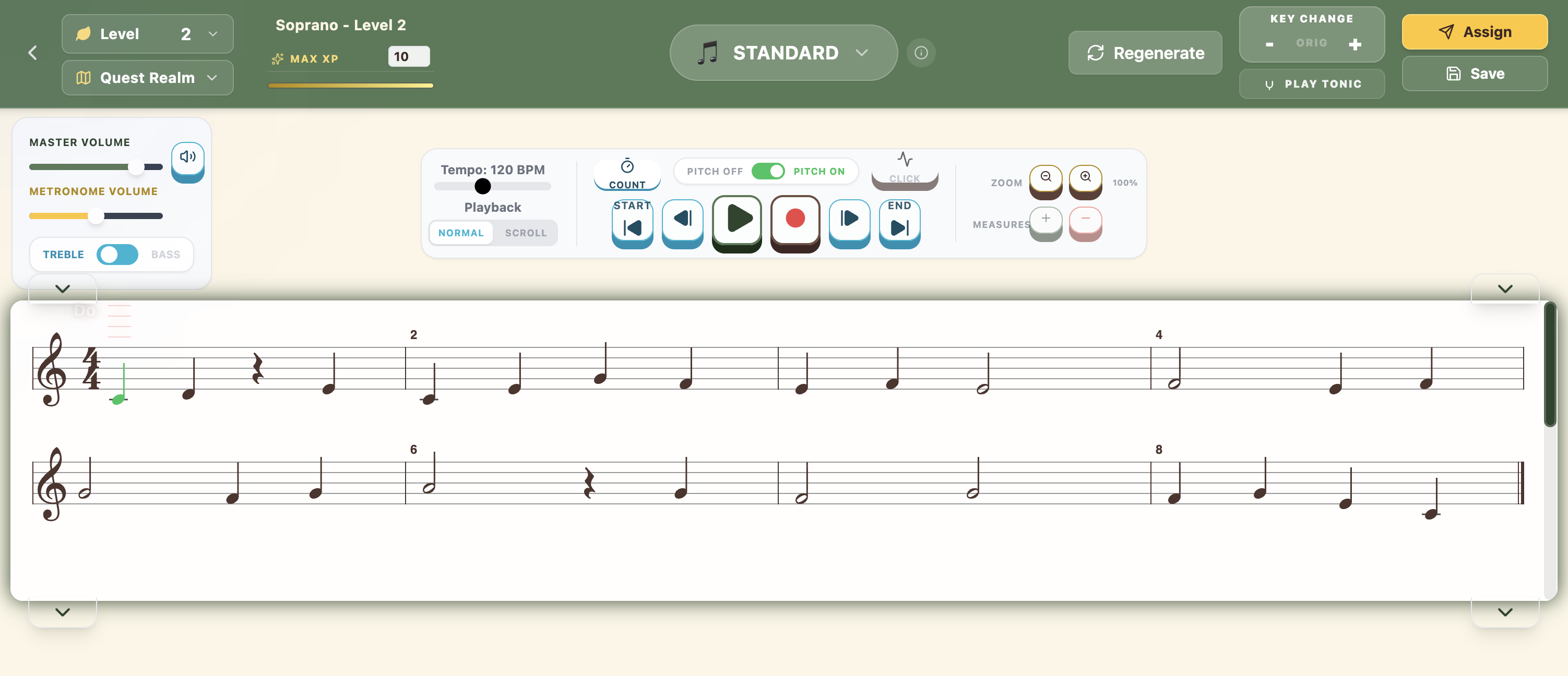
Why Traditional Audiation Exercises Often Fall Short
The challenge is that many traditional audiation exercises feel disconnected from actual ensemble rehearsal. Too often, these activities become repetitive drills, isolated exercises, or disconnected ear-training routines unrelated to real repertoire. As a choir teacher or instrumental director, you know that students may view these tasks as abstract, tedious, or simply irrelevant to the music they rehearse every day. That disconnect matters. If students do not understand how audiation connects to actual music reading and performance, they are less likely to engage deeply.

Introducing Audiate Attack
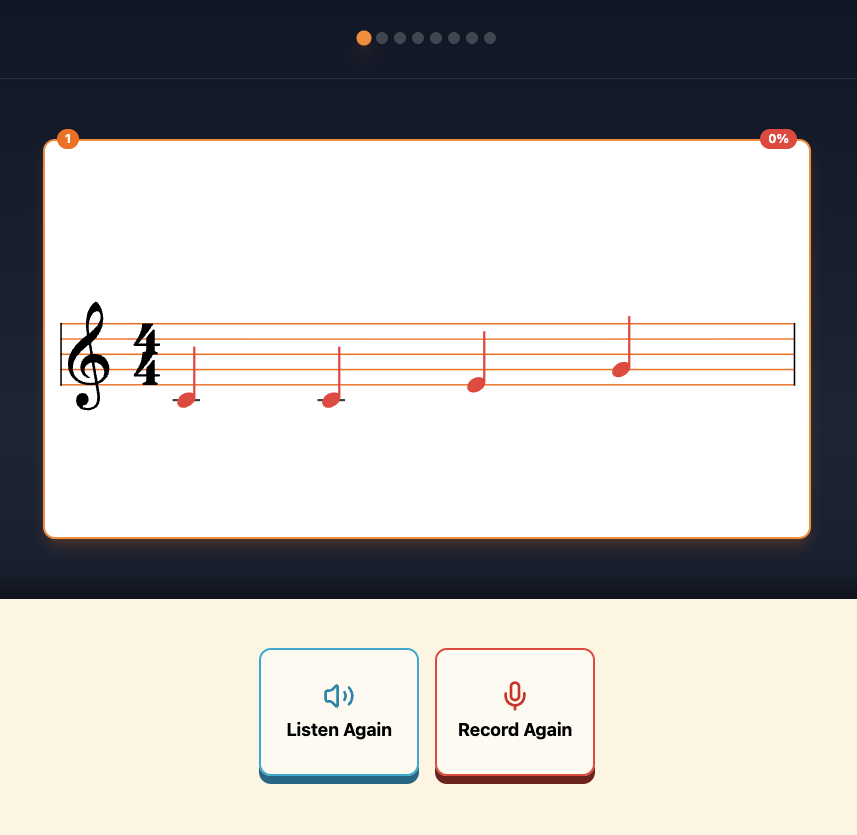
Audiate Attack is a new gamified challenge inside SightReadQuest designed to strengthen audiation, pitch anticipation, and rhythmic internalization. The idea is simple: students hear one measure of music performed aloud, then immediately attempt to perform it themselves from memory. Instead of relying on visible notation, students must internalize the music and perform accurately from what they heard. In other words: students are learning to hear music before performing it.
Breaking the Habit of Guessing
One of the biggest problems in traditional sight-reading is that students often guess. They guess pitches, guess rhythms, and react instead of anticipate. Audiate Attack helps break this habit by creating urgency around active listening. Students cannot simply wait for the person next to them; they must listen carefully, internalize the measure, and perform independently. This changes the entire mental process of music reading.
Attack Sight Reading One Measure at a Time
One of the most powerful ideas behind Audiate Attack is that it simplifies the process into manageable musical moments. Instead of overwhelming students with an entire exercise, it encourages them to focus deeply on one musical idea at a time. This helps build confidence, accuracy, and musical memory. And because the process is gamified, students remain motivated to improve.
Customizable Difficulty for Every Ensemble
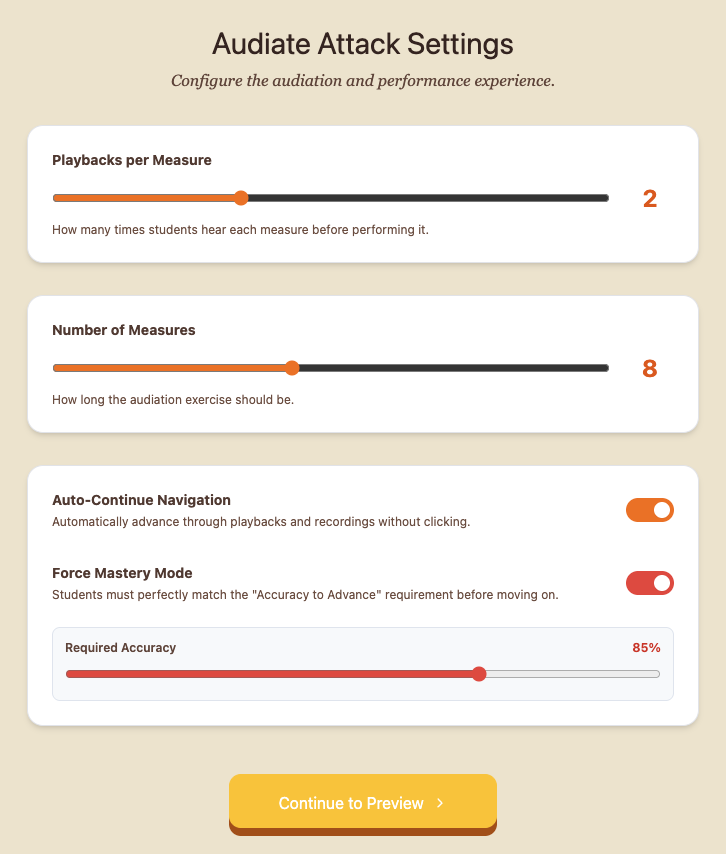
Every ensemble has different skill levels. That is why Audiate Attack allows teachers to customize the required accuracy threshold for advancement, ranging from 50% to 100% accuracy. This flexibility helps students experience challenge without overwhelm, making it perfect for beginner ensembles, advanced choirs, or differentiated instruction.
The Hidden Skill Behind Strong Ensembles
The biggest “aha” moment for a teacher may happen after the exercise. You may begin noticing more focused silence before entrances, stronger anticipation during rehearsal, and fewer guessed pitches. That silence matters. Great ensembles are not simply reacting together; they are anticipating together. That is the true power of audiation.
Final Thought
Music literacy is not just about seeing notes. Great musicians learn to hear music internally before they perform it. That is the hidden superpower behind strong musicianship. Audiate Attack was designed to help students develop that skill in a way that feels engaging, interactive, and fun. When students begin anticipating music instead of guessing at it, everything about their music education journey starts to change.
Frequently Asked Questions
What is audiation in music education?
Audiation is the cognitive process where a musician hears and comprehends music in their head when no physical sound is present. It is essentially 'thinking in music' and is a foundational skill for literacy and performance.
How do you teach sight-reading effectively?
Effective sight-reading instruction moves beyond note-naming to focus on rhythmic internalization and melodic anticipation. Using tools like Audiate Attack helps students hear the music before they play it, reducing guessing.
Why should a choir teacher focus on audiation?
For a choir teacher, audiation is the key to better intonation and ensemble blend. When singers can internally hear their pitch before singing it, they perform with significantly higher accuracy and confidence.
What is the difference between audiation and ear training?
While ear training often involves reacting to sounds already heard, audiation is the proactive ability to anticipate and internalize musical structures, making it a more advanced and practical skill for performance.
Check Out This Leading Music Education Curriculum!